President Donald Trump is keeping his promise to help farmers on the front lines of his trade wars with a $12 billion aid package paid for by tariff revenue.
Roughly $11 billion will be directed toward the Agriculture Department’s new Farmer Bridge Assistance program, which will provide one-time payments to row crop farmers, according to the White House. The USDA will hold on to the remaining $1 billion as the department continues to monitor the consequences of Trump’s trade and tariff policies.
“This relief will provide much-needed certainty to farmers as they get this year’s harvest to market and look ahead to next year’s crops, and it’ll help them continue their efforts to lower food prices for American families,” Trump said Monday at the White House.
Trump also previewed steps he would like to take regarding the cost of farming equipment, which has been affected by his metal tariffs.
“We’re going to take off a lot of the environmental restrictions that they have on machinery,” he said. “We’re going to take a lot of that nonsense off of the equipment, which is going to reduce” prices.
Trump made the farmer aid package announcement during a roundtable event on Monday at the White House, alongside Treasury Secretary Scott Bessent, Agriculture Secretary Brooke Rollins, lawmakers, and farmers, including Meryl Kennedy, a rice, corn, and soybean farmer from Louisiana.
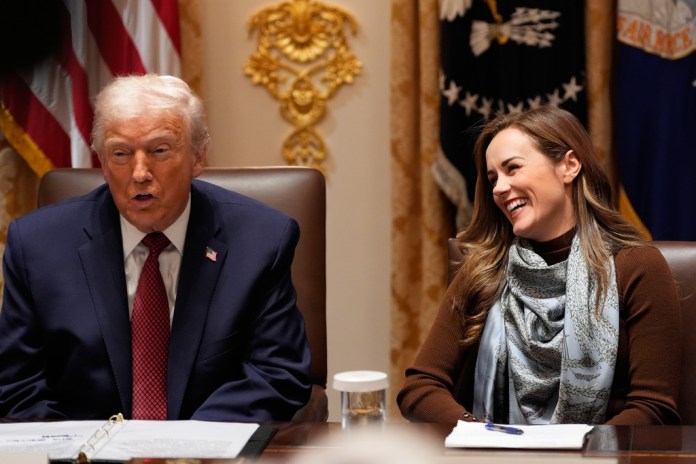
At one point, Kennedy criticized India for dumping rice into the U.S. market, which piqued Trump’s interest amid U.S.-India trade deal negotiations.
“Why is India allowed to do that?” Trump asked Bessent. “They have tariffs. Do they have an exemption on rice?”
“No, sir,” the secretary said. “We’re still working on their trade deal.”
The president replied, “They shouldn’t be dumping. Give me the countries if you could. Mark it down, Scott.”
At the same time, Trump used the White House event to defend his trade and tariff agenda, despite their impacts on farmers.
The most high-profile example of those impacts has been on soybean farmers after China declined to purchase their products amid U.S.-China trade deal talks.
China purchased more than half of the United States’s $24.5 billion in soybean exports last year.
China’s purchases of U.S. soybeans resumed in October after Trump and Chinese President Xi Jinping reached a tentative trade deal, with China promising to buy 12 million metric tons by the end of February. Bessent previously announced that China would purchase that amount by the end of the year and a minimum of 25 million metric tons every year for the next three years.
“I think he’s going to do even more than he promised to do,” Trump said of Xi on Monday. “What he promised to do is a lot. So we’re very happy with that.”
Trump has been mindful of farmers, in part, because counties designated as “farming-dependent” by the USDA supported the president with an average of 77.7% of the vote during last year’s election.
Earlier this year, Trump even seemed amenable to a moratorium on illegal immigration enforcement operations at farms, hotels, and restaurants because of migrant labor shortages before reversing that decision in response to pressure from pro-enforcement administration officials, including White House deputy chief of staff for policy Stephen Miller and Homeland Security Secretary Kristi Noem.
Trump alluded to his farmer support on Monday, underscoring that “farmers like me based on voting trends.”
Trump then compared his record to that of former President Joe Biden, emphasizing how farmers were “crushed” by inflation and restrictions on energy, water, and “countless other necessities,” in addition to the number of bankruptcies and lack of trade deals during Biden’s administration.
“In my first term, we had an agricultural trade surplus by a lot,” he said. “Biden turned that surplus into a gaping agricultural deficit that continues to this day, but we’re knocking it down.”
During the 2018-2019 U.S.-China trade war of Trump’s first administration, farmers received $28 billion in aid.
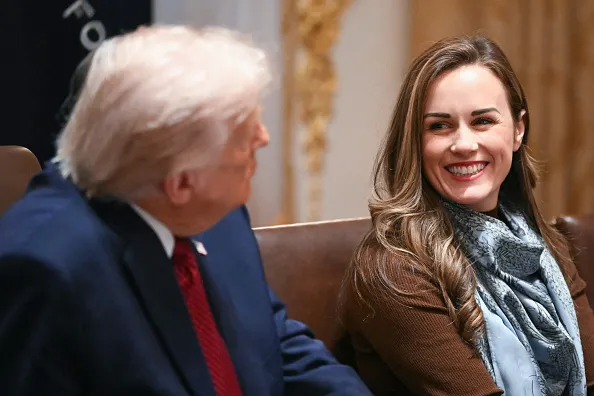
The farmer aid package comes as Trump grapples with the issue of affordability, one for which the president has been scrutinized by Democrats, particularly since last month’s off-year elections.
Trump has responded to the criticism in the past by dismissing it as a Democratic “con job” and “hoax,” but on Monday, he appeared to modulate that rhetoric.
“The Democrats caused the affordability problem, and we’re the ones that are fixing it,” he said. “Inflation is essentially gone. We have normalized, and it will go down even a little bit further. You don’t want it to be deflation either.”
The package is Trump’s second recognition of the effect his trade and tariff priorities are having on affordability, after exempting coffee, bananas, and beef from his duties last month.
TRUMP LOOKS TO LITERALLY BUILD HIS LEGACY. DOES IT SOUND AN AFFORDABILITY CLARION CALL?
One year before the 2026 midterm elections, Democrats have a 5-point advantage over Republicans in generic congressional ballot polling, according to RealClearPolitics. Specifically, Trump’s economic approval rating is net negative 15 points and his inflation approval rating is net negative 27 points.
Subscribe to George Magazine and unlock exclusive bonuses. Your subscription now includes a free crypto essentials guide and three premium downloadable images. These images are perfect for personal use as desktop or mobile backgrounds, with thumbnail previews shown below.




Discount Applied Successfully!
Your savings have been added to the cart.