NEWYou can now listen to Fox News articles!
Absent direct military action, President Donald Trump is running low on options amid his standoff with Venezuelan President Nicolás Maduro, according to experts.
Strikes near Venezuelan waters aimed at drug traffickers, sanctions and a $50 million bounty have so far been unsuccessful in forcing Maduro, whom the U.S. has designated as a leader of the Tren de Aragua drug cartel, to step down from power.
After repeated threats, adversaries may now view a lack of direct military action as a sign of weakness from the U.S. But Maduro is in an equally difficult position — his own military capabilities are dwarfed in comparison to Trump’s, and experts say China and Russia lack the will to directly challenge the U.S. in its own hemisphere.
Meanwhile, the clock is ticking: Trump’s unprecedented military buildup in the Caribbean — including sending the world’s largest aircraft carrier to the region — is taking away resources from other theaters.
WASHINGTON’S SHADOW WAR: HOW STRIKES ON CARTELS THREATEN TO COLLAPSE MADURO’S REGIME
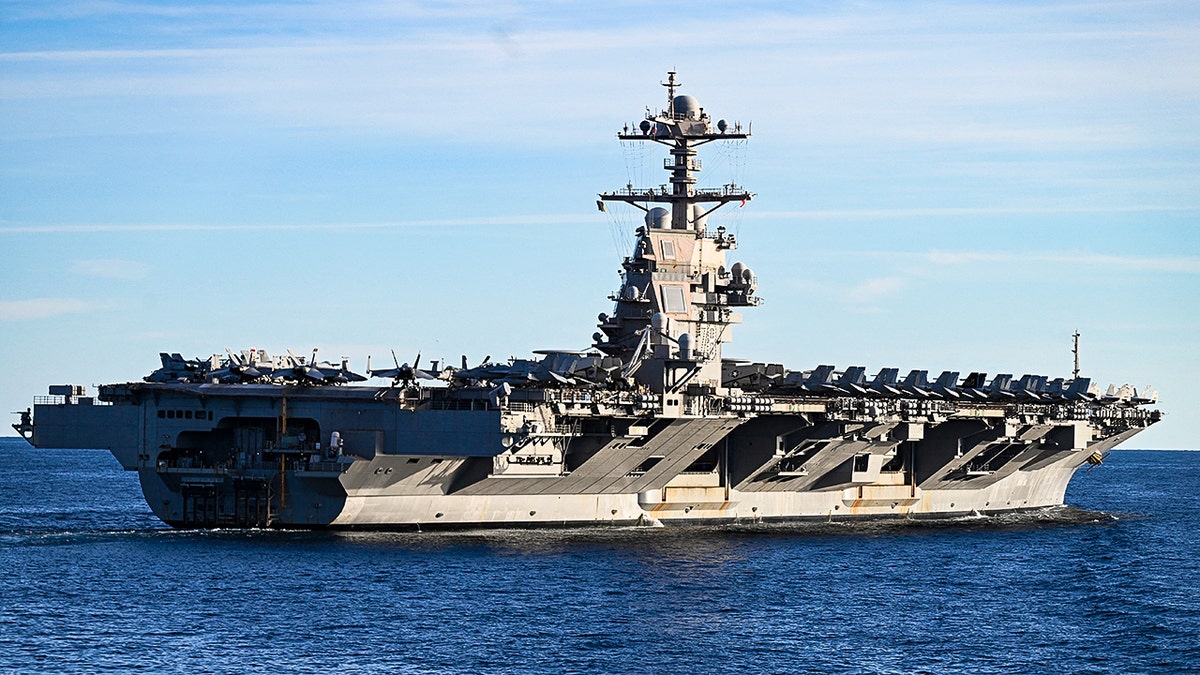
Navy deploys USS Gerald R. Ford and robotic vessels for anti-drug mission in Latin America. (Jonathan Klein/AFP via Getty Images)
Katherine Thompson, a senior fellow in defense and foreign policy studies at the libertarian think tank the Cato Institute, said that there are very few tools left at Trump’s disposal to oust Maduro, aside from a targeted strike against the Venezuelan leader or a land invasion.
While the White House has not directly said that it is seeking regime change, recent media reports indicate that Trump and Maduro have spoken about the Venezuelan leader departing his post.
Thompson noted that previous efforts to squeeze out Maduro, including imposing sanctions on Venezuela and backing opposition leader Juan Guaidó during Trump’s first term, have proven unsuccessful.
“It does not seem like there is — outside of the military option — anything new on the table that hasn’t really been tried,” Thompson said.
Even so, Thompson cast doubt on whether military action would prove successful.
“If the offer on the table from the Trump administration is we’re going to potentially execute an invasion unless you talk to us, perhaps that’s a strong enough diplomatic, strategic move that gets Maduro to capitulate,” Thompson said. “But it just doesn’t seem like we’re picking up that many signals from the Maduro regime that that is going to be palatable.”
Meanwhile, Thompson said that adversaries like Russia and China are probably confused about why the Trump administration has fixated on the Maduro regime, which doesn’t jeopardize U.S. interests as much as other actors, when the Trump administration has adopted an “American First” mantra.
“I imagine for them, it’s probably a bit puzzling, if they’re looking at it through a real, brass tacks, realist lens, why this administration would be prioritizing ousting the Maduro regime, as opposed to conflicts in other theaters,” Thompson said.
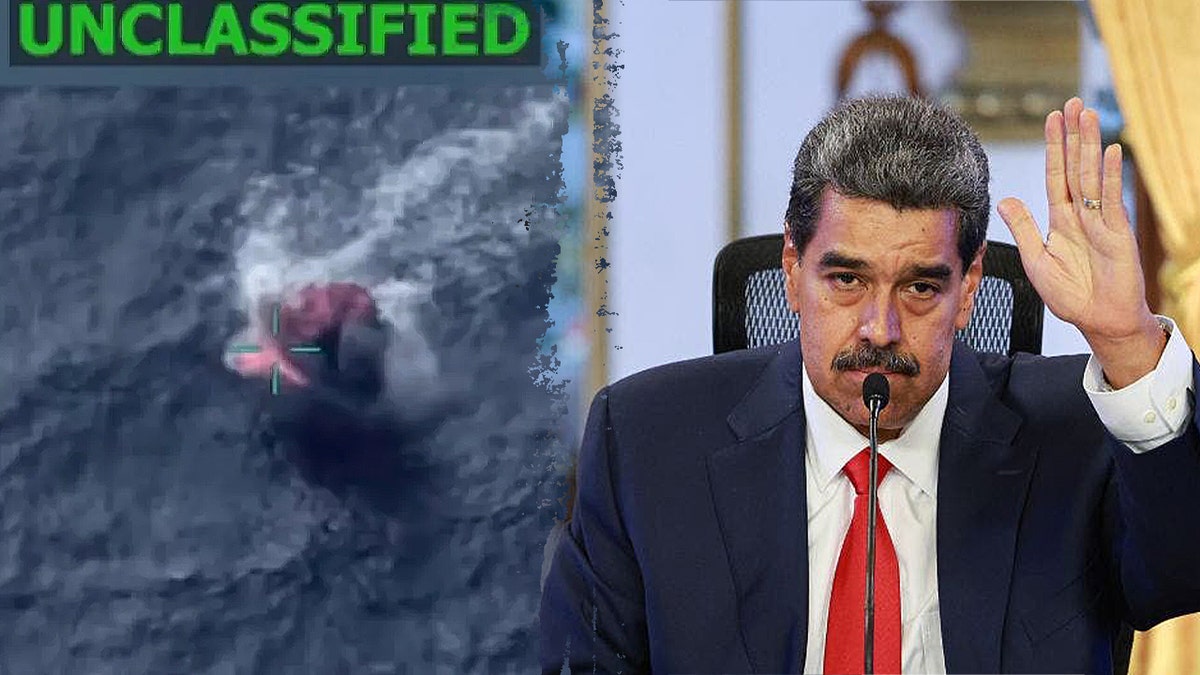
U.S. strikes on drug boats near Venezuelan waters may be targeted at taking out Venezuelan leader Nicolás Maduro. (@realDonaldTrump/Truth Social; Jesus Vargas/Getty Images)
TRUMP UNLEASHES US MILITARY POWER ON CARTELS. IS A WIDER WAR LOOMING?
As a result, the Trump administration’s actions focusing on Venezuela likely leave a bit of “befuddlement” on the part of Russia and China about how serious the U.S. is about putting American interests first, Thompson said.
She added that China may be wondering if the U.S. diverting resources, such as directing the aircraft carrier USS Gerald R. Ford to the Caribbean, could provide an opportunity for it to invade Taiwan if the U.S. is tied up with operations in Venezuela. Multiple U.S. officials have said they believe China will be capable of invading Taiwan by 2027.
While there may be greater interest from China to take action within its own theater, experts agreed it was unlikely that Russia or China would actually get involved and back Venezuela should military operations between the U.S. and Caracas escalate — even though Moscow and Beijing are strategic allies with Venezuela.
Some analysts said Maduro would find himself largely isolated if Trump launched military strikes against Venezuela. Russia, still consumed by its war in Ukraine, is unlikely to offer anything beyond denunciations of U.S. action, and China, despite years of deep economic engagement with Caracas, is also expected to stop well short of military involvement, they said.
From Moscow’s perspective, there is both ideological and strategic discomfort with an American intervention — but little appetite or capability to counter it.
“Moscow opposes unilateral U.S. military intervention, especially when aimed at toppling a friendly authoritarian regime. That said, Russia lacks the will and ability to stop U.S. intervention in this part of the world should Trump decide to go that route,” said John Hardie, a Russian military analyst at the Foundation for Defense of Democracies (FDD).
TRUMP GAVE MADURO ULTIMATUM TO FLEE VENEZUELA AS LAND OPERATIONS LOOM: REPORT
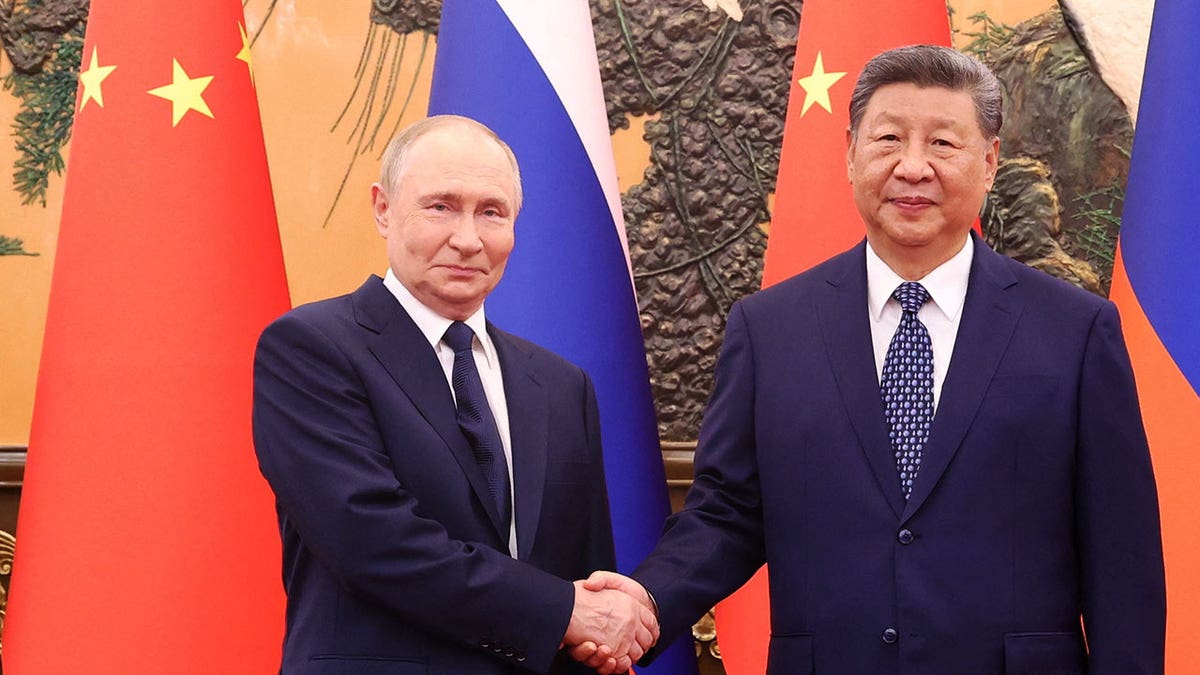
Chinese President Xi Jinping shakes hands with Russian President Vladimir Putin at the Great Hall of the People in Beijing, China, on Sept. 2, 2025. (China Daily via REUTERS)
Hardie said Russia is watching Washington’s internal debate carefully.
“Analysts in Moscow interpret the internal debate in Washington over Venezuela as evidence that although Republican views on foreign policy are shifting, the more traditional, hawkish camp still retains influence,” Hardie said. “This whole episode probably also reinforces Russian views of Trump as unpredictable and impulsive, though I suspect Moscow is glad to see Trump prioritizing the Western Hemisphere over other regions more central to Russian interests.”
China’s likely response would mirror its recent behavior in other conflicts. Beijing has major financial stakes in Venezuela but has shown little willingness to risk confrontation with the United States, especially in the Western Hemisphere.
Jack Burnham, a China analyst at FDD, said Maduro should take note of how China behaved during the 12-Day War, when Iran came under intense U.S.- and Israeli-led strikes.
“If Maduro is expecting support from China, he should have had his expectations corrected by Tehran’s recent experience under fire,” Burnham said. “Despite China providing key war-related materials to Iran prior to the 12 Day War, once the conflict escalated, Beijing stood down, content to stand on the sidelines and offer statements.”
Burnham said that same pattern would likely apply now: “If American military action accelerates, look for Beijing to engage in a war of words rather than send badly needed supplies to Caracas.”
The Trump administration has beefed up its military presence off the coast of Venezuela and has adopted a hard-line approach to address the flow of drugs into the U.S. For example, it designated drug cartel groups like Tren de Aragua, Sinaloa and others as foreign terrorist organizations in February.
The Trump administration has repeatedly said it does not recognize Maduro as a legitimate head of state, but instead, a leader of a drug cartel. In August, the Trump administration upped the reward for information leading to Maduro’s arrest to $50 million, labeling him “one of the largest narco-traffickers in the world.”
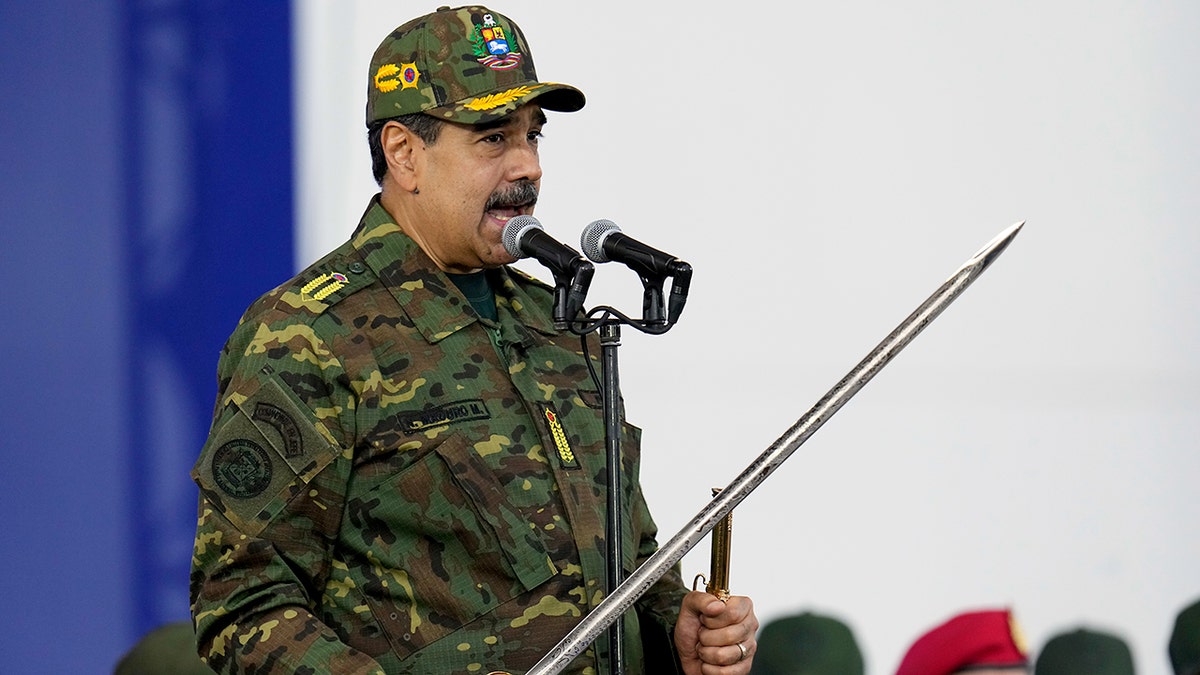
Venezuelan leader Nicolás Maduro brandishes a sword said to have belonged to independence hero Simon Bolivar during a civic-military event at the military academy in Caracas, Venezuela, Tuesday, Nov. 25, 2025. (Ariana Cubillos/AP Photo)
On Sunday, Trump confirmed that he spoke to Maduro over the phone last week, after the New York Times reported that the two had talked, but declined to provide specifics on what they discussed. However, The Miami Herald reported on Sunday that Trump gave Maduro an ultimatum, guaranteeing the Venezuelan leader and his family safety — if he resigned immediately.
The White House did not provide comment when asked if the Trump administration is pushing a regime change, and whether Maduro had been offered any incentives to step down. However, the officials said all options are on the table to mitigate the influx of drugs into the U.S.
“President Trump has been clear in his message to Maduro: stop sending drugs and criminals to our country,” White House spokesperson Anna Kelly said in a statement to Fox News Digital on Tuesday. “The President is prepared to use every element of American power to stop drugs from flooding in to our country.”
The White House did not respond to a request for comment from Fox News Digital on The Miami Herald’s report.
Additionally, the New York Post reported on Tuesday that U.S. officials are discussing potentially sending Maduro to Qatar, although officials familiar with Qatar’s role in the negotiations said Maduro will not head there. It’s unclear where Maduro would flee to, and no countries have confirmed they will accept him.
Trump’s reported negotiation with Maduro comes as the strikes in the Caribbean are facing heightened scrutiny from the legal community and lawmakers.
TRUMP PUSHES PEACE IN EUROPE, PRESSURE IN THE AMERICAS — INSIDE THE TWO-FRONT GAMBLE
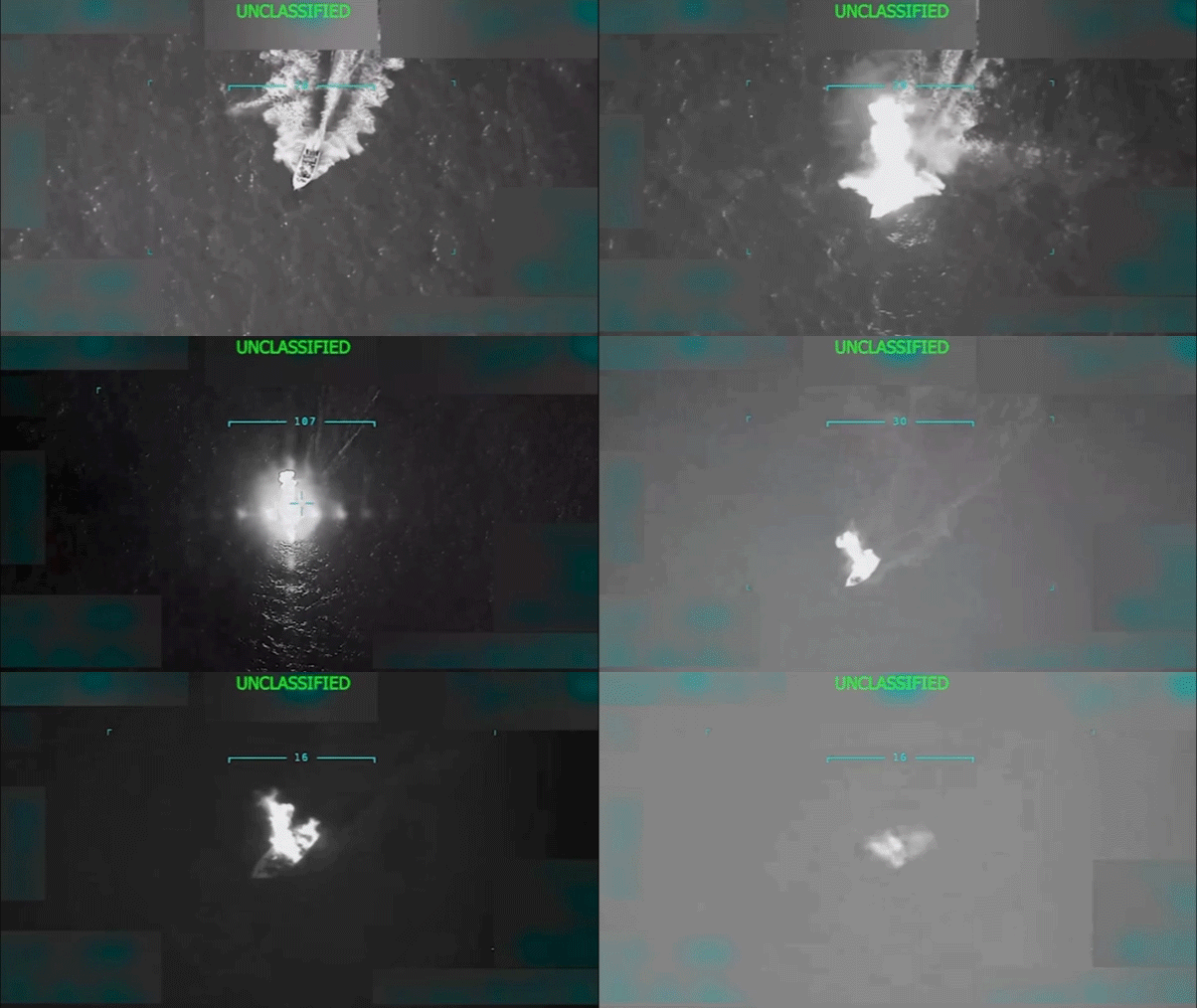
Venezuelan vessel destroyed during U.S. military strike off of Venezuela Sept. 2, 2025. (@realDonaldTrump via Truth Social)
While lawmakers have questioned the legality of the strikes since the beginning, the attacks have come under renewed scrutiny after the Washington Post reported on Friday that Secretary of War Pete Hegseth verbally ordered everyone onboard the alleged drug boat to be killed in a Sept. 2 operation. The Post reported that a second strike was conducted to take out the remaining survivors on the boat.
On Monday, the White House confirmed that a second strike had occurred, but disputed that Hegseth ever gave an initial order to ensure that everyone on board was killed when asked specifically about Hegseth’s instructions.
The White House also said Monday that Hegseth had authorized Adm. Frank “Mitch” Bradley to conduct the strikes, and that Bradley was the one who ordered and directed the second one.
At the time of the Sept. 2 strike, Bradley was serving as the commander of Joint Special Operations Command, which falls under U.S. Special Operations Command. He is now the head of U.S. Special Operations Command.
According to Hegseth, carrying out a subsequent strike on the alleged drug boat was the right call.
“Admiral Bradley made the correct decision to ultimately sink the boat and eliminate the threat,” Hegseth said Tuesday.
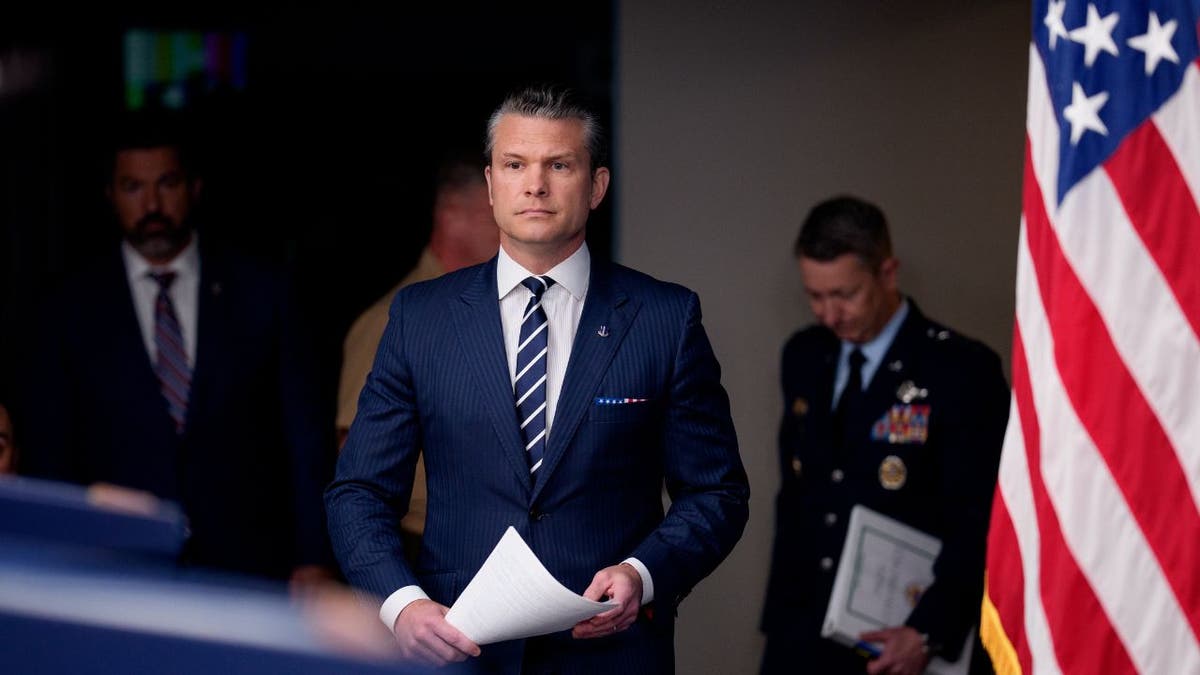
Defense Secretary Pete Hegseth arrives for a news conference at the Pentagon, June 22, 2025, in Arlington, Virginia. (Andrew Harnik/Getty Images)
Altogether, the Trump administration has conducted more than 20 strikes against alleged drug boats in Latin American waters, and has enhanced its military presence in the Caribbean to align with Trump’s goal to crack down on drugs entering the U.S.
CLICK HERE TO DOWNLOAD THE FOX NEWS APP
The last confirmed strike occurred on Nov. 15. Hegseth said Tuesday that although there has been a pause in strikes in the Caribbean because alleged drug boats are becoming harder to find, the Trump administration’s crusade against drugs will continue.
“We’ve only just begun striking narco-boats and putting narco-terrorists at the bottom of the ocean because they’ve been poisoning the American people,” Hegseth said Tuesday.
Subscribe to George Magazine and unlock exclusive bonuses. Your subscription now includes a free crypto essentials guide and three premium downloadable images. These images are perfect for personal use as desktop or mobile backgrounds, with thumbnail previews shown below.
Discount Applied Successfully!
Your savings have been added to the cart.