
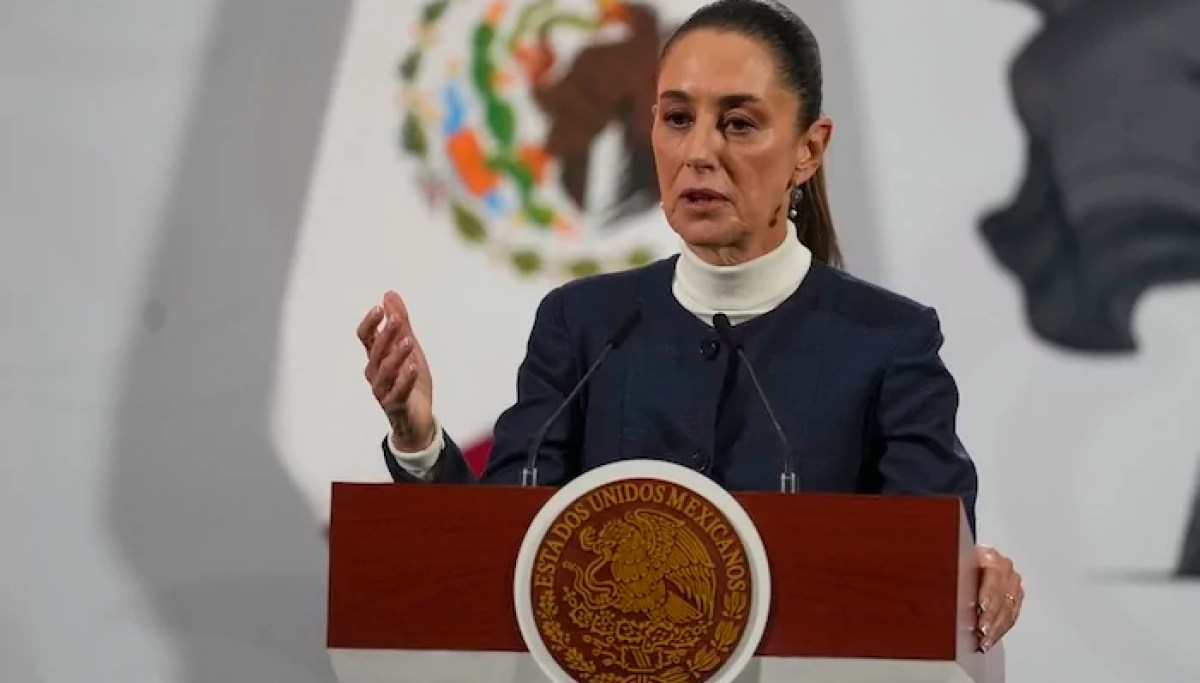
President Donald Trump said on Thursday he held a “very productive” phone conversation with Mexican President Claudia Sheinbaum.
Trump said in a Truth Social post that the conversation focused on border security, drug trafficking, and trade.
In the post, Trump said the call “went extremely well for both Countries” and pledged further discussion and meetings in each nation.
He described Sheinbaum as a “wonderful and highly intelligent Leader,” issuing a positive tone on what has been a complex diplomatic dynamic since he returned to the White House.
Sheinbaum, Mexico’s first female president, also characterized the exchange as “productive and cordial” on X, noting that their teams would continue to work together on trade and security issues.
The exchange reflects an evolving relationship with Mexico under Trump’s second term.
The Trump administration has repeatedly emphasized “law-and-order” approaches to cross-border challenges, particularly focusing on drug flow into the U.S.
His comments come as the Department of Justice pursues a high-profile case against Ryan Wedding, a former Canadian Olympic snowboarder turned alleged drug kingpin who was caught in Mexico.
Wedding was arrested after Mexican security forces were closing in on his cartel activity. He was extradited to the U.S. to face charges alleging he ran a multinational cocaine trafficking network with ties to Mexico’s Sinaloa Cartel and oversaw murders tied to the enterprise, prosecutors said.
The Wedding case has drawn intense media attention in both countries.
Sheinbaum has stressed that Wedding’s surrender to authorities was a matter of Mexican law enforcement procedures and has disputed narratives that U.S. law enforcement conducted the independent operations on Mexican soil.
The Wall Street Journal said a covert FBI operation was involved and meant to be kept private, as Mexico’s laws ban foreign agencies from operating on Mexican soil.
Mexico has been toeing the line on relations with the U.S., at times pushing back on U.S. demands that it perceives as threatening Mexican sovereignty, and at other times following its lead.
Mexico recently stopped oil shipments to Cuba, a move that was seen as supportive of the Trump administration’s efforts to strangle supply to the country in its mission to see leadership change there. The White House praised Sheinbaum’s decision to halt the shipments, though the Mexican president denied it had to do with the U.S.’s position.
Cuba’s oil supply came primarily from Venezuela and Mexico. After the Trump administration captured former dictator Nicolas Maduro and installed his vice president as interim leader, it forced Venezuela to end its long-standing agreement with Cuba and stop supplying it with oil.
PROSPECT OF STRIKE ON IRAN SENDS OIL PRICES SOARING
However, Mexico hasn’t given in to every pressure from its northern neighbor. Sheinbaum has rejected proposals for military involvement on Mexican soil against cartel groups and emphasized that security cooperation must work within Mexico’s national legal context.
In efforts to appease Trump, Mexico transferred 37 cartel members to avoid Trump’s threats of land strikes. Mexico has made three such transfers with a total of 99 cartel members extradited.
The U.S. and Mexico are deeply integrated economically. Mexico is one of the U.S.’s largest trading partners under the United States-Mexico-Canada Agreement, and billions of dollars in goods flow across the shared border annually.




Discount Applied Successfully!
Your savings have been added to the cart.