-
×
 GEORGE Magazine, Issue 39, HARDCOVER Collector’s Edition
1 × $175.00
GEORGE Magazine, Issue 39, HARDCOVER Collector’s Edition
1 × $175.00 -
×
GEORGE Magazine, Issue 39
1 × $35.00
Subtotal: $210.00

 GEORGE Magazine, Issue 39, HARDCOVER Collector’s Edition
1 × $175.00
GEORGE Magazine, Issue 39, HARDCOVER Collector’s Edition
1 × $175.00  GEORGE Magazine, Issue 39
1 × $35.00
GEORGE Magazine, Issue 39
1 × $35.00 Subtotal: $210.00
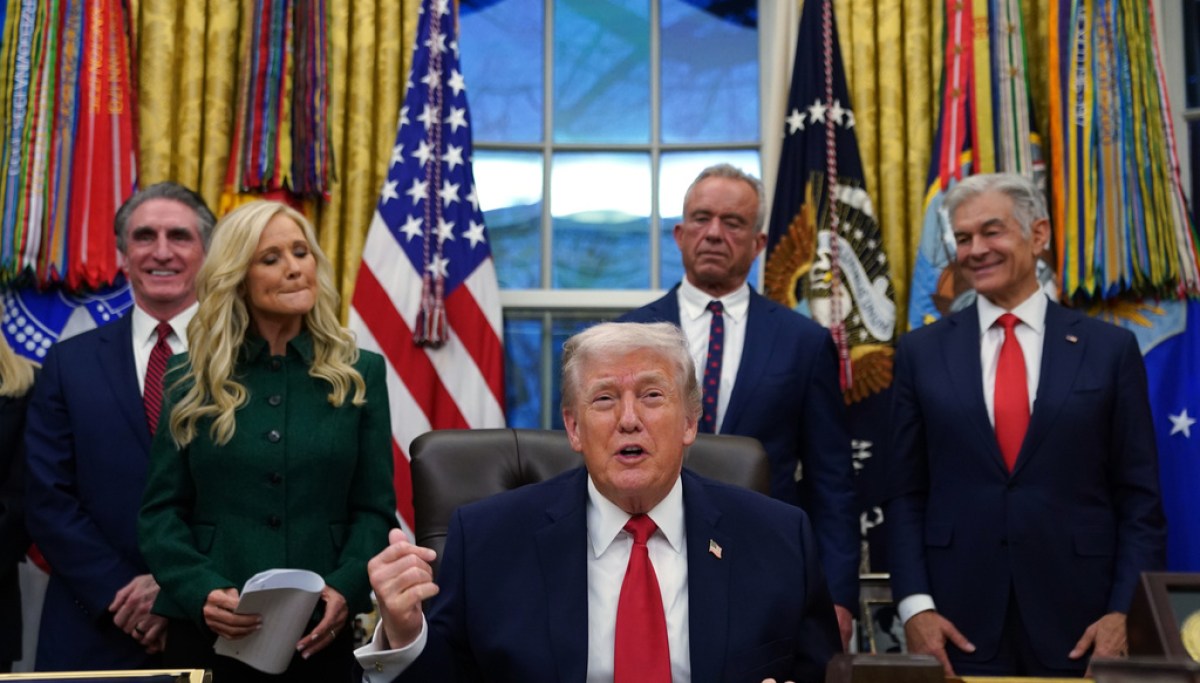
Addiction recovery advocates are wary that President Donald Trump’s plan for addressing the substance abuse epidemic in the United States won’t sufficiently help the problem without action from Congress and a boost in funding for addiction treatment nationwide.
Trump signed an executive order on Thursday creating the Great American Recovery Initiative, an intergovernmental task force aimed at addressing demand-side factors fueling America’s drug and alcohol epidemic, but the move was met with a degree of skepticism from the advocacy community.
As of 2024, 48.5 million people over age 12 suffered from some sort of substance abuse disorder, nearly 17% of the total U.S. population.
More than 28 million people reported battling drug use disorder, with 1 in 6 of them saying they also struggle with alcohol abuse. Another 27.9 million live with alcohol use disorder.
Trump’s executive order acknowledges that very few of the public actually receive treatment for their substance abuse disorder despite breakthroughs in medicine and psychology to assist in recovery.
The initiative’s task force, led by Health and Human Services Secretary Robert F. Kennedy Jr., represents a whole-of-government approach to drive innovation in addiction recovery and spread awareness to reduce stigma.
Kennedy, a recovering heroin addict, told Fox and Friends on Friday that he also lost his brother and two nieces to substance abuse disorder.
Kathryn Burgum, wife of Interior Secretary Doug Burgum and Trump’s newly appointed adviser for addiction recovery working alongside Kennedy, is also a recovering alcoholic, who started abusing alcohol as a teenager.
Addiction recovery advocates are not wholly optimistic about the executive action without substantive commitments of federal funding to increase access to treatment.
Dr. Stephen Taylor, president of the American Society of Addiction Medicine, applauded the administration’s decision to address addiction as a chronic disease, but said it ultimately needed to be backed by sufficient expansion of Medicaid and Medicare coverage “to address the full continuum of addiction care.”
Keith Humphreys, a professor of psychology specializing in addiction at Stanford University, told the Washington Examiner the GOP’s reduction of Medicaid spending by $1 trillion over the next 10 years, as part of their spending bill last summer, will undermine any stated goals from the administration to help people struggling with addiction.
“The biggest payer for addiction treatment, Medicaid, is going to endure historic cuts under the Administration’s One Big Beautiful Bill Act,” Humphreys said. “The noble aspirations expressed in the Executive Order thus lack the funding to be realized.”
Taylor’s ASAM statement also noted the One Big Beautiful Bill Act’s Medicaid work requirements could jeopardize access to addiction treatment. Taylor said the Centers for Medicare and Medicaid Services ought to take special care in implementing the work requirements come January 2027 so as not to cut patients off from critical services.
Erin DeLullo, an advocate on the front lines of the opioid crisis in West Virginia, told the Washington Examiner she is wary of the Trump administration following their abrupt cancellation of $2 billion in funding for the Substance Abuse and Mental Health Services Administration, which was promptly reinstated after public outcry.
“What we need are leaders willing to commit to a consistent, coherent strategy to address the addiction and drugs epidemic,” DeLullo said.
Dr. Jeff Singer, a medical doctor and health policy expert for the libertarian Cato Institute, wrote in an op-ed on Friday that another central problem with the initiative is the administration’s framing of addiction as a chronic disease, akin to diabetes.
He says the biomedical research indicates all addiction is a neuropsychological condition of compulsive behavior, despite negative consequences, exacerbated by comorbidities such as autism spectrum disorder, obsessive-compulsive disorder, ADHD, and PTSD.
From the policy side, Singer said one of the main problems with opioid addiction treatment in particular is the Drug Enforcement Administration’s involvement in sanctioning opioid treatment programs for methadone, requiring people to visit a clinic daily instead of getting a prescription from a physician.
Only about 600,000 people in the U.S. were treated with methadone in 2026, despite 8 million people over age 12 meeting the criteria for the treatment protocol.
Singer said Congress ought to resurrect the Modernizing Opioid Treatment Access Act of 2023, a bipartisan piece of legislation that would have increased access to methadone by allowing patients to get treatment from board-certified specialists in addition to traditional clinics. The bill has not been reintroduced this session.
Taylor told the Washington Examiner that as a clinician, he hopes the Trump administration’s focus on recovery will spur Congress to act.
“Congress holds the power to meaningfully strengthen access to evidence-based addiction care,” he said. “The administration’s focus on demand-side interventions should compel federal lawmakers to finally pass key legislation that continues to improve access to addiction treatment — one of the initiative’s stated goals.”



![Enjoy the [Road] Show Travel Mug with Handle, 14ozEnjoy the [Road] Show Travel Mug with Handle, 14oz](https://georgemagazine.com/wp-content/uploads/2024/08/479070202831754764_2048-300x300.jpeg)
Discount Applied Successfully!
Your savings have been added to the cart.