

President Donald Trump’s push to reopen the Strait of Hormuz is beginning to gain steam, as a stream of allies respond coolly to his demands to help secure the key waterway from Iranian control.
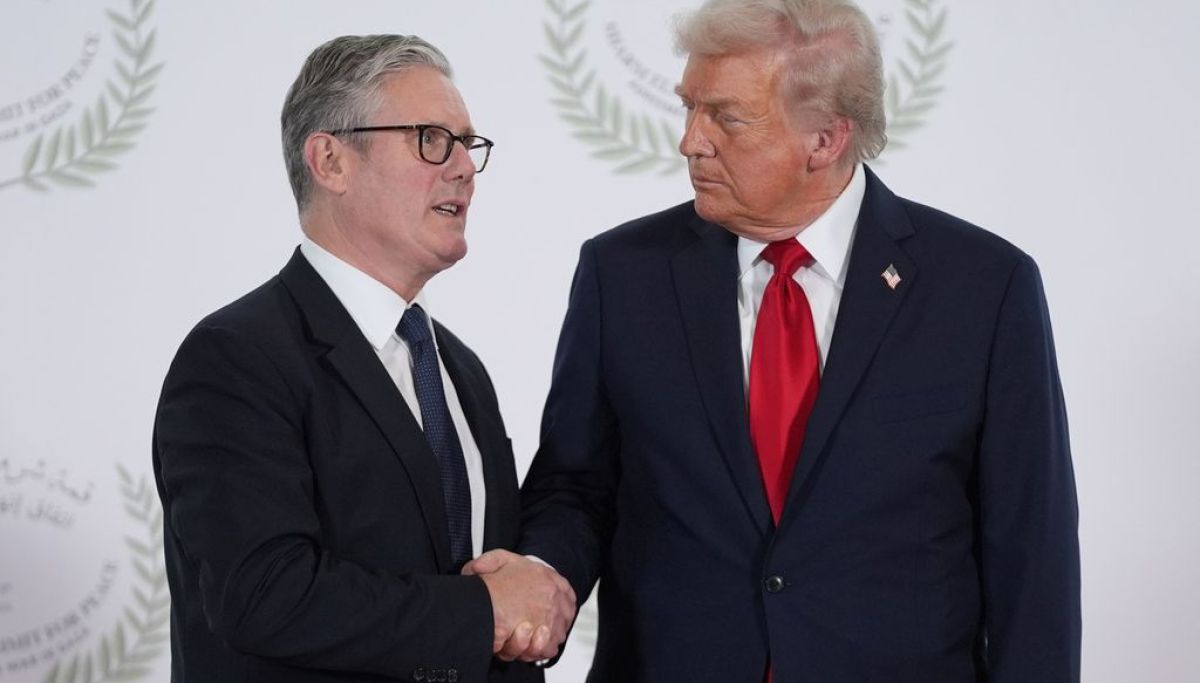
British Prime Minister Keir Starmer held a call with Trump on the matter over the weekend. At a Monday press conference, Starmer announced that his country is working on a “viable plan” to reopen the strait, which has been choked by the Iran war, to “ensure stability in the markets.”
French President Emmanuel Macron reiterated Sunday that “freedom of navigation” in the strait must be restored “as soon as possible.” Roughly one week ago, Macron deployed nearly a dozen warships to the Middle East and suggested some of them could be used as an international force that could be used to help reopen the strait and escort vessels safely through the waterway, but only once the “most intense phase” of the U.S.-Israeli war on Iran has concluded. Over the weekend, the French Foreign Ministry maintained that the force is not yet headed to the strait, and emphasized that its posture remains purely “defensive.”
Germany has been among the most skeptical of U.S. demands to help reopen the strait, particularly of Trump’s push for NATO involvement. “This war has nothing to do with NATO. It is not NATO’s war,” German Chancellor Friedrich Merz’s office said Monday, after Trump said NATO members could face a “very bad future” if they don’t contribute to an international force. “Participation has not been considered before this war and is not being considered now,” the prime minister’s office continued, in a statement backed by German Foreign Minister Johann Wadephul.
However, the European Union nudged Germany to get on board with an international coalition to secure the strait. EU foreign policy chief Kaja Kallas said Monday she had spoken to United Nations Secretary-General António Guterres about the waterway. When pressed on Germany’s tepid response, she replied, “Of course, we need to also have the member states on board.”
“If the member states say that we are not doing anything with this, then of course it’s their decision, but we have to discuss how we help to keep the Strait of Hormuz open,” she said. “It is in our interest to keep the Strait of Hormuz open, and that’s why we are also discussing what we can do in this regard from the European side.”
The developments come after Trump called on allies on Saturday to send warships to the strait, which is a global oil shipping outlet and critical for energy security. China, France, Japan, the United Kingdom, and South Korea were among the countries the president referenced.
South Korea said over the weekend it would examine Trump’s call to join the “team effort, promising “communicate closely with the U.S. regarding this matter and make a decision after careful review.” Japan cautioned that the threshold for deploying naval forces is “extremely high.” Takayuki Kobayashi, policy chief of the ruling Liberal Democratic Party, said the plan would face “high hurdles” in comments to Japanese public broadcaster NHK on Sunday.
China has been largely silent on the matter. After Trump threatened to delay his summit with Chinese President Xi Jinping, China said it was “maintaining communication” with the U.S. The administration said the possible trip delay was unrelated to the strait reopening.
“Head‑of‑state diplomacy plays an irreplaceable strategic guiding role in China–U.S. relations,” Chinese foreign ministry spokesman Lin Jian told reporters, ahead of Trump’s anticipated March 31 summit. “China and the United States are maintaining communication regarding President Trump’s visit to China.”
On the Strait of Hormuz, Lin said China “once again calls on all parties to immediately cease military actions, avoid further escalation of tensions, and prevent regional instability from having a greater impact on global economic development.”
Iran effectively closed the strait in the Persian Gulf after the U.S. and Israel launched military operations against Tehran on Feb. 28. The move held massive repercussions for global energy supply, marking the largest oil disruption in history.
TRUMP TALKS WITH STARMER AS HE TRIES TO LURE COUNTRIES TO HELP REOPEN STRAIT OF HORMUZ
Iran said on Monday that the Strait of Hormuz is “not closed,” but is operating under “special conditions.”
“Parties not involved in the military aggression against Iran have been able to pass through the Strait of Hormuz in coordination with and with permission from our armed forces,” Iranian foreign ministry spokesman Esmaeil Baghaei.




Discount Applied Successfully!
Your savings have been added to the cart.