I still remember the morning of February 28, 2026.One of those half-awake, grab-your-phone moments… and instantly regretting it.Headlines everywhere: U.S.-Israeli strikes on Iran.Then I checked Bitcoin.


By Avery Knox
I still remember the morning of February 28, 2026.One of those half-awake, grab-your-phone moments… and instantly regretting it.Headlines everywhere: U.S.-Israeli strikes on Iran.Then I checked Bitcoin.
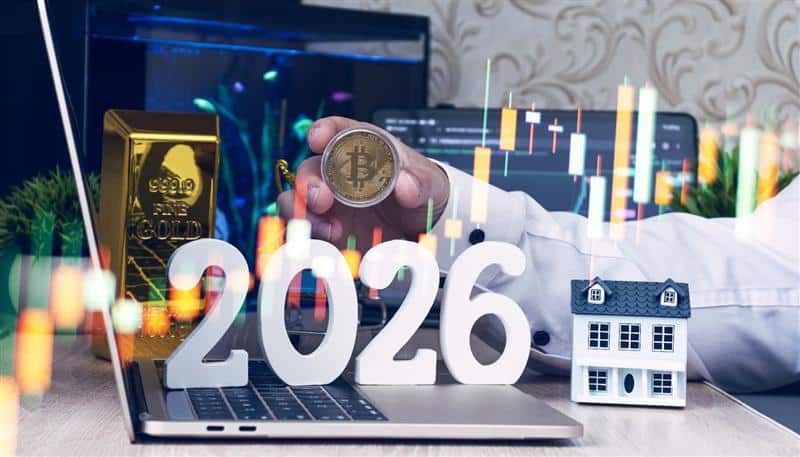
Down hard. From $72,000 to nearly $63,000 in hours. Liquidity? Gone. Order books looked like a ghost town. And here’s what most people missed: this wasn’t retail panic. These were institutional-sized orders hitting the market with precision.
Real talk – that distinction matters more than the price itself.
Because it tells you why markets move the way they do during geopolitical shocks. And if you don’t understand that, you’ll keep reacting at exactly the wrong time.
Let’s get one thing straight: this wasn’t just a crypto story.
Oil surged 11.5% almost immediately, with traders pricing in worst-case scenarios around the Strait of Hormuz – a route responsible for roughly 20% of global seaborne oil supply. Meanwhile, the S&P 500 and Nasdaq dropped close to 1%. Bitcoin saw over $300 million in liquidations in a single session.
Here’s the kicker: all of this happened simultaneously.
Not in sequence. Not in stages. Together.
That’s your first clue about what crypto has become in 2026.
According to the IMF, every sustained 10% increase in oil prices adds about 40 basis points to global inflation and cuts 0.1–0.2% from global output. Gita Gopinath went even further – if oil averages $85 through 2026, global growth could drop by 0.3–0.4 percentage points.
That’s not abstract macro theory. That’s a direct pipeline from war → oil → inflation → monetary policy → crypto.
Bitcoin isn’t operating on an island anymore. It’s plugged into the same system as everything else. And when that system takes a hit, crypto doesn’t sit it out.
The “digital gold” narrative gets thrown around so casually it’s almost meaningless now.
So let’s ignore the narrative and look at what actually happened.
Yes – Bitcoin dropped roughly 12% immediately after the strikes.
But within 48 hours? It rebounded about 9%. By mid-March, it was trading above $74,000 again.
Gold didn’t exactly shine in comparison. Its movement was volatile and far less convincing as a hedge.
Bernstein analyst Gautam Chhugani put it bluntly:
“Bitcoin and crypto markets have appeared robust in light of the Middle East turmoil, outperforming both gold and stock indices.”
That’s not hype. That’s performance.
And it lines up with something I’ve learned the hard way over multiple cycles: Bitcoin doesn’t behave like a safe haven at the moment of impact. It behaves like one after the dust starts settling.
A 2026 Economic Modelling study confirms this – Bitcoin underperforms during the initial shock phase but shows meaningful hedging behavior during recovery and consolidation.
So is Bitcoin a safe haven?
Here’s my answer: it’s becoming one. But it earns that title after chaos, not during it.
This is where things get expensive.
When geopolitical shocks hit, institutional portfolios don’t “think” – they execute. Risk models trigger automatic deleveraging. Liquid assets get sold fast.
And Bitcoin? It’s one of the most liquid assets in the world.
So it drops.
Not because it’s weak. Because it’s sellable.
Then comes the part most retail investors consistently get backwards.
Institutions start buying again.
In early March 2026, over $458 million flowed into spot Bitcoin ETFs in a single day. BlackRock’s IBIT absorbed the majority. CoinShares reported $303 million in inflows for the week of March 20, followed by $230 million the next week – with Bitcoin accounting for $219 million.
Meanwhile, retail investors? Still reacting to the drop.
I’ve made this mistake myself back in earlier cycles – selling into fear, only to watch smart money quietly re-enter.
Expensive lesson.
If you’re reading this, you’re probably wrestling with some version of this question:
Is Bitcoin actually a hedge… or just another risk asset waiting to drop again?
And more importantly:
What am I supposed to do with that information right now?
Because 2026 isn’t a simple market anymore. Bitcoin reacts to oil. To Fed policy. To war. To institutional flows. Sometimes all at once.
That complexity is what’s freezing people.
And hesitation? In markets like this, it costs more than being wrong.
Here’s the clean takeaway from everything we just walked through:
The numbers don’t lie.
But they also don’t tell you what to do.
That’s where most people get stuck.
In Part 2, I’ll break down exactly how to evaluate Bitcoin in this kind of environment – including:
Because understanding the market is one thing.
Positioning yourself inside it? That’s the part that actually matters.
About This Series:
This 3-part breakdown cuts through the noise around Bitcoin, geopolitics, and macro uncertainty in 2026 – giving you a clear framework for deciding, allocating, and managing risk in a market that’s changing fast.
References:
Bloomberg. (2026). Bitcoin gains as Iran war driven volatility hits oil and stocks.
https://www.bloomberg.com/news/articles/2026-03-10/bitcoin-jumps-back-above-70-000-as-iran-war-worries-ease
CNBC. (2026). Why the coming weeks in the Iran war are pivotal for the U.S. economy.
https://www.cnbc.com/video/2026/03/28/the-coming-weeks-in-the-iran-war-are-crucial-for-the-us-economy.html
Forbes Digital Assets. (2026). Bitcoin suddenly braced for a massive price shock.
https://www.forbes.com/sites/digital-assets/2026/03/01/bitcoin-suddenly-plunges-as-markets-brace-for-iran-war-price-crash/
International Monetary Fund (IMF). (2026). Coping and thriving in a fluid world.
https://www.imf.org/en/news/articles/2026/03/09/sp030926-coping-and-thriving-in-a-fluid-world
Reuters / IMF. (2026). Energy prices, inflation, and global growth.
https://www.reuters.com/world/imf-says-prolonged-increase-energy-prices-could-boost-inflation-lower-growth-2026-03-19/
Yahoo Finance / Bernstein. (2026). Bitcoin shows resilience amid Iran war.
https://finance.yahoo.com/news/bitcoin-shows-resilience-amid-iran-war-outshines-gold-and-stocks-173729098.html
Yahoo Finance. (2026). Bitcoin behaving like a safe haven.
https://finance.yahoo.com/news/bitcoin-behaving-safe-haven-why-175154080.html
Investing.com. (2026). Bitcoin ETF inflows return.
https://www.investing.com/analysis/these-bitcoin-etfs-are-seeing-inflows-for-the-first-time-in-months-200677104
CoinShares. (2026). Digital asset fund flows reports.
https://coinshares.com/insights/research-data/fund-flows-23-03-26/
ScienceDirect (Economic Modelling). (2026). Safe-haven properties of Bitcoin.
https://www.sciencedirect.com/science/article/abs/pii/S0313592626000469


Subscribe to George Magazine and unlock exclusive bonuses. Your subscription now includes a free crypto essentials guide and three premium downloadable images. These images are perfect for personal use as desktop or mobile backgrounds, with thumbnail previews shown below.




Discount Applied Successfully!
Your savings have been added to the cart.