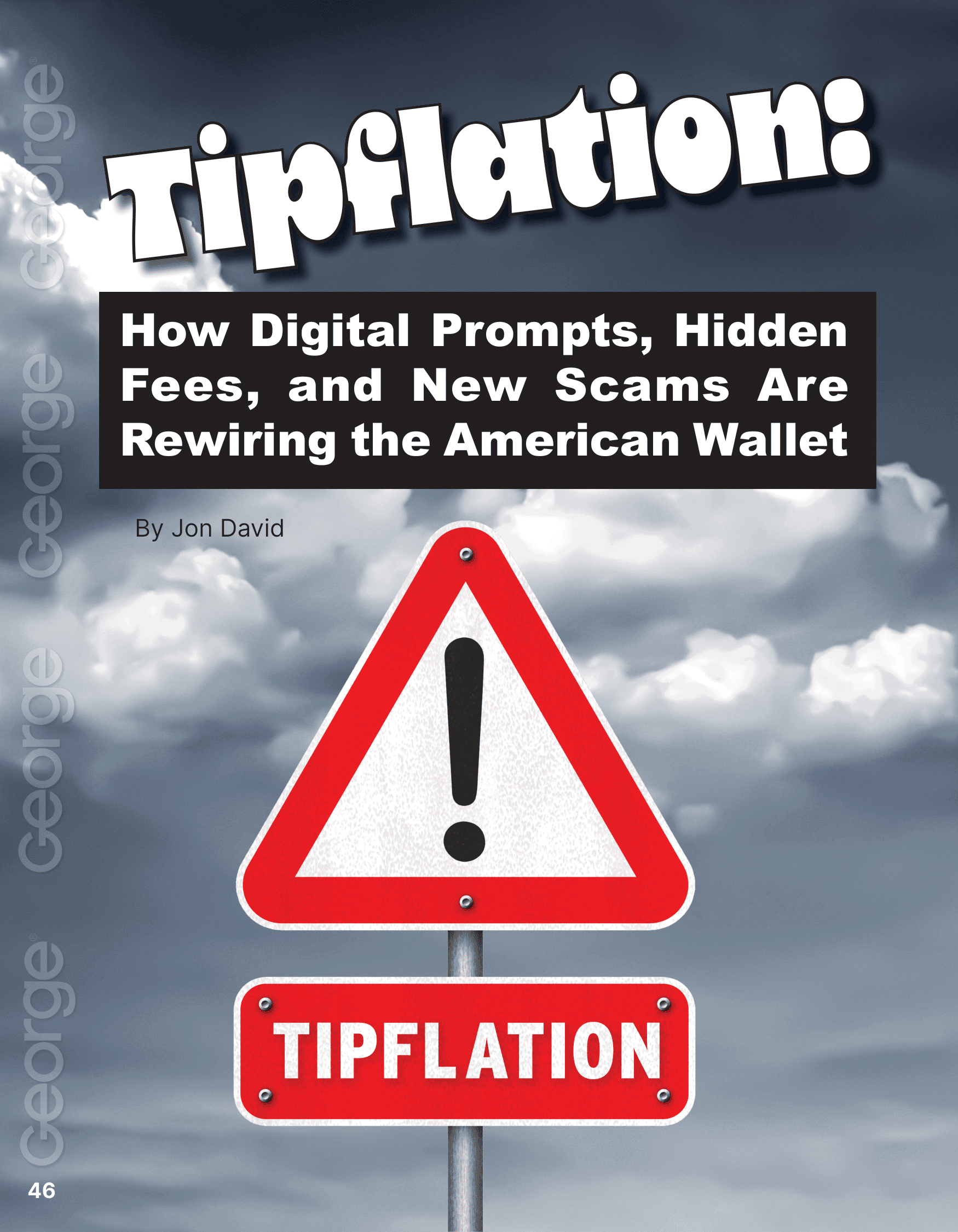
This article unpacks the rise of tipflation, the psychology behind it, and the latest scams…including a viral case where a credit‑card reader inflated tip amounts far beyond the percentages selected. The result is a landscape where consumers feel cornered, confused, and sometimes deceived.
The Rise of Tipflation: From Gratitude to Obligation
The explosion of digital point‑of‑sale (POS) systems during and after the pandemic fundamentally changed tipping culture. What was once a voluntary gesture has become a default expectation. As one analysis notes, customers are now confronted with tip screens “even when no traditional service has been provided,” a trend often referred to as tip creep or tipflation!
These screens are not neutral. They are engineered to influence behavior:
- Forced decision-making: You must actively choose “no tip” to complete the transaction…turning a passive non-action into a socially uncomfortable moment.
- Anchoring: Suggested tips often start at 18–20%, making lower tips feel inadequate.
- Social pressure: The cashier is watching, and the screen is turned toward you like a spotlight.
This combination has created what many consumers describe as tipping fatigue. According to surveys, Americans increasingly resent the ubiquity of tip prompts and the sense that tipping is no longer tied to service quality but to interface design.
The New Frontier: Tip Scams and Manipulated Interfaces
While tipflation itself is controversial, the newest wave of concern involves tip scams…instances where digital systems misrepresent tip percentages or hide fees in ways that mislead customers.
The Viral “You Tipped More Than You Think” Scam
In 2024, a video went viral showing a credit‑card reader that displayed tip percentages…15%, 18%, 20%, 25%…but calculated the actual dollar amounts incorrectly. On a $27 bill:
- A 15% tip should have been $4.05, but the machine displayed $6.22.
- An 18% tip should have been $4.86, but the machine displayed $7.47.
Every percentage was inflated, sometimes by more than 50%. The customer, Instagram user @big_beau7, called it a scam waiting for a class‑action lawsuit. Commenters noted that the device claimed tips were calculated “after tax and before discounts,” but even that didn’t fully explain the discrepancies. The incident sparked widespread concern about how many consumers may be unknowingly over‑tipping due to opaque or misleading POS design
Fast‑Moving Tip Prompts Designed to Trick You
Another viral clip showed POS screens that present large, brightly colored tip buttons…while hiding “custom tip” or “no tip” options in small, low‑contrast text. Critics argue these systems are intentionally designed to steer customers toward higher tips by exploiting behavioral shortcuts. The quickest path is the most expensive one.
This design tactic has fueled public outrage, with many calling it manipulative and deceptive. It’s part of a broader pattern of “dark patterns” in digital interfaces…design choices that nudge users toward actions they might not otherwise take.
Hidden Fees Masquerading as Tips
Some restaurants have begun adding ambiguous fees…such as “employee health insurance fee” or “concession and franchise fee”…that appear alongside tip lines. Customers often mistake these for gratuities or assume they benefit workers. In reality, these fees may go directly to the business, not the staff.
A viral Las Vegas example showed a handheld card reader that displayed only the total amount before payment. Only after printing the receipt did the customer discover an added fee that had nothing to do with tipping. Consumer advocates warn that such opacity can lead to accidental double tipping or paying charges customers never agreed to.
Psychology at the Checkout: Why These Scams Work
Digital tipping systems leverage several well‑documented psychological principles:
- Anchoring: High default percentages reset expectations.
- Social pressure: The presence of an employee increases compliance.
- Choice architecture: “No tip” is often hidden or requires extra steps.
- Speed pressure: Fast‑moving lines push customers to tap quickly without reviewing details.
These tactics blur the line between suggestion and coercion. As one analysis notes, the digital tip screen “forces a decision,” turning what used to be a private choice into a public performance.
The Starbucks $4,444 Tip Fiasco: When Errors Become Catastrophic
Not all tipping disasters are intentional scams…some are catastrophic errors. In one widely reported case, an Oklahoma couple was charged a $4,444 tip on a $10 Starbucks order due to a digital input mistake. The couple’s bank later rejected Starbucks’ reimbursement checks, forcing them to cancel a long‑planned international trip. The incident highlighted how vulnerable consumers are when digital tipping systems malfunction…and how difficult it can be to unwind the damage.
Why Tipflation Feels Like a Breaking Point
Several forces are converging:
- Economic pressure: With inflation and rising costs, consumers feel squeezed.
- Cultural confusion: Tipping norms are expanding faster than etiquette can keep up.
- Technological opacity: Digital systems hide calculations and fees.
- Erosion of trust: Viral scams and errors make consumers suspicious of every screen.
Surveys show that 66% of Americans now have a negative view of tipping culture, and many feel it has spiraled out of control. Even major brands like Domino’s have acknowledged the backlash, launching promotions that “tip customers back” to ease frustration.
How to Protect Yourself from Tip Scams
Consumers can take several steps to avoid being misled:
- Always check the actual dollar amount, not just the percentage.
- Ask for a printed receipt before finalizing payment.
- Avoid tipping on tax unless you choose to.
- Watch for hidden fees that appear only after payment.
- Use custom tip options when preset buttons seem inflated.
- Slow down…don’t let the line pressure you into tapping too quickly.
The Future of Tipping: Reform or Escalation?
Tipflation shows no signs of slowing. As digital payment systems become more sophisticated, so do the psychological and technical tools used to influence consumer behavior. Without clearer regulations, transparency standards, or industry norms, tipping may continue drifting into a gray zone where generosity, guilt, and deception collide.
But public backlash is growing. Viral videos, consumer advocacy, and media scrutiny are pushing businesses to rethink their practices. Whether this leads to reform…or simply more subtle forms of manipulation…remains to be seen.
For now, the best defense is awareness. In a world where every screen asks for a tip, understanding how these systems work is the first step toward taking back control of your wallet.
References & Citations
- “The Checkout Conundrum: The Problem with Tipping at the Point of Sale.” Stop‑Tipping.org. https://stop-tipping.org/tipping-at-the-point-of-sale/
- “Hidden fees and tip prompts spark outrage.” https://www.msn.com/en-us/news/other/hidden-fees-and-tip-prompts-spark-outrage/gm-GM6D9A4606
- “This Tipping Scam Makes You Tip More Than You Think You Are.” https://www.delish.com/food-news/a60648119/higher-tip-scam/
- “Starbucks Has Finally Responded to the $4,000 Tipping Fiasco.” https://www.thedailymeal.com/1197787/starbucks-has-finally-responded-to-the-4000-tipping-fiasco/