

New York Yankees President Randy Levine, Vice Chair of ‘Saving College Sports’ Board, joins Brian Kilmeade to break down the ‘Wild West’ of college sports. Levine highlights the escalating issues of name, image, and likeness (NIL) deals, the chaotic transfer portal, and athlete eligibility impacting student-athletes. He details the financial strain on universities and President Trump’s efforts to find legislative solutions, hoping for a bipartisan fix within 90 days.
The future of college football is once again up for debate, with prominent voices from major conferences and teams giving their opinions on NIL as the federal government works through potential legislation to regulate the sport.
Wednesday provided an opportunity for one of college football’s most important figures, former Alabama Crimson Tide head coach Nick Saban, to give Congress his thoughts directly. Saban made several accurate and valuable points about the current direction of the sport and his issues with it.
Namely, that the unlimited transfer portal and “arms race” for spending in major college football are changing the sport. He’s right that the endless transfer system has its flaws, and that spending money on players has dramatically impacted roster construction. But he also brought up a result of NIL that, well, is simply not realistic as to what college football is and has been for decades.
ZERO BS. JUST DAKICH. TAKE THE DON’T @ ME PODCAST ON THE ROAD. DOWNLOAD NOW!
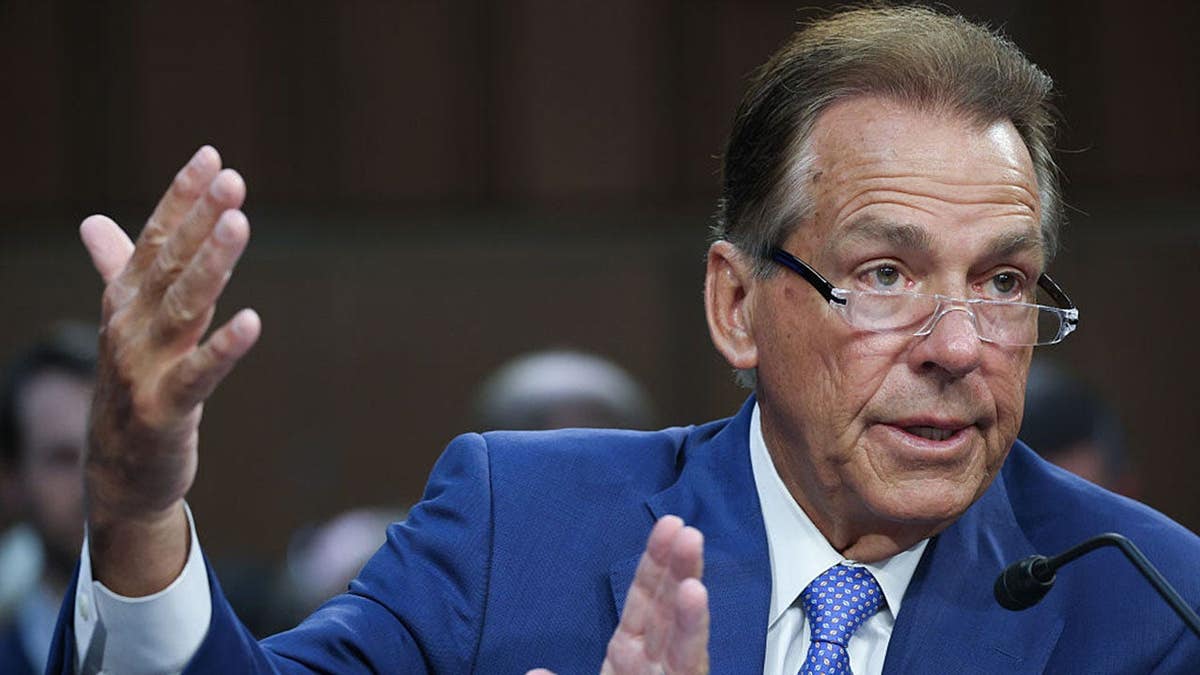
Nick Saban, former head football coach at the University of Alabama, testifies before the Senate Committee on Commerce, Science, and Transportation in Washington, D.C., on June 3, 2026. (Win McNamee/Getty Images)
“That is not the same thing as turning NIL into a pay-for-play system,” he said, referring to allowing players to earn income from their name, image, and likeness. “It is not the same thing as using collectives and outside entities to create a bidding war for recruits and transfers. When the system becomes whoever raises the most money gets the best players, then we are no longer talking about college athletics as millions of fans and I have known it.”
Pete Bevacqua, the current athletic director for the Notre Dame Fighting Irish, said something similar.
“If you continue to have all of your resources pooled into football with escalating roster fees, and not knowing where that ends, I believe the inevitable outcome is there’s going to be a small handful of schools that will differentiate themselves from others and play football at a super league level,” Bevacqua said. “I don’t think it’s good for college football to be a mini-NFL. That’s not the spirit of college football.”
Saban said something similar, lamenting the rapid increase in spending: “Now you have schools that have close to $40 million rosters.” The implication being that smaller schools that can’t match that level of investment won’t be able to compete for championships.
But what Saban, and Bevacqua, fail to realize about college football is that it’s already been this way. In fact, it’s been this way for decades prior to the introduction of NIL.
Let’s look at the list of national champions since 2000. Alabama under Saban won six times. Ohio State has three. Georgia has two titles. LSU has two, three including a shared title in 2003. Florida has two. So does Clemson. USC has two, including 2003. Oklahoma won in 2000. Miami in 2001. Florida State won in 2013, Auburn in 2010, Michigan in 2024, and of course, Indiana in 2025.
See any small schools in there? Ironically, the “smallest” program in the past 25 years to win a championship was…Indiana in the new NIL era.
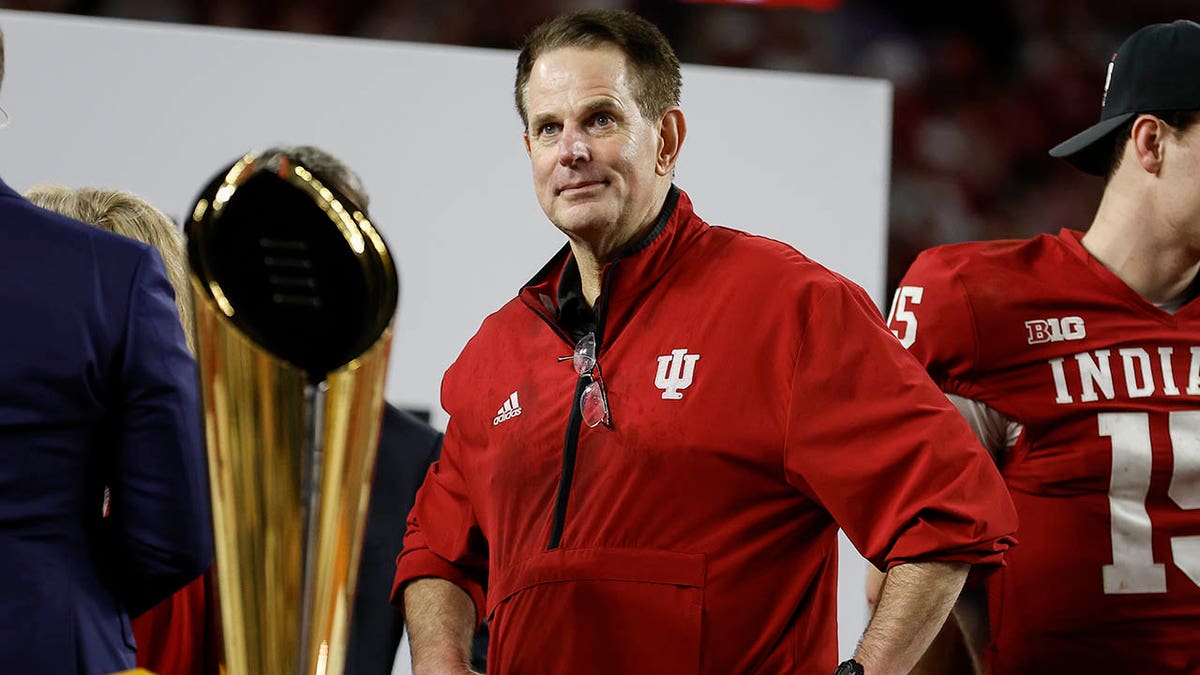
Indiana Hoosiers head coach Curt Cignetti looks on during the College Football Playoff National Championship Game against the Miami Hurricanes at Hard Rock Stadium in Miami Gardens, Fla., on Jan. 19, 2026. (David Rosenblum/Icon Sportswire via Getty Images)
But that’s just since the turn of the century. We can go back much further. Going back as far as 1980, 46 years ago, there’s BYU in 1984 and shared titles for Washington and Colorado in the 1990s. The 1970s were dominated by USC, Notre Dame and Alabama. With some Nebraska and Oklahoma thrown in. Pittsburgh would be the outlier in 1976. 1960s champions included Texas, Ohio State, USC, Notre Dame, Michigan State and Alabama. Minnesota and Ole Miss were shared champions in 1960. 66 years ago. Though, credit to Syracuse, they won in 1959 under the Eisenhower administration.
The broader point here being that depending on how you classify teams, you could point to BYU in 1984, Pittsburgh in 1976 and maybe Colorado as “smaller” programs to win championships. In 66 years. It’s mostly a myth that, as Saban and Bevacqua discuss, NIL is going to push out the lesser teams. And again, Indiana might qualify as the least likely program to win a title in 35-40 years. They did it last season.
NIL, in some ways, has actually become a bit of an equalizer. Saban built a dynasty at Alabama in part because he was able to attract recruits with advantages other teams can’t match. Whether those advantages came from, uh, any type of financial arrangements is up for debate. But what isn’t is that top high schoolers have always wanted to play for the blue blood programs. Alabama, USC, Notre Dame, Texas, Ohio State, Michigan, Georgia, Oklahoma, Miami.
For decades, those teams could tell recruits, “come play for us, you’ll be on national TV, we’ll get you to the NFL, you’ll play in big bowl games,” and they’d generally be right. Now, though, NIL offers teams like Indiana and Texas Tech a quick path to competing at a national level. Obviously, there’s more to it than that, coaching and other factors need to be in place too, but does anyone believe Fernando Mendoza winds up in Bloomington if not for NIL? Or that Texas Tech, in Lubbock, winds up with one of the best defenses in the country without NIL?
OUTKICK IS NOW ON THE FOX APP: CLICK HERE TO DOWNLOAD
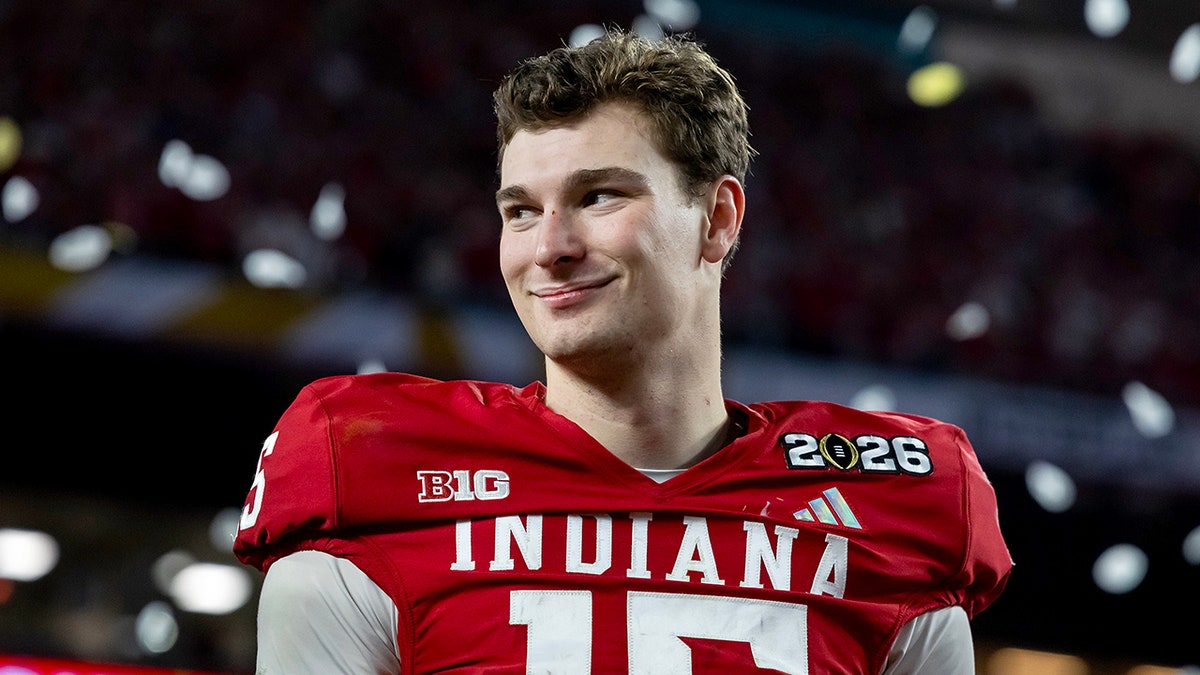
Indiana Hoosiers quarterback Fernando Mendoza celebrates after defeating the Miami Hurricanes in the College Football Playoff National Championship game at Hard Rock Stadium in Miami Gardens, Fla., on Jan. 19, 2026. (Mark J. Rebilas/Imagn Images)
Sure, not every team can compete at the top end of the NIL budget. But Texas had the country’s most expensive roster in 2025, including one of the most hyped, and expensive, quarterbacks in decades, and went 9-3 and missed the playoffs.
College football has a habit of romanticizing the past in ways that don’t match the actual results. NIL is no different. Are there things to be fixed? Absolutely. Will fixing it mean that Rice or Middle Tennessee State wins a championship? Nope. Ironically, the best path forward for programs like that would be a wealthy donor putting money into the program. Just look at Oregon, which was a middle-tier Pac-10 team until Phil Knight got involved. NIL offers the same opportunities, even if coaches and ADs don’t like it.

Discount Applied Successfully!
Your savings have been added to the cart.