

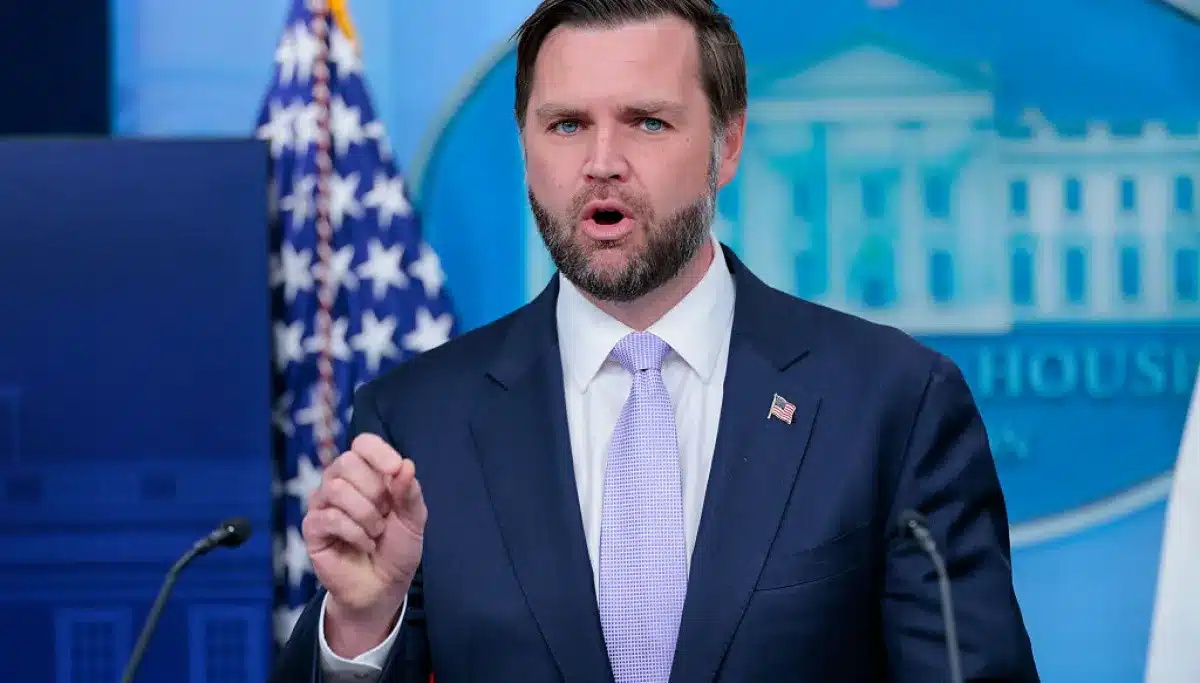
Vice President JD Vance said a 60-day preliminary ceasefire extension between Iran and the United States was signed digitally ahead of in-person meetings to sign the deal in Europe later this week.
“We already signed the deal digitally yesterday,” Vance told ABC’s Good Morning America on Monday about the memorandum of understanding. “And there’s been no money released, and that won’t change.”
A senior U.S. official confirmed that President Donald Trump and Vance signed the MOU, along with Iranian Parliament Speaker Mohammad Bagher Ghalibaf, in a call with reporters Monday morning.
The formal signing of the peace deal is expected to take place on Friday in Geneva, with Vance in attendance on behalf of the U.S.
Comprehensive details about what is included in the deal have not been released, but reports about payments to Iran have sparked controversy. Points of the deal that are public include the U.S. ending its naval blockade of Iran, the reopening of the Strait of Hormuz, and the end of fighting between the nations, including attacks from Israel against Hezbollah in Lebanon. Iran has suggested that half of the $24 billion in frozen assets will be released before the next phase of nuclear negotiations can begin — something the administration denies.
The senior U.S. official said more information about the memorandum would be provided in the next 24 to 48 hours and that the U.S. will maintain its military posture in the region while the technical details of the agreement are hammered out.
“This is a performance-based thing,” Vance said. “If we see the Iranians making, for example, taking action to eliminate their stockpile of enriched material, then yes, sanctions relief will follow. If we see the Iranians taking action to allow the kind of verification regime that we need to see to know that they’re not going to build a nuclear weapon. Yes, sanctions … relief will follow.”
The Trump administration has determined that the deal is a win for the U.S., as the reopening of the Strait of Hormuz will eventually lead to lower oil and gas prices.
Israel has vehemently disagreed with the portion of the deal ending hostilities against Hezbollah in Lebanon, although Vance downplayed questions that Israel could derail the deal before Friday.
ISRAEL SAYS TRUMP’S ORDER TO STOP LEBANON STRIKES A ‘RESOUNDING SLAP IN THE FACE’
“Everything’s going to complicate the deal, as you know, in this region of the world, even a ceasefire, sometimes they’re a little bit dirty,” Vance said. “But what we fundamentally believe is that this is going to be a good deal for the people of Israel, for the people of the gulf, the people of America, and again, potentially for the people of Iran as well.”
It is unclear whether the 60-day extension started on Sunday and when exactly the Strait of Hormuz will open. Trump, who is in France for the G7 summit, previously suggested that the Strait of Hormuz could open on Friday.



Discount Applied Successfully!
Your savings have been added to the cart.