First, Avoid the Three Classic Mistakes
1. Comparing Assets by Unit Price
This is the easiest mistake to eliminate.
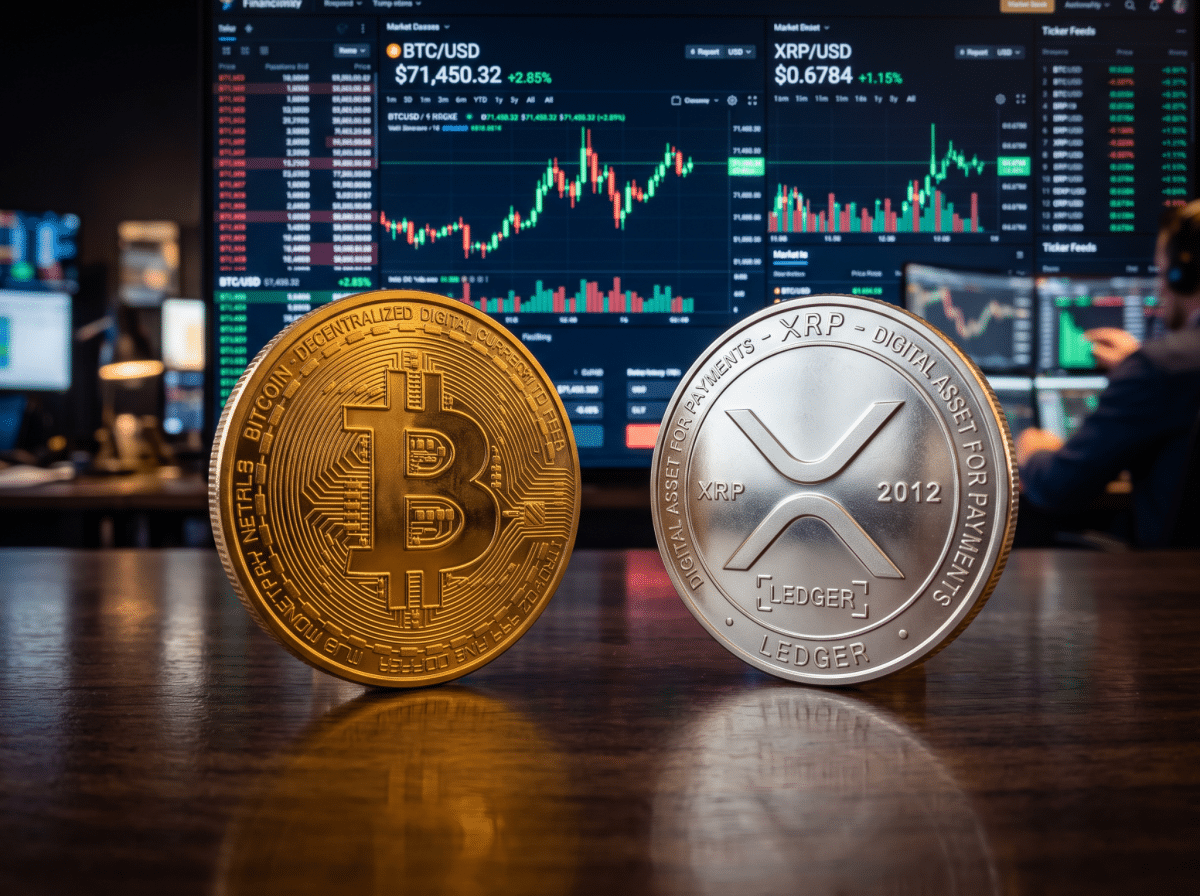
A $1 XRP and a $60,000+ Bitcoin cannot be compared by unit price.
The number on the screen doesn’t tell you whether one asset is “cheaper.” Market capitalization, circulating supply and liquidity are the relevant measures.
If you remember only one thing from this section, remember this: unit price is not valuation.
2. Assuming Partnerships Equal Token Demand
This mistake is particularly important with XRP.
Ripple is a company. XRP is a digital asset. The XRPL is a blockchain.
Those three things are connected, but they aren’t interchangeable.
A major Ripple partnership may demonstrate business development or infrastructure adoption without proving that institutions must acquire and hold XRP.
Follow the chain:
Actual Product Use → Requirement to Hold XRP → Transaction Demand → Real Economic Effect
If the chain breaks, don’t fill the gap with optimism.
3. Assuming Speed Equals Value
Fast and cheap transactions are useful.
But they aren’t the entire investment case.
Long-term network value also involves security, liquidity, regulatory clarity and hard adoption metrics.
Bitcoin’s base-layer architecture and XRPL’s architecture prioritize different characteristics. The right question isn’t which feature sounds better in isolation.
It’s whether those characteristics support the economic thesis you’re relying on.
What Should You Monitor?
If you’re evaluating either network over time, don’t obsess over price alone.
Track whether the original thesis is actually developing.
For Bitcoin, the original article highlights decentralized monetary value, scarcity, security and institutional-grade market structure. The January 2024 approval of spot Bitcoin exchange-traded products provides an important institutional milestone.
For XRP, watch the actual economic activity around the XRPL rather than simply counting Ripple announcements.
Look for evidence involving payment corridors, liquidity requirements, stablecoin activity and developer engagement.
That’s the difference between monitoring a thesis and monitoring a ticker.
Allocation Is a Risk Decision
Here’s where I want to be particularly careful.
The source material establishes different use cases and risk considerations for Bitcoin and XRP, but it does not provide a specific evidence-based percentage allocation for a Bitcoin/XRP portfolio.
So I won’t manufacture one.
There is no defensible “put X% in Bitcoin and Y% in XRP” recommendation contained in the research provided here.
What the material does support is a more useful principle: allocation should follow the thesis and its risk profile rather than the popularity of the asset.
If your thesis depends on decentralized monetary value and scarcity, you are evaluating Bitcoin’s characteristics.
If your thesis depends on rapid settlement, liquidity and cross-border value transfer, you are evaluating XRP and the XRPL.
If you are considering both, understand that you are not simply buying two versions of the same technology.
You’re expressing two different theses.
Risk Management Means Knowing What Would Change Your Mind
This is the part investors often skip.
Before entering a position, identify what evidence would strengthen your thesis-and what evidence would weaken it.
For XRP, for example, don’t automatically treat every Ripple partnership as confirmation. Ask whether it creates actual use of the network and whether that use creates a requirement for XRP.
For Bitcoin, don’t assume institutional adoption eliminates volatility. The original analysis explicitly notes that Bitcoin remains volatile and is not risk-free.
And for both assets, don’t confuse technological capability with guaranteed economic success.
A network can work exactly as designed and still fail to generate the adoption investors expected.
That’s an expensive lesson, but an important one.
The Bigger Picture
Bitcoin and XRP shouldn’t be viewed as identical competitors.
Bitcoin’s proposition is centered on decentralized monetary value, scarcity, security and institutional infrastructure.
XRP is positioned around global liquidity, cross-border settlement and digital asset movement.
That makes the phrase “Bitcoin or XRP?” less useful than it sounds.
A better question is:
“Which network’s design, economics and risk profile actually match the future I’m betting on?”
That question forces you to think beyond price.
Beyond Twitter.
Beyond partnership announcements.
And beyond the seductive idea that the fastest blockchain must automatically be the most valuable.
The crypto market is maturing past the point of treating every digital asset like a shiny lottery ticket. The people who understand the plumbing have a much better framework for evaluating what they’re actually buying.
Your Next Step
Before making an allocation decision, write down three things:
The thesis: What specific problem do you believe this network will solve?
The evidence: What measurable activity proves that the thesis is developing?
The invalidation point: What evidence would make you reconsider the position?
Then monitor those factors instead of letting every price move dictate your thinking.
That’s how you turn crypto research into an actual process.
The goal isn’t to predict which ticker wins.
It’s to understand what you’re buying, why you own it and what would make you change your mind.
The takeaway: Bitcoin and XRP represent different technological and economic propositions. Evaluate them accordingly, size exposure around your own risk tolerance and monitor the underlying thesis-not just the market price.
And if there’s one lesson worth carrying forward, it’s this: understand the plumbing before you bet on the pipe.
About This Series: This three-part breakdown examines Bitcoin and XRP through the lens of network design, real-world utility, regulatory conditions and investment risk, using the research and analysis contained in the original article.
References
Nakamoto, S. (2008). Bitcoin: A Peer-to-Peer Electronic Cash System. Bitcoin.org.
https://bitcoin.org/bitcoin.pdf
XRP Ledger Foundation. (n.d.). Introduction to the XRP Ledger Consensus Protocol. XRPL.org.
https://xrpl.org/consensus.html
Lightning Network. (n.d.). Scalable, Instant Bitcoin/Blockchain Transactions. Lightning.network.
https://lightning.network/
U.S. Securities and Exchange Commission. (2024, January 10). Statement on the Approval of Spot Bitcoin Exchange-Traded Products. SEC.gov.
https://www.sec.gov/news/statement/gensler-statement-spot-bitcoin-011023
United States District Court, Southern District of New York. (2023, July 13). SEC v. Ripple Labs Inc. Summary Judgment. CourtListener.
https://www.courtlistener.com/docket/19857399/sec-v-ripple-labs-inc/