
NEWYou can now listen to Fox News articles!
The Department of Justice faces an uphill legal battle in Alaska, where it is trying to convince a federal court that confusion between two Senate candidates with nearly identical names could be enough to delay certification of the election results.
Roughly two weeks before Election Day on Oct. 22, the DOJ filed a federal lawsuit seeking to delay certification if Sen. Dan Sullivan loses and votes cast for another candidate named Daniel J. Sullivan could have changed the result, pending an investigation into whether voters mistakenly selected the wrong candidate.
The DOJ’s complaint stems from a controversy in Alaska where two individuals by the name of Dan Sullivan, one a retired school teacher and the other the state’s incumbent senator, appear alongside each other on the state’s ballots. Although Alaska has traditionally been a Republican stronghold in Senate elections, the state’s race could carry greater national significance this year as Republicans seek to defend their narrow Senate majority.
The New York Times reported Wednesday that the campaign of Mary Peltola, the Democrat running for Senate in Alaska, reportedly worked with operatives to recruit another Dan Sullivan to run for Alaska’s Senate seat, hoping voter confusion would draw support from the incumbent Republican senator. Citing interviews, text messages and documents prepared for a potential lawsuit, the Times reported that the effort also targeted other potential spoiler candidates, despite the Peltola campaign’s repeated denials of involvement in the second Sullivan’s candidacy.
TODD BLANCHE CHALLENGES DANA BASH FOR ONLY CITING PART OF CONSTITUTION DURING HEATED ELECTION CLASH
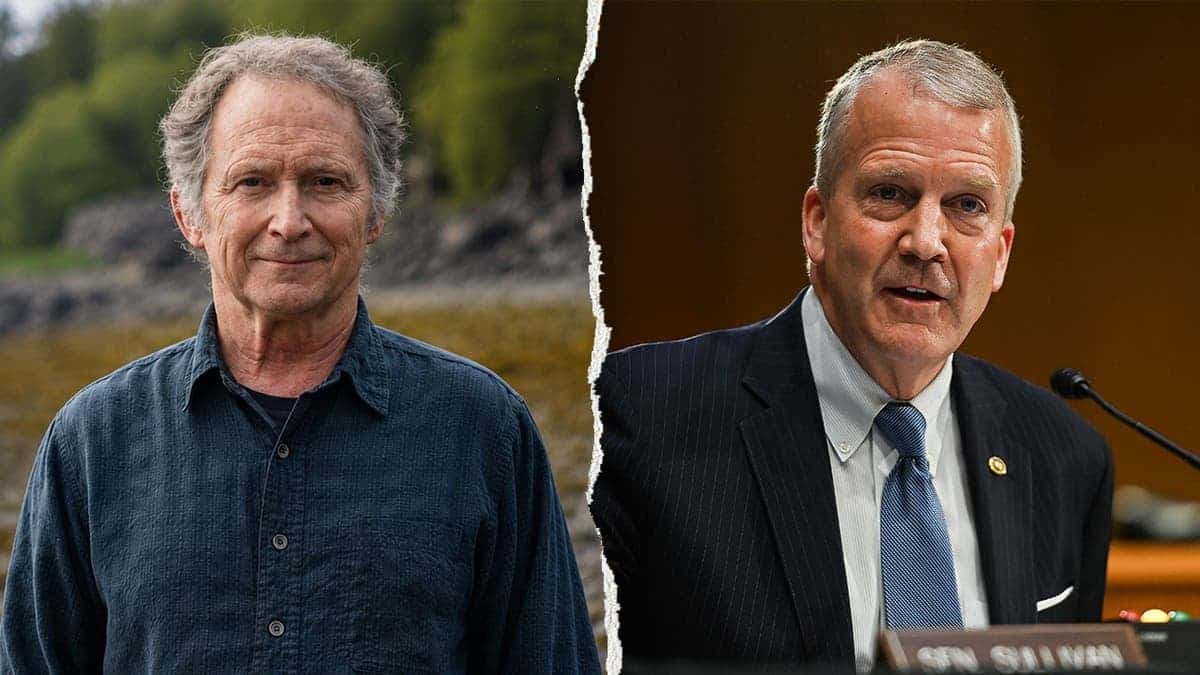
Newly-introduced Senate candidate Dan Sullivan, left, pictured alongside Sen. Dan Sullivan, D-Alaska, right. (Sullivan for U.S. Senate; Brandon Bell-Pool/Getty Images)
On Sunday, Peltola’s campaign and the Democratic Senatorial Campaign Committee filed a proposed motion to dismiss the Justice Department’s lawsuit, arguing that the federal law cited by the DOJ governs voter registration, not candidate eligibility or ballot design. They also urged the court to resolve the case before Election Day.
Conservatives have argued that two similar names on the same ballot could possibly lead to voters who would prefer to reelect the state’s Republican senator accidentally voting for the retired school teacher. Opponents of the effort to remove Daniel J. Sullivan from the ballot argue that sharing a name with an incumbent is not grounds for disqualification and that Alaska’s ranked-choice voting system allows voters to rank both candidates, potentially limiting the effects of mistaken selections.
Alaska’s Division of Elections initially sided with conservatives, disqualifying Sullivan the school teacher by finding that his candidacy was not a genuine, good-faith bid for office but instead was designed to confuse voters into mistaking him for the senator. Alaska Superior Court Judge Thomas Matthews overturned the decision in June, holding that the Division of Elections had no authority to void a candidacy on that basis.
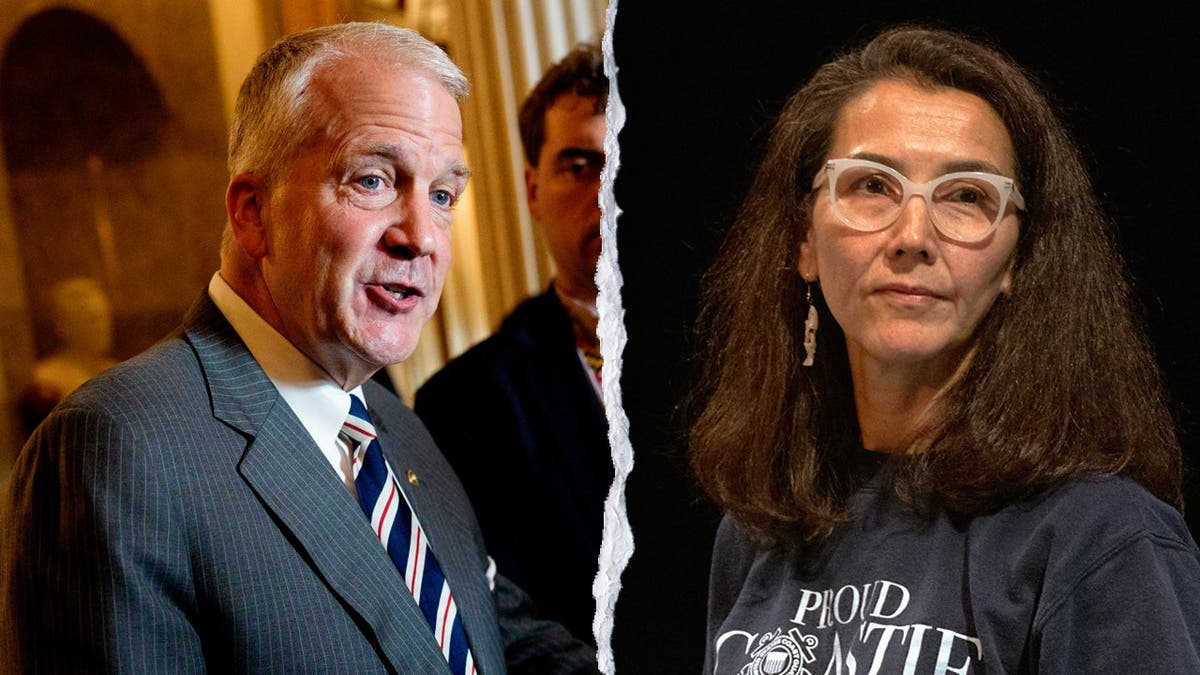
Sen. Dan Sullivan, R-Alaska, and former Rep. Mary Peltola, D-Alaska. (Photo by Andrew Harnik/Getty Images) (Nathaniel Wilder/Bloomberg via Getty Images) ((Photo by Andrew Harnik/Getty Images) (Nathaniel Wilder/Bloomberg via Getty Images))
Alaska’s general election ballot identifies the incumbent as “Sullivan, Dan S.,” with Republican and incumbent designations, while listing the other candidate as “Sullivan, Daniel J. Jr.,” without a party affiliation, a measure some argue is enough to clear up potential confusion. Lawyers at the Justice Department, however, remain unconvinced.
Although Attorney General Todd Blanche has suggested that officials could examine ranked-choice ballot patterns for signs of confusion, the Justice Department has not explained how those patterns could establish that individual voters mistakenly selected the wrong candidate. Voter privacy protections pose a major obstacle to a potential federal case, as it would be nigh impossible to tie specific voters to specific ballots to serve as evidence of confusion.
ALASKA HAS A VOTING SYSTEM LIKE NO OTHER STATE; REPUBLICANS WORRY IT COULD COST THEM IN NOVEMBER

Senator Dan Sullivan, a Republican from Alaska, stands in the Senate Subway of the U.S. Capitol in Washington, D.C., on June 17, 2026. (Daniel Heuer/Bloomberg)
“This is just the stuff that is just impossible to measure after the fact,” Notre Dame law professor Derek Muller said of the DOJ’s plan to infer voter intentions from anonymous ballots.
Attorney General Todd Blanche, in interviews with the press, has provided some insight into how he would like the DOJ to go about solving this problem.
“So because of rank-based voting, voters … they write not just one, not just two, but multiple names on the ballot. And so there are a number of scenarios where it could be obvious that a voter was confused by the way they wrote down candidates,” Blanche told CNN’s Dana Bash.
Blanche’s comments suggest that the Justice Department could examine ranked-choice ballot patterns for potential signs of confusion, although such patterns alone would not establish whether voters intended to support a different candidate.
“It will be obvious from the results and from the ballots that voters were confused, and that could be obvious from the way that they rank the Dan Sullivans or not including a Dan Sullivan on the ballot,” he said in a later interview with CBS.

Dan J. Sullivan, who has filed to run for U.S. Senate in Alaska, poses for a photo in Petersburg, Alaska, on June 26, 2026. (Katie Holmlund/Associated Press)
Don Palmer, senior legal fellow for election integrity at the right-of-center Heritage Foundation, told Fox News Digital that he feels the Justice Department might have a case if the agency’s lawyers construct it properly. Statistical analysis of ballots alone, he maintains, will likely not be sufficient to convince a judge of the administration’s position.
“You’ll have the opportunity to interview witnesses, do some statistical analysis, and make a decision whether or not the campaign wants to contest the results of the election,” Palmer said. “So it’s actually quite a high standard where you have to bring in witnesses. You can’t generally just prove it with some statistical analysis … the campaign would have to show to the court through statistical and expert testimony, plus witness testimony, plus affidavits, that enough voters were confused, that they made inaccurate choices on what they intended to do. Then and only then could the court determine whether the race should be overturned.”
“If voters voted for the non-Republican Dan Sullivan as their 1st choice but voted down ballot for Republicans as their 1st choice otherwise, that could indicate patterns of confusion whereby voters were looking to vote straight Republican as their first choice and were prevented from doing so because the inclusion of Daniel J. Sullivan on the ballot confused matters,” a spokesman for the America First Policy Institute told Fox News Digital.
Ben Hovland, a senior fellow at the left-of-center Center for American Progress and an expert on elections, was more bearish on the DOJ’s prospects.
SEEING DOUBLE: SECOND DAN SULLIVAN ADVANCES, SETTING UP BIZARRE ALASKA SENATE BALLOT
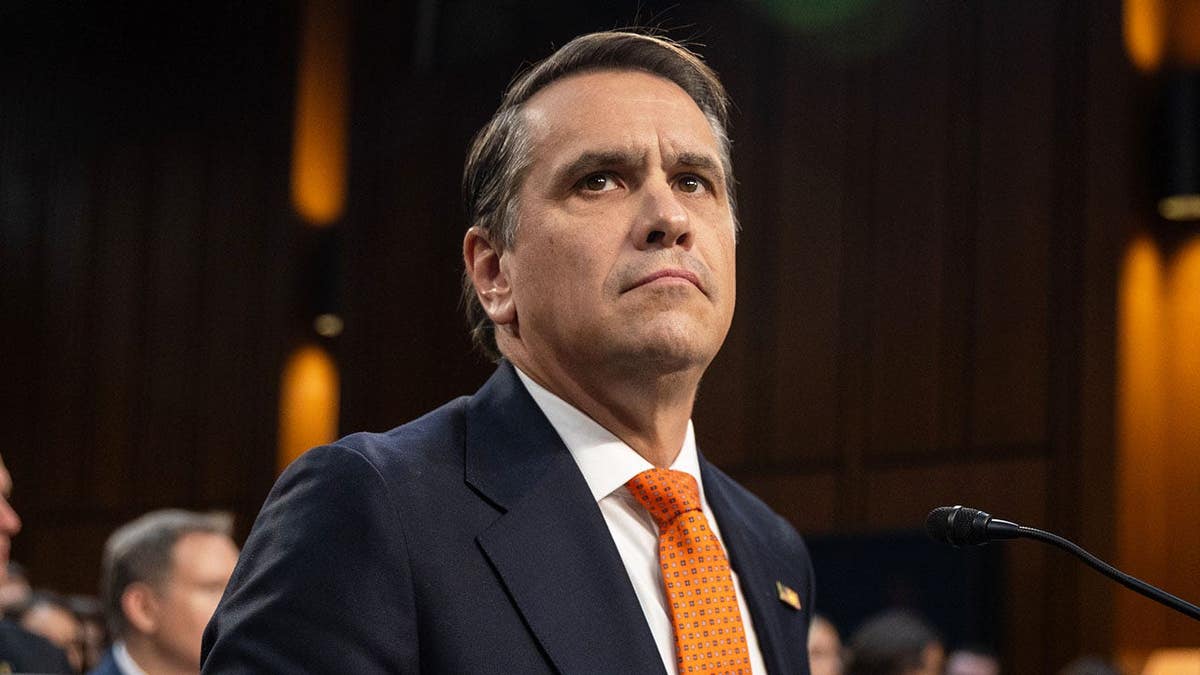
Acting Attorney General Todd Blanche appears before a Senate Judiciary Committee confirmation hearing for his nomination to be attorney general at the Dirksen Senate Office Building in Washington, D.C., on July 15, 2026. (Anadolu via Getty Images)
“You’ve never seen a claim like this made under the National Voter Registration Act,” he told Fox News Digital. “This is not a matter of federal law. This is a state ballot qualification issue and the Alaska Supreme Court addressed this issue months ago. For the Department of Justice to step in at this point and sort of make this claim, you know, doesn’t appear to be about winning in a lawsuit because it doesn’t seem like there’s any scenario where [they win], this is clearly about trying to sow confusion or sow doubt or set the stage to undermine the results of the election if the administration doesn’t like what the voters will have to say.”
Walter Olson, a senior legal fellow at the libertarian Cato Institute, also isn’t convinced that the Justice Department will be able to get its case off the ground.
“I wouldn’t expect Blanche’s local allies to get very far in this effort unless a federal court rules in favor of his theory that Alaska violated federal (as opposed to state) law by letting the schoolteacher stay on the ballot,” Olson told Fox News Digital. “I think the state is likely to beat Blanche in federal court on that point, and that should end the case.”
Alaska has already moved to have the DOJ’s case dismissed.
CLICK HERE TO DOWNLOAD THE FOX NEWS APP
The DOJ did not respond to a request for comment when reached by Fox News Digital on Tuesday.


Discount Applied Successfully!
Your savings have been added to the cart.