The United States has signed critical mineral, energy, and technology deals with Finland and Hungary, strengthening economic and security cooperation with the European allies.
U.S. Secretary of State Marco Rubio met with Finnish Foreign Minister Elina Valtonen on Thursday morning to sign a technology deal and a critical minerals framework agreement, which the U.S. State Department said would support technological collaboration and secure critical supplies.
Rubio said Finland’s mining expertise makes it an ideal partner for a critical minerals deal.
“It’s the foundation of tech, and we’re partnering on that today, everything from semiconductors to batteries to defense systems to energy infrastructure,” he told a press conference. “All of this is dependent on that, and Finland, of course, has extraordinary expertise in mining, in refining, and in processing that makes it an ideal and critical partner in the world on this topic.”
He added that the technology deal was an important milestone in the partnership between Washington and Helsinki on critical and emerging technologies.
Finland is home to major multinational technology companies, such as telecommunications giant Nokia and ICEYE, which provides satellite communications systems.
Related Stories

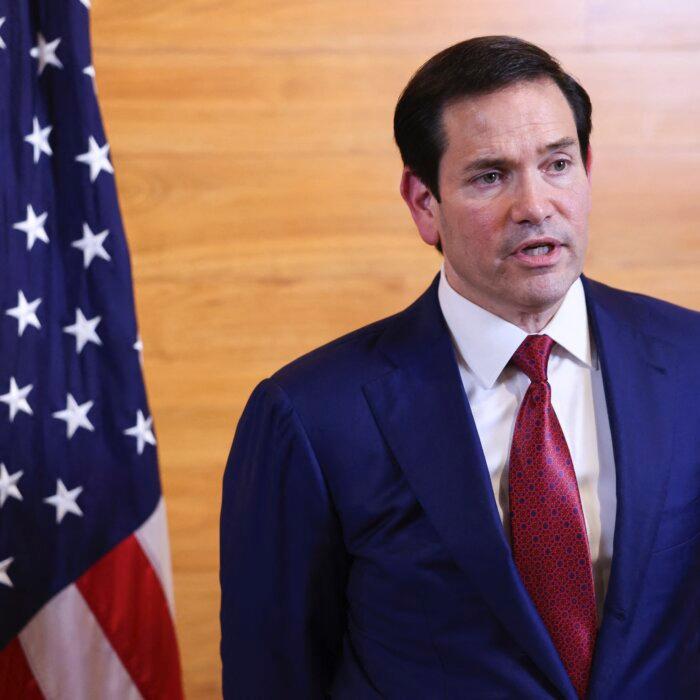
Later on Thursday, Rubio and Hungarian Foreign Minister Anita Orbán met to discuss cybersecurity cooperation and energy.
They signed a memorandum of understanding that codified Hungary’s earlier commitment to energy diversification under the Trump Peace Pipelines Framework, which is aimed at reducing European dependence on what the State Department describes as “adversarial energy sources.”
“This is an opportunity for us to continue to export energy that we are able to develop and create a little bit more energy independence, or at least energy diversification,” Rubio said.
Orbán said during the signing that this agreement would “help Hungary to become an important player in the regional energy supply,” and, together with the United States, create “a robust, a resilient, and a very competitive energy ecosystem.”
The signing came the day after the Hungarian government submitted a bill to parliament that, if passed, would make a nuclear cooperation agreement with the United States legally binding.
The agreement on civilian nuclear cooperation was signed under the previous Hungarian administration of Prime Minister Viktor Orbán (no relation to the current foreign minister) during Rubio’s Feb. 16 visit. It encourages Hungary to choose U.S. nuclear companies and technologies as its main suppliers for new projects.
The Hungarian parliament is likely to approve the bill, as Prime Minister Péter Magyar’s government holds a two-thirds majority.

U.S. Secretary of State Marco Rubio (R) shakes hands with Hungarian Foreign Minister Anita Orbán (L) before signing memorandums of understanding at the State Department in Washington, on Oct. 29, 2026. Oliver Contreras/AFP via Getty Images
The United States and Hungary also agreed to confront the “resurgence of far-left terrorism,” Rubio said, “which is something that’s been ignored for far too long.”
“We have to stop the way these groups target police departments and law enforcement, and ultimately critical infrastructure, historical landmarks—the foundations of a free society; that’s what they attack,” Rubio said.
He added that the agreement will increase information sharing and cooperation, which he said is essential because many far-left movements are internationalized.
Reuters contributed to this report.

Discount Applied Successfully!
Your savings have been added to the cart.