

In early October, a recent law school graduate shared a post on LinkedIn that would have been unheard of before the second Trump administration.
After passing the bar exam, 29-year-old Preston Bigley wrote, “With this milestone complete, I will begin serving as an Assistant United States Attorney in the Criminal Division of the U.S. Attorney’s Office for the Western District of Texas.”
It was a remarkable achievement, considering Bigley had graduated from Texas A&M’s law school in May and had been hired by the Justice Department in August to be, as his resume notes, an “incoming” assistant U.S. attorney. That unusual title was followed by an unusual caveat: “pending bar admission.” Once officially licensed to practice the law, he updated his profile to show he had become a bona fide federal criminal prosecutor.
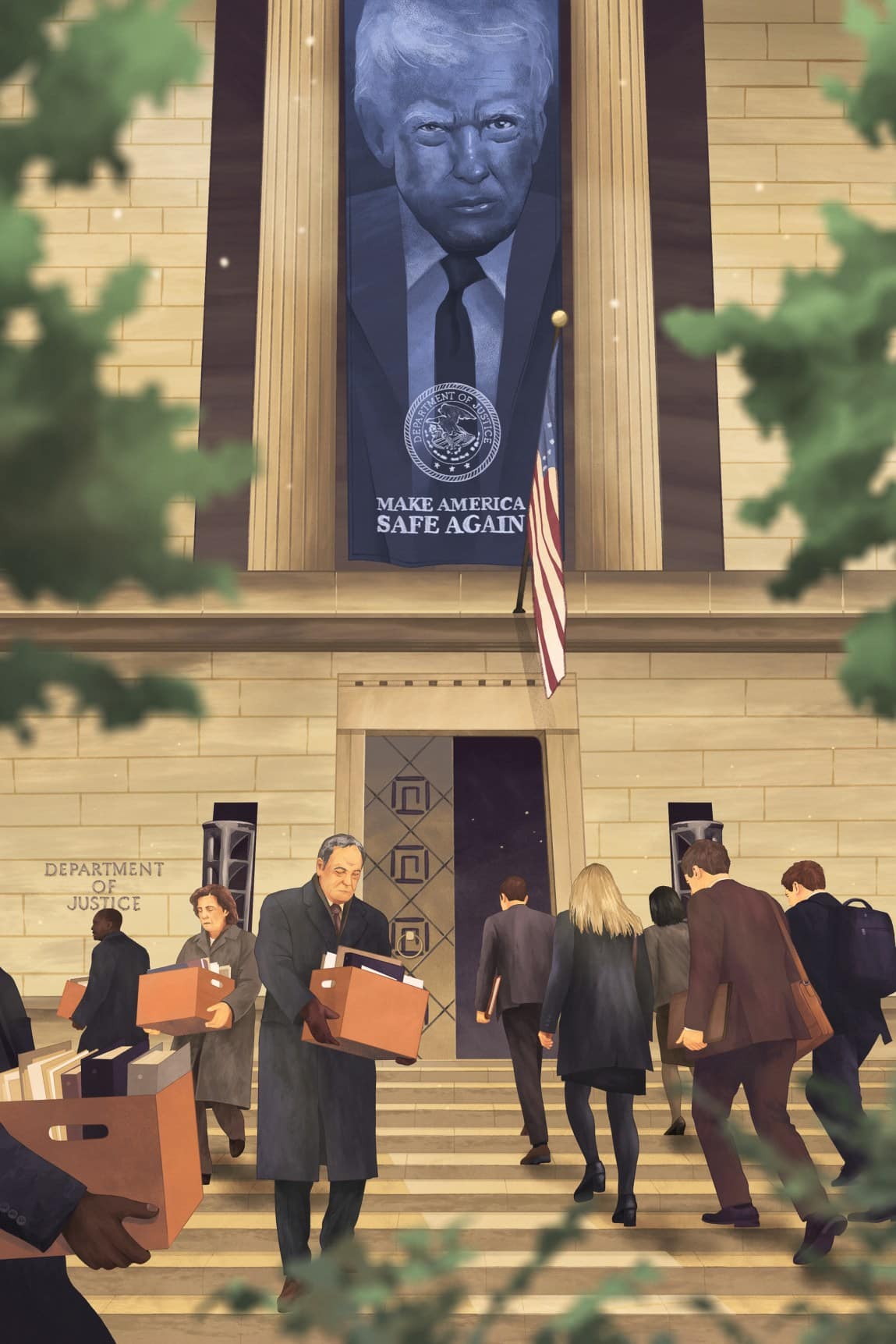
Bigley is one of a growing cohort of inexperienced attorneys, many of them fresh out of law school, who are being fast-tracked to fill the shoes of seasoned career prosecutors who fled or were purged from the DOJ in President Donald Trump’s second term. That brain drain, amounting to thousands of years of experience, comes as prosecutions of fraud and drugs have fallen in key districts to make way for Trump’s immigration agenda, ProPublica found.
Across the country, ProPublica identified more than 50 new assistant U.S. attorneys with less than three years of experience who traditionally wouldn’t have been considered for such vital positions, legal experts said. Some were hired with the intent to anoint them as prosecutors — once they pass the bar exam, public disclosures show.
That figure is likely a fraction of the actual total, as a comprehensive analysis is impossible because DOJ staff identities are redacted in government personnel data. But of those ProPublica identified through bar membership records and social media, about 20 passed the bar within the last year. At least seven were in the same May graduating class as Bigley, from a range of schools.
“The fact that the DOJ is hiring, and indeed actively recruiting, right out of law school — it’s an astounding break with past practice,” said Juliet Sorensen, a Loyola University Chicago law professor and former assistant U.S. attorney. “It reflects a lowering of standards for a job that is important and requires lawyers who are meticulous, committed to doing the right thing, and bring with them experience beyond just law school.”
To understand how Trump transformed the DOJ, ProPublica examined federal court data and records, federal workforce and state bar information, and social media accounts. We also interviewed more than two dozen former assistant U.S. attorneys.
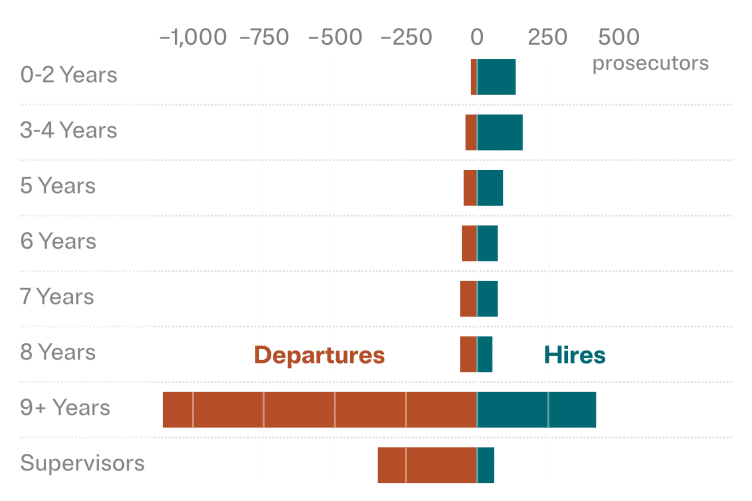
More than half of those who left the Justice Department in Trump’s first 18 months boasted nine-plus years of legal experience. Those who left had spent, on average, more than 13 years working for the government, the analysis shows. Those more experienced attorneys were the ones most likely to take on complex cases, such as money laundering, organized crime and drug trafficking, legal experts say and court dockets show.
ProPublica shared its analysis and detailed questions with the DOJ; the department did not respond. Previously, the DOJ said it “remains committed to investigating and prosecuting all types of crime.”
The DOJ has long hired recent graduates through its Honors Program, which places graduates into rigorous training through the main office in Washington, but experts say the program was small and not meant to replace prosecutors.
Before Trump’s second term, the DOJ typically would not hire new prosecutors unless they had a minimum of three to five years of legal experience, former officials and law professors said. That standard is gone. Earlier this year, Bloomberg Law reported, the DOJ waived a policy requiring at least one year of experience.
While private law firms routinely hire promising graduates before they pass the bar exam, typically to begin their training, the DOJ’s hiring of new grads is a striking departure from its once-rigorous hiring process, said University of Michigan law professor Barbara McQuade, a former U.S. attorney for the Eastern District of Michigan.
“The people who I hired came to us as partners in law firms,” said McQuade, who was appointed by President Barack Obama. “These were superstars who had been very successful at large law firms or in state court prosecutors’ offices.”
Trump’s creation of a less experienced DOJ will have longstanding consequences, McQuade said.
“It means that some very serious crimes will go unpunished,” she said. “It takes experienced prosecutors at the federal level to bring down corporate fraud, transnational gangs and corrupt public officials.”
While experts expressed concern, some of those benefiting from the law school-to-federal prosecutor pathway have voiced excitement on LinkedIn. “I look forward to beginning my DOJ career by serving the Del Rio Division,” wrote Jacquelyn Kilcommons, who graduated from Pace University’s law school in May. “Upon receiving my bar exam results, I will transition into an Assistant United States Attorney (AUSA) position.”
As he announced his new role in the district of Washington, D.C., newly graduated assistant U.S. attorney Ellis O’Donnell wrote, “In the past few months I have had the honor to graduate from Vanderbilt University Law School and to sit for and pass the Wisconsin Bar Exam.” None of the recent law school graduates responded to requests for comment.
The departure of assistant U.S. attorneys in Trump’s second administration marks the largest number of exits two years into a presidential term in at least two decades.
Beyond the personnel turnover, the administration’s priorities have shifted since Trump retook the White House, an analysis of Federal Judicial Center data shows.
As immigration cases shot up nationwide, felony fraud prosecutions fell sharply in key districts. Amid an exodus of prosecutors in the Western District of Virginia, for instance, fraud cases fell 66%. Those cases dropped 14% in the Southern District of Florida, a hotbed for white-collar crime, where many prosecutors have left in protest of Trump’s retribution campaign against people deemed political enemies. Nationally, drug prosecutions have fallen about 10% in Trump’s first 18 months and fraud cases are flat.
Meanwhile, the number of people facing immigration-related charges skyrocketed by almost 50%, clogging the courts and depleting resources at U.S. attorneys’ offices nationwide. Even in border districts where immigration proceedings can dominate the caseload, prosecutions have risen dramatically. For instance, New Mexico and the Southern District of California saw 300% and 125% increases in immigration cases, respectively, the ProPublica analysis shows. In the Western District of Texas, where Bigley and at least two other recent graduates just became prosecutors, immigration cases have surged at least 36%.
The immigration caseload, including tens of thousands of unlawful-detention cases filed in civil court, has strained the department so severely that the DOJ has drafted hundreds of attorneys from other federal agencies and the military to keep up, former officials said.
Those cases coincided with violent deportation sweeps led by masked immigration agents, who killed U.S. citizens, and the nationwide protests that sprouted up in response. Many of the cases Trump’s DOJ brought against people protesting immigration authorities’ actions fell apart, a ProPublica analysis showed. The news organization also reported how the truthfulness of Trump’s prosecutors has come under question in courts across the country. The DOJ previously said its attorneys “represent the United States with integrity.”
Amid the unrest, ProPublica has tracked nearly 100,000 habeas corpus petitions filed by immigrants arguing that their detentions were unjust. In each case, an assistant U.S. attorney must defend the government’s position, a task that had some U.S. attorneys reassigning veteran lawyers — experts in financial crimes, civil rights and human trafficking — to immigration. In Washington state, an acting U.S. attorney said he’s so overbooked with unlawful-detention petitions, his office cannot handle every case.
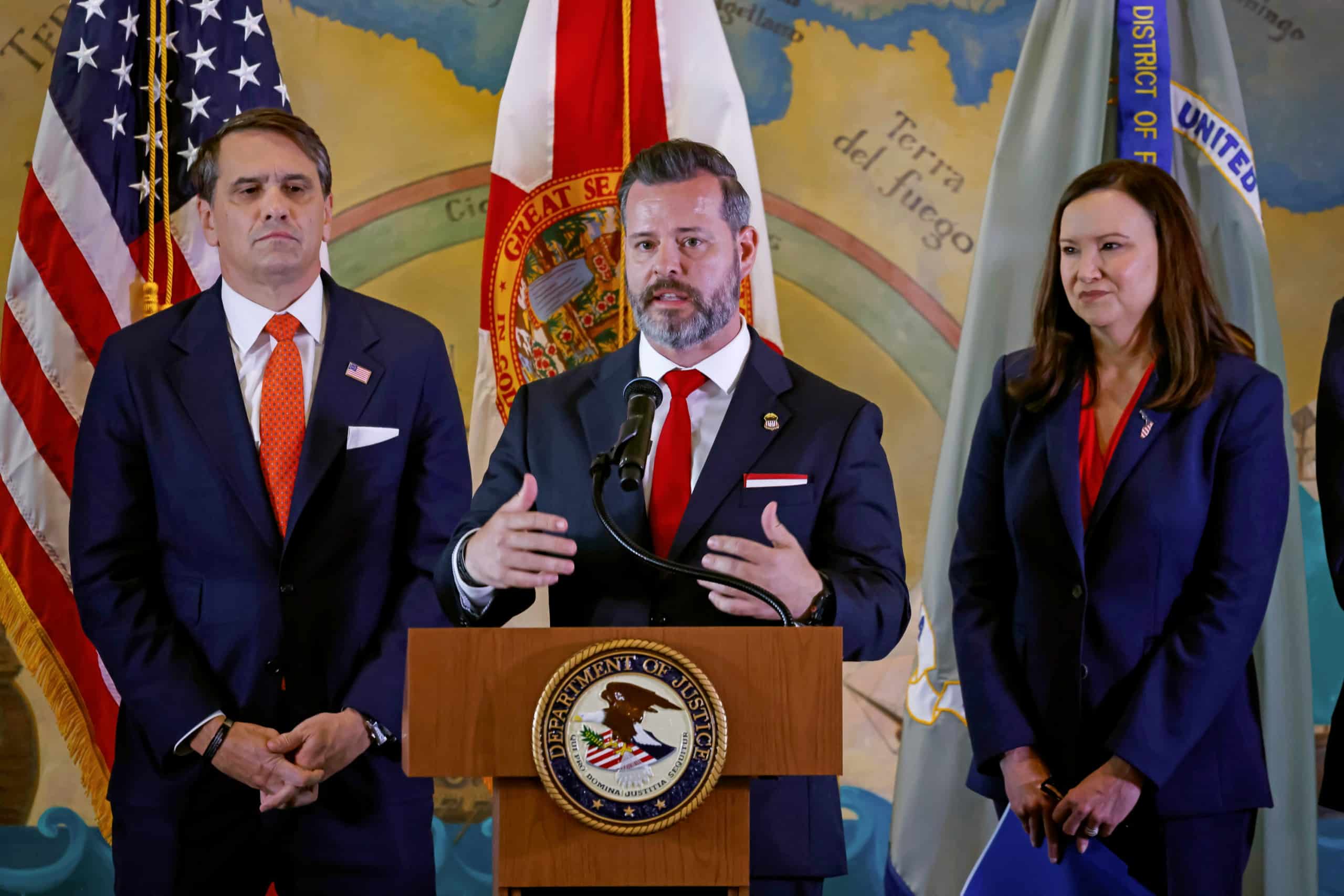
In South Florida, where an exodus of veteran lawyers presaged a drop in fraud and financial crime cases, one former white-collar crimes prosecutor said he and his colleagues could not decline an immigration case without permission from U.S. Attorney Jason Reding Quiñones, who abruptly resigned this month. Before his resignation, Quiñones had led the “grand conspiracy” investigation targeting former officials Trump alleged were part of a “deep state” plot against him.
“Every case takes time, and you want to put in effort, and now you’re wasting your time on cases you don’t believe in or think are unjust,” said the former prosecutor, who spoke on the condition of anonymity because he hopes to return to the Justice Department after Trump leaves office. “It affects morale.”
In recent months, the DOJ has ramped up efforts to recruit lawyers to replace the lost expertise, government data and the department’s recruiting materials show.
While Justice Department personnel data is kept secret, assistant U.S. attorneys are paid on a unique pay scale set by the attorney general, a quirk that dates to the 1950s and distinguishes them from other civil servants. By tracking the number of people compensated this way, it is possible to obtain broad data on the numbers of assistant U.S. attorneys.
As of January 2025, the department employed about 6,200 assistant U.S. attorneys, the data shows. Then Trump’s so-called Department of Government Efficiency took a hatchet to the Justice Department and other federal agencies. Led by the world’s richest man, Elon Musk, DOGE offered employees financial packages to resign from the federal government by September 2025. About 1 in 10 of all assistant U.S. attorney departures were part of that offer, the data suggests.
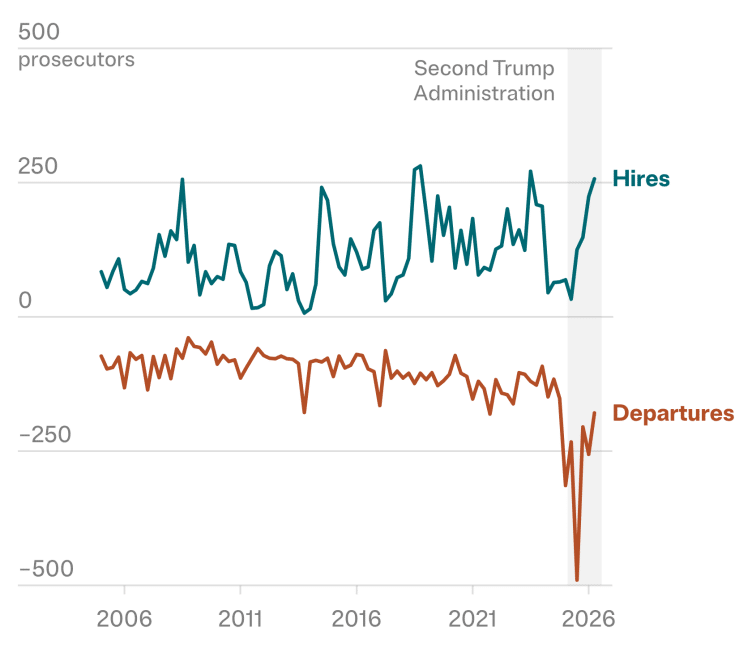
The ranks shrank much faster than the department anticipated, former officials said, and it was unable to hire sufficient replacements. By the end of January 2026, the DOJ lost over 1,300 assistant U.S. attorneys and replaced only about 470 of those attorneys.
For most of the past two decades, quarterly AUSA departures held fairly steady until Trump’s reelection, when they peaked at nearly 500 departures in the second quarter of 2025.
The DOJ began turning to novice attorneys to fill the empty desks.
In early 2026, a former White House official shared a post on X, the social media platform owned by Musk, that hinted at the DOJ’s growing desperation to find new hires.
“If you are a lawyer, are interested in being an AUSA, and support President Trump and anti-crime agenda, DM me,” wrote Chad Mizelle, who had recently left his DOJ role as chief of staff to then-Attorney General Pam Bondi. Mizelle did not respond to a request for comment.
In March, the department hit its lowest numbers since 2014. A month later, the University of Miami hosted an event titled “Lunch & Learn: Entry Level Opportunities with The U.S. Attorney’s Office.” The invite, targeted toward third-year law students, promised a new pathway to become a criminal prosecutor in one of the country’s busiest districts.
“The U.S. Attorney’s Office for the Southern District of Florida is now recruiting 3Ls for entry-level positions beginning immediately after graduation — an exciting expansion of opportunities for Miami Law students interested in federal prosecution,” the invitation said.
To lure new hires, the DOJ is offering signing bonuses. As of August, due in part to the hiring spree focused on greener attorneys, the department lifted its ranks to about 5,600, still a 10% drop from the end of the Biden administration.
U.S. Rep. Jamie Raskin, the ranking member on the House Judiciary Committee and the presumed chair once Democrats take charge, told ProPublica that the shift toward inexperience is showing in courtrooms across the country.
“They’ve sacked some of the finest lawyers in America, by tradition, and replaced them with a large group of inexperienced lawyers,” said Raskin, himself an attorney.
In his home state of Maryland, fraud cases fell 31% and drug cases nearly 16%, while immigration charges nearly doubled. “Those numbers are jaw-dropping,” he said.
Jim Fang was among the veteran prosecutors who left.
Fang’s road to becoming a criminal prosecutor was winding. After working in tech for about a decade, he switched careers, and in 2009 graduated from Georgetown Law. He worked in private practice, focusing on intellectual property law, but couldn’t shake a feeling that what he really wanted was “to take down bad guys.”
In April 2020, he got his dream job and was named a federal criminal prosecutor in the District of Nevada. He moved to Las Vegas and, aided by his 11 years handling complex areas of the law, took on tough white-collar crime cases.
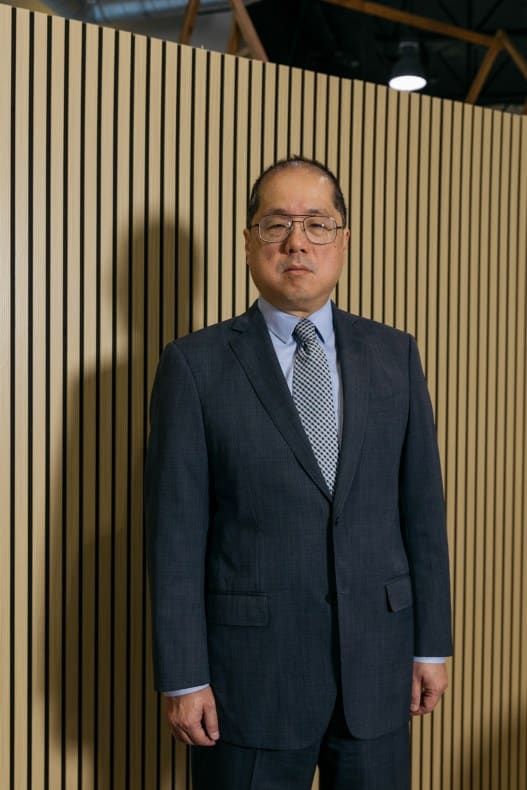
After the election, Trump picked Sigal Chattah, a former Republican political candidate, to run the Nevada U.S. Attorney’s Office.
Through court records and sources, ProPublica confirmed that more than 30 staff have left under Chattah’s tenure. The Nevada district is so depleted that for months it didn’t have prosecutors in its Reno office, about 450 miles away. Las Vegas prosecutors were asked to fly there for court appearances, sources said. Chattah disputed the 30 figure but acknowledged that Las Vegas-based staff flew to Reno “to ensure that our federal and local partners had competent and aggressive prosecutors.”
The office dropped cases it had been building as Chattah pushed immigration and politically motivated prosecutions. To ease the caseload, Chattah ordered her civil defense unit, charged with fighting lawsuits demanding cash from taxpayers, to pay out all cases that could be settled for $250,000 or less, multiple sources said. “We were ordered to settle those cases even if they didn’t have merit,” one former assistant U.S. attorney said. “It was just throwing money at a problem.”
Chattah called the allegations that she issued such a directive “patently false” and pushed back on her former employees’ characterizations of her tenure.
“There were attorneys that failed to meet the expectations of competent workmanship with the Department of Justice, and chose to leave or retire, some were terminated,” she wrote. “Former AUSAs who failed to handle an expected case load were replaced with aggressive prosecutors who will keep our state safe.”
In September 2025, Fang took the DOGE offer and went back into private practice as a defense attorney. He suspects the department’s loss of financial crime experts like him will result in fewer successful prosecutions.
“It’s a good time to be a white-collar criminal,” Fang said.
Now facing off against his former colleagues, he’s mostly busy representing clients who’ve filed habeas petitions. He was recently surprised to learn that one of the new hires brought into his former office had just passed the bar. “They’re taking a gamble on them,” he said.
Fang says they may well end up being fine attorneys but added, “There’s no way I could have taken that job and done it well right out of law school.”
The post They Were Just Admitted to the Bar. Now They’re Federal Prosecutors. Meet Trump’s New DOJ. appeared first on ProPublica.



Discount Applied Successfully!
Your savings have been added to the cart.