NEWYou can now listen to Fox News articles!
A high-fat diet may do more than pack on pounds — it could disrupt aspects of gut–brain communication, potentially contributing to issues such as overeating and mood or cognitive changes, according to a new scientific review.
The analysis was published in Nutritional Neuroscience in August. The team was led by Taylor Gray and Jian Han at North Carolina Agricultural and Technical State University, in collaboration with researchers from Brown University and Cornell University.
It claims that long-term consumption of fatty foods may alter the body’s serotonin system, PsyPost reported,though most of the evidence comes from animal studies.
SCIENTISTS REVEAL HOW YOUR FAVORITE SODA COULD QUIETLY MESS WITH YOUR MOOD
Serotonin helps regulate digestion, mood, memory and appetite, but when its signaling breaks down — which can happen with long-term high-fat eating — the gut and brain stop communicating properly.
Experts say such disruptions could weaken fullness signaling, which might make overeating more likely.
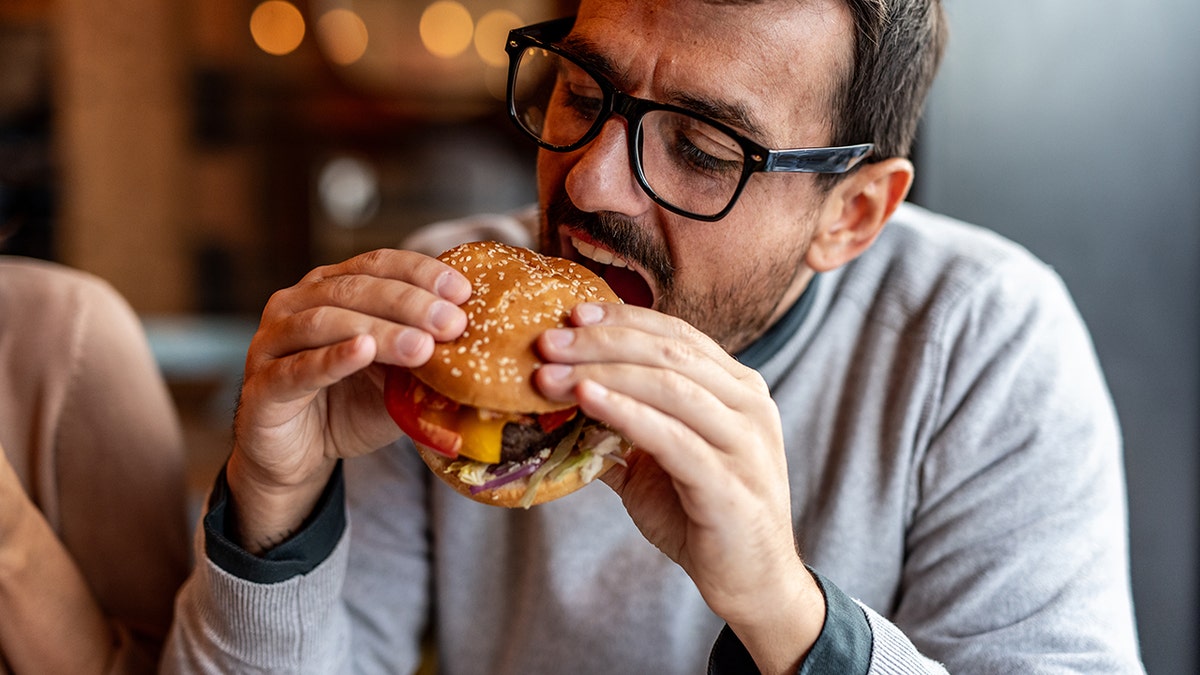
Researchers say that long-term fatty eating may throw serotonin off balance, weakening fullness cues and fueling weight gain. (iStock)
That disruption may help contextualize why unhealthy eating habits are strongly linked to overeating, emotional eating, depression, anxiety and cognitive problems, according to the researchers.
Part of the problem is that, while serotonin is widely known as a “feel-good” brain chemical, roughly 95% of it is actually produced in the gut. Fatty foods appear to push gut cells to overproduce serotonin, while simultaneously shutting down the system that normally clears out excess, the review found.
While the gut ends up overloaded with serotonin, the brain has too little.
This double blow leaves serotonin accumulating in the gut. There, it can irritate the digestive tract, trigger inflammation and weaken the intestinal lining — which can lead to a leaky gut, when harmful substances can escape into the bloodstream.
TEST YOURSELF WITH OUR LATEST LIFESTYLE QUIZ
The review suggests that such disturbances may generate stress signals that could influence brain regions involved in mood and appetite. While the gut ends up overloaded with serotonin, the brain has too little.
In regions that control mood and memory, serotonin gets broken down too fast, and the parts of the brain that regulate hunger and fullness stop responding to it the way they should.

A high-fat diet may disrupt the gut-brain communication system, according to experts. (iStock)
And the consequences extend beyond the gut.
High-fat eating patterns are often paired with lower fiber intake, which some researchers say can negatively affect gut bacteria and potentially contribute to inflammation and altered serotonin signaling.
Although much of the review relied on animal studies, the researchers argue that the patterns warrant further attention, while emphasizing the need for larger human studies.
CLICK HERE TO SIGN UP FOR OUR LIFESTYLE NEWSLETTER
Dr. Michael Bass, a Pennsylvania-based gastroenterologist and hepatologist, noted that while the animal evidence is robust and may have relevance to humans, current research does not establish causality — and human diets differ meaningfully from laboratory conditions. (He was not involved in the research.)
Rodents eat simplified, extremely high-fat lab diets that don’t resemble how people eat, according to Bass. And while the new findings do not yet prove causality in humans, they are “compelling,” he said.

Experts say shifting to a higher-fiber, plant-forward diet may support healthier gut–brain interactions and could be associated with improved mood or appetite over time. (iStock)
“The big idea here is that long-term high-fat eating doesn’t just affect weight,” he added. “It seems to change how the gut and brain talk to each other.”
There is no single symptom or clinical test for gut serotonin overload, Bass noted.
CLICK HERE FOR MORE LIFESTYLE STORIES
“Instead, it shows up as clusters: low energy, mood changes, cravings, trouble feeling full, weight gain, disrupted sleep and sometimes GI symptoms.”
A full reversal takes time and may require improving sleep, stress and activity, but “when people shift toward higher-fiber, plant-forward diets, we see mood and appetite changes often within a few weeks, and more durable changes over a few months,” Bass said.
CLICK HERE TO GET THE FOX NEWS APP
Fox News Digital reached out to the researchers for comment.


Subscribe to George Magazine and unlock exclusive bonuses. Your subscription now includes a free crypto essentials guide and three premium downloadable images. These images are perfect for personal use as desktop or mobile backgrounds, with thumbnail previews shown below.




Discount Applied Successfully!
Your savings have been added to the cart.