

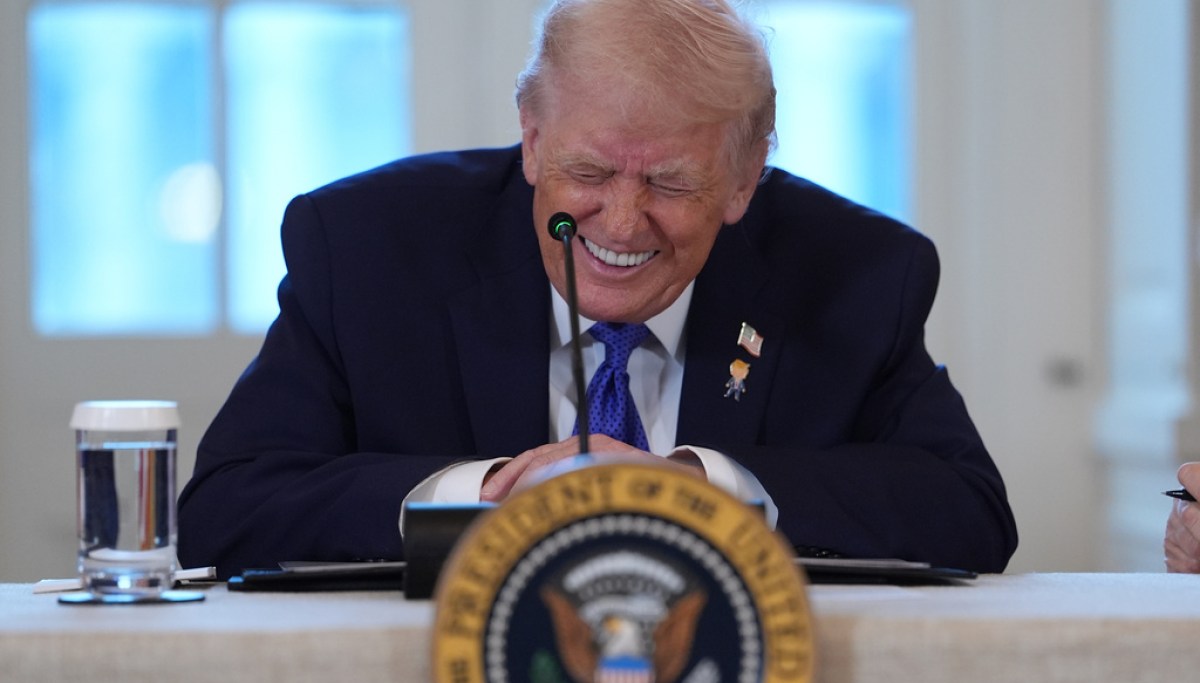
When President Donald Trump returned to the White House, the speed and breadth of his administration’s actions caught his political opponents off guard.
Critics and supporters alike called Trump’s flurry of executive orders and unrivaled dominance of the news cycle “shock and awe,” a phrase typically reserved for aerial bombing campaigns like the one that helped bring down Saddam Hussein’s government in Iraq.
Now, almost a year into Trump’s second term, Republicans are starting to ask whether it is too much, too fast.
Just since the beginning of this year, Trump has toppled and taken into custody former Venezuelan dictator Nicolas Maduro, renewed threats to acquire Greenland without taking the military option off the table, suggested that he might not be done with military and other actions in Iran, and defended the ICE officer involved in a fatal shooting in Minneapolis in stronger terms than he initially offered on behalf of the police officer in the George Floyd case during his first term.
The Department of Justice’s criminal investigation into Federal Reserve Chairman Jerome Powell initially appears to be an escalation of Trump’s feud with the monetary policy chief, one that many Republicans on Capitol Hill don’t like.
All this comes with Republican congressional majorities hanging in the balance in November’s midterm elections.
“If Republicans don’t get the President to calm down, the voters will get a Democrat Congress to calm him down,” the influential conservative radio commentator Erick Erickson posted on X. “Trump is playing with fire from Greenland to the Fed and more, he needs to cool off.”
The last time voters were rattled by Trump ahead of a midterm election, Democrats gained more than 40 House seats. The resulting majority impeached Trump twice, but things did not get noticeably calmer.
One Republican lawmaker who isn’t hanging around to find out what effect Trump will have on the party’s majorities is Sen. Thom Tillis (R-NC). Tillis decided last year to retire rather than seek reelection, opening a competitive Senate seat in a battleground state.
Tillis, a member of the Senate Banking Committee, has condemned the investigation of Powell and pledged to block Federal Reserve nominees while it is ongoing. He was similarly outspoken about Greenland.
“This nonsense on what’s going on with Greenland is a distraction from the good work he’s doing, and the amateurs who said it was a good idea should lose their jobs,” Tillis said on the Senate floor. He also blamed “advisers within the Trump administration” who “are actively pushing to end the independence of the Federal Reserve” for the Powell matter.
Republicans like Erickson and Tillis have long been among Trump’s more timorous allies. Jeb Bush called Trump the “chaos candidate” ahead of the 2016 Republican primaries. Trump easily dispatched Bush, who won none of those primaries.
But the attack does resonate among some voters. Minnesota Democrats blamed the Trump administration, rather than anti-ICE protesters and their own local elected officials, for sowing chaos in the state both before and after last week’s shooting.
“The Trump administration’s shock and awe strategy was meant to overwhelm opponents, disrupt the establishment and bust norms,” Tina Reed reported in Axios last February. “But it’s also sweeping up ordinary Americans who disdain politics but find they can’t detach from the barrage of news.”
A similar phenomenon existed during Trump’s first term. Many voters described “doom scrolling” through disheartening news stories about the deadly pandemic, the lockdowns ravaging schools and the economy, the death of George Floyd in police custody, and the resulting protests and riots. This climate contributed to Trump’s failure to secure a consecutive second term in the 2020 election.
This time around, the Trump administration is more united in the pursuit of the president’s agenda. There is less public infighting. White House chief of staff Susie Wiles has kept things more organized than any of her Trump 1.0 predecessors without alienating the boss.
But the challenge in trying to do so many things at once is that it becomes difficult to make the case for any of them. Some polls show public confusion about the rationale behind the military operation in Venezuela, for example. It also makes it harder to stay focused on the economy, which is what voters say they want. Trump’s pre-Christmas inflation speech already feels like a lifetime ago.
IRAN HARDENS RESOLVE AS TRUMP THREATENS ACTION OVER PROTESTS: WHAT TO KNOW
Trump has been actively involved in efforts to help Republicans protect their congressional majorities, including raising money, advocating for red-state redistricting, and recruiting candidates. But he has also governed like someone who knows those majorities aren’t guaranteed to last for the remainder of his presidency and is term-limited himself.
Republicans may want Trump to slow down, but convincing him to do so won’t be easy.

Discount Applied Successfully!
Your savings have been added to the cart.