

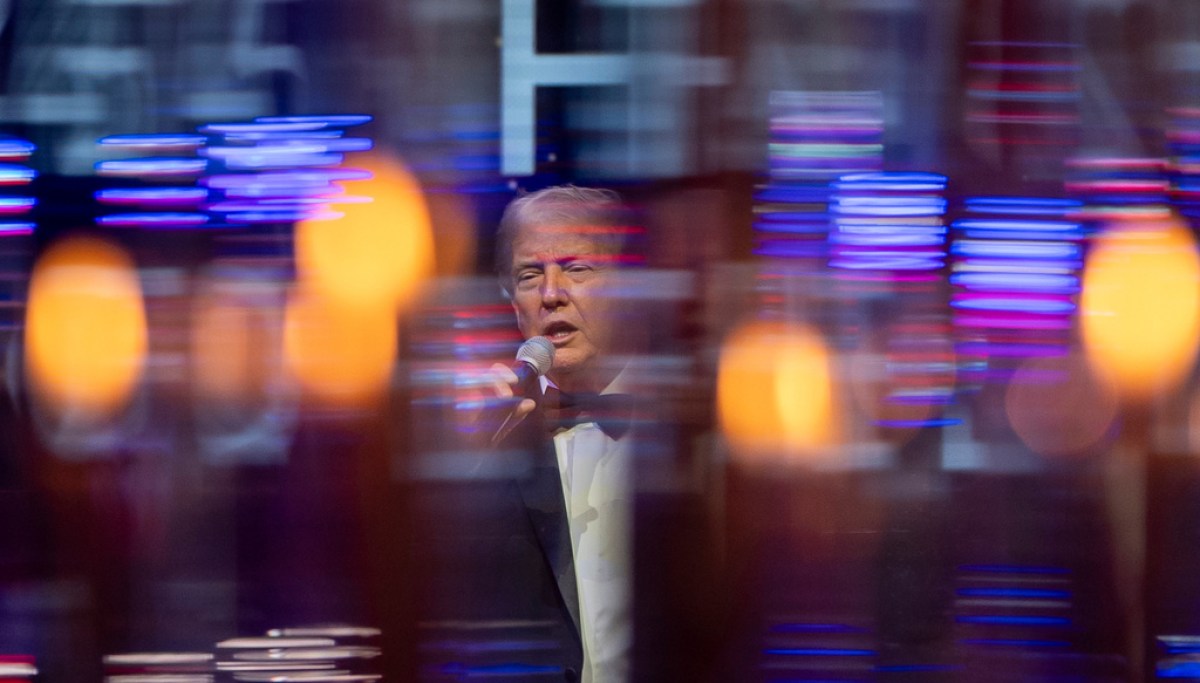
President Donald Trump, in just under one year, has already matched the number of countries he bombed across the entirety of his first term.
In 2025, the U.S. struck land targets in seven countries: Iran, Iraq, Nigeria, Somalia, Syria, Venezuela, and Yemen.
Some of these campaigns, specifically those in Iraq, Somalia, Syria, and Yemen, maintained operations carried out during both the president’s first term and the tenures of former presidents Barack Obama and Joe Biden. The others, Iran, Nigeria, and Venezuela, mark wholly new military endeavors, on top of the dozens of strikes Trump has ordered since September on alleged drug runners in international waters.
The president did notably abstain last year from striking targets in Afghanistan, Libya, and Pakistan, all of which were hit during the Obama, Biden, or first Trump administrations.
Since reentering the White House, Trump has consistently sought to fashion himself as the president of peace, with the stated goal of ending global conflicts not directly involving America.
“We will measure our success not only by the battles we win but also by the wars that we end — and perhaps most importantly, the wars we never get into,” he emphatically declared during his inaugural address last January.
White House spokeswoman Anna Kelly told the Washington Examiner, “As the architect of the ‘peace through strength’ agenda, President Trump is unafraid to use America’s military might to eliminate terrorists trying to harm our country.”
“At the same time, he has demonstrated immense diplomatic prowess by ending eight wars, securing a 5% defense spending pledge from NATO allies, negotiating fairer trade deals, and more. All of the president’s actions have made the world safer and more stable.”
Excluding the buildup of American forces in the Caribbean Sea, Trump’s campaigns have yet to send any service members to countries where American troops aren’t already stationed and have proven particularly lethal and destructive for Trump’s handpicked targets.
But experts are still split on whether Trump’s 2025 military actions are actually promoting peace through strength for the world at large, let alone safeguarding American citizens from direct economic and security threats.
Jennifer Kavanaugh, director of military analysis for Defense Priorities, told the Washington Examiner she doesn’t “see these uses of military force, whether they’re successful or otherwise, as having any benefits, really, for Americans.”
“The question shouldn’t be, ‘Is the world a safer place?’ It should be, ‘Are these applications of force advancing U.S. interests? Are the things that he’s acting against actually hurting U.S. interests or making Americans less safe?’” she said in an interview. “The safety of America’s economic interests, of homeland, and of Americans living abroad, that’s what’s most important. It doesn’t seem to me that any of Trump’s uses of military force, so far, have been against threats that posed real security concerns, economic or otherwise, to the United States or to Americans. And so in that sense, I would say, no, it’s not an effective application of peace through strength.”
Kavanaugh noted that Trump “has never been afraid to use military force when he thought he could do so in ways that wouldn’t have big negative consequences for the United States,” adding that the president frequently employed the idea of the “big red button” throughout his first term.
“To me, what we’re seeing here is the desire for foreign policy wins. If something looks like it can be a big, successful strike, overwhelming military power, and then the U.S. doesn’t have to do much else, that seems to be something that’s appealing to Trump,” she said. “Especially in this term, and where we’ve seen him use military force, it’s always been against adversaries or targets that can’t really strike back.”
On the other hand, Edmund Fitton-Brown, the former British ambassador to Yemen and a senior fellow at the Foundation for Defense of Democracies, argues that Trump’s military strategy has been an effective tool for advancing his overall foreign policy.
“When the U.S. was more bound by more conventional ways of thinking — was unwilling to look bad internationally, if you like — then, when somebody like Joe Biden made a statement about something, against something, or critical of somebody, people, more or less, might turn around and just sort of say, ‘So what? We don’t care,’” he told the Washington Examiner. “People don’t tend to do that with Trump because they worry about the fact that he might actually do something.”
“My guess is that the kind of transaction that took place with the Nigerian government over those strikes was probably the Nigerians saying, ‘We don’t really like this, but on the other hand, we’d rather keep him as a friend,’” Fitton-Brown said. “From Trump’s point of view, he’s obviously going to have enough people around him saying, ‘You do realize that invading Nigeria is not an option.’ So the only way you’re going to do this thing that you want to do is going to be in partnership with the Nigerian government, and so it ends up working for both sides in a way.”
Still, Kavanaugh, Fitton-Brown, and a number of diplomats representing the U.S. and its allies warned the Washington Examiner that these operations, specifically the very real possibility of an invasion to oust President Nicolás Maduro in Venezuela, run the risk of entrenching the U.S. in longer conflicts than the president is anticipating.
“You never know when one of these things will go wrong. Just looking at the history of U.S. military interventions, it is not uncommon for things that look like they’re going to be quick, easy, in-and-out operations to become disastrous,” Kavanaugh cautioned, citing the Vietnam War, American intervention in the 1965 civil war in the Dominican Republic, and the 1989 American invasion of Panama. “While the intention may be to use military force in limited ways in pursuit of U.S. objectives and U.S. interests, although we may differ what those interests are, you’re playing a game of luck if you think that you’re never going to pay bigger consequences than you expect.”
No matter the true success of Trump’s strikes thus far, he’s certainly eliminated dissenting defense and foreign policy opinions from his Cabinet and close circle of advisers compared to his first term.
“I think he underestimates the value of the U.S. departments and agencies that he has at his disposal. You know just how good U.S. diplomacy is, how good U.S. defense is, how good [the U.S. Agency for International Development] was, how good the CIA is,” one senior diplomat told the Washington Examiner.
“I feel like he’s got a few people he trusts, like [Steve] Witkoff or [Jared] Kushner. Those guys are really only as good as they are. They’re not deep experts. They’re not necessarily sufficiently impartial in the way that they look at these things.”
TRUMP TESTS TIM WALZ AS DEMOCRATIC BOGEYMAN AFTER SOMALI FRAUD SCANDAL
Kavanaugh similarly stated, “It’s a different Pentagon. It’s a different Cabinet, and he certainly has consolidated executive power in a way that he hadn’t in the previous administration.
“It seems to feel pretty unconstrained. I know as someone who’d like to see a smaller U.S. military footprint, these things, these developments are concerning to me.”




Discount Applied Successfully!
Your savings have been added to the cart.