


Holdouts in both chambers span across the ideological spectrum, from centrists to fiscal hawks. Some are even demanding that the administration produce a more detailed accounting of how a portion of the federal funds would be spent on a ballroom that Trump has long promised would be fully paid through private donations and his own money.
There appears to be little more that Senate Majority Leader John Thune (R-SD) and House Speaker Mike Johnson (R-LA) can do to persuade weary Republicans of greenlighting the security funding that’s tucked into a party-line immigration enforcement bill. The ball now rests in the administration’s court.
“I think we want to see that full breakdown,” Sen. Lisa Murkowski (R-AK) said. “It’s a pretty nice, round number. Convenient.”
Rep. Brian Fitzpatrick (R-PA), co-chairman of the bipartisan Problem Solvers Caucus, advocated the portion for ballroom security, estimated to cost Secret Service $220 million, be stripped from the roughly $70 billion immigration enforcement legislation. The remaining $780 million would be used for Secret Service training and security measures unrelated to the ballroom, construction of which is being privately funded to the tune of about $400 million.
“We have a lot of needs in this country right now,” Fitzpatrick said.
The White House did not respond to a request for comment.
Republicans are racing to pass the bill in the coming weeks under the so-called budget reconciliation process that requires only a simple majority and cannot be blocked with a Senate filibuster. But the GOP is working on razor-thin margins. The episode marks the latest split between the White House and members of Congress, an increasing number of whom fear Trump’s lack of focus on affordability issues will bite them in the November midterm elections.
Sens. Rick Scott (R-FL) and John Curtis (R-UT) were also among GOP lawmakers who framed closed-door briefings from senior administration officials this week, including Secret Service Director Sean Curran, as inadequate. Sen. Jim Justice (R-WV) was likewise on the fence, saying the figure “seems like all the money in the world to me.”
“We’re in this environment where there’s a lot of important things. We don’t have the money,” Curtis said. “We’re telling people at home, ‘We don’t have the money to do this and that.’ So why should we be any different here?”
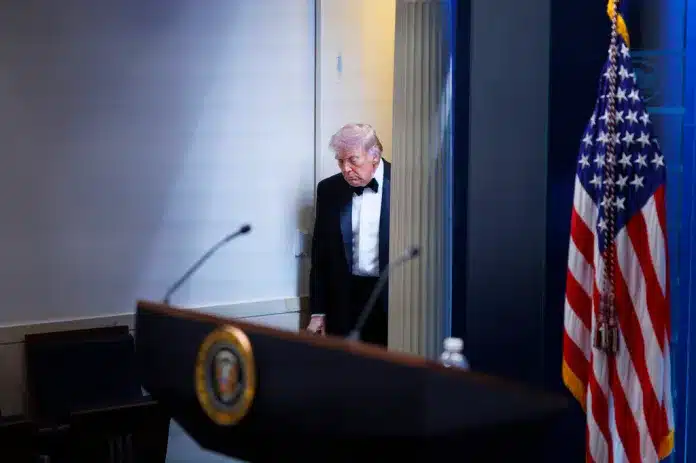
House Republicans emerged from a private meeting Wednesday with Department of Homeland Security Secretary Markwayne Mullin using a new talking point they said was further justification for the $1 billion in security funds.
“Did you know that the Secret Service cannot take donations?” said Rep. Buddy Carter (R-GA), a candidate for Senate. “That’s why they’re having to spend $15 million or $20 million [sic] to secure the ballroom.”
Republican leaders are pivoting from the politically toxic “ballroom” label as they forge ahead, settling instead on variations of its official name — East Wing Modernization Project — to describe the tranche of security money. The Senate could pass the bill as early as next week and send it to the House. Thune estimated that “most of our members are prepared to support the funding for the Secret Service that’s needed to enable them to do their jobs.”
GOP HEARTBURN FORCES MESSAGING PIVOT FROM ‘BALLROOM’ FOR TRUMP SECURITY MONEY
The inclusion of the security provisions in what ultimately passes the Senate is far from certain. They’ll have to withstand not only political muster but also the Byrd rule that governs which policies are allowed in reconciliation bills.
“I’m not going to prejudge the product we get from the Senate,” Johnson said. “But I certainly understand what the Secret Service’s requests are.”




Discount Applied Successfully!
Your savings have been added to the cart.