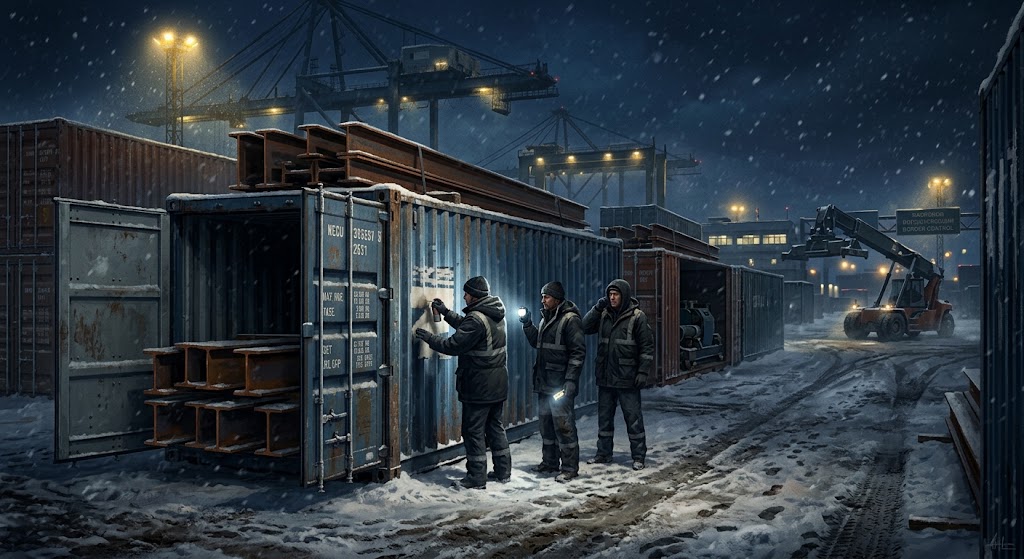
The implications of this backdoor entry are profound, particularly concerning the quality of the materials. China is the largest steel producer in the world, but not all of its output meets the stringent standards required for critical infrastructure or advanced manufacturing. Much of the steel involved in these transshipment schemes is widely considered weaker or of lower metallurgical quality. It is often produced using older, less environmentally friendly blast furnaces and lacks the precise alloying elements found in premium North American steel. When this substandard metal is secretly integrated into the United States supply chain, it introduces significant risks. Builders and manufacturers might unknowingly use compromised materials for bridges, buildings, or automotive parts, operating under the false assumption that they are utilizing high grade, properly certified Canadian steel.
The economic damage caused by this deceptive practice is equally alarming. American steelworkers and domestic mills depend on a fair playing field to remain competitive. When tariffs were enacted, they provided a necessary buffer against foreign dumping practices. Dumping occurs when a country exports a product at a price lower than its normal value to dominate the market. The Canadian transshipment loophole entirely undermines this defensive measure. Domestic producers are once again forced to compete against artificially cheap materials that do not reflect the true cost of labor, environmental compliance, or quality control. This situation threatens thousands of well paying manufacturing jobs and weakens the industrial base of the nation.
Furthermore, this dynamic places a strain on the otherwise strong trade relationship between the United States and Canada. American trade representatives have repeatedly voiced their frustrations regarding porous borders and inadequate tracking of raw materials. To combat the issue, industry advocates are pushing for stricter origin tracking. One of the most popular proposed solutions is the implementation of a strict melt and pour standard. This rule would require the steel to be entirely melted and poured within North America to qualify for tariff exemptions. Under such a system, metal initially cast in a Chinese foundry would permanently carry its original designation, regardless of how many times it was rolled, cut, or painted in a Canadian facility.
Until these rigorous tracking methods are uniformly enforced, the backdoor pipeline will likely continue. The financial incentives for bypassing American tariffs are simply too massive for foreign exporters to ignore. Customs officials face a monumental task in auditing the sheer volume of metal crossing the border every single day. The responsibility ultimately falls on policymakers to close this glaring loophole. Securing the supply chain is no longer just an issue of economic fairness. It is a matter of national security and public safety. The United States must ensure that the steel holding up its infrastructure is truly what it claims to be, rather than a weaker imitation hiding behind a forged passport.
*****
Is Your Child Safe? George Issue 47 : https://georgemagazine.com/product/george-magazine-issue-47/
All George Magazine Past Issues: https://georgemagazine.com/past-george-issues/
George’s America’s 250th: https://georgemagazine.com/product/america-250-celebrating-legacy/
Ageless Tech E-Book Using AI to Your Advantage: https://georgemagazine.com/agelesstech/
George’s Crypto E-Playbook: https://georgemagazine.com/product/the-crypto-playbook-by-george-magazine/
Aetherian Realm’s Final Judgments Map: https://georgemagazine.com/product/aetherian-realms-final-judgments-map/
Q is for Quantum Coffee Mug: https://georgemagazine.com/product/q-is-for-quantum-coffee-mug/
The CoVFeFe T-Shirt you want: https://georgemagazine.com/product/cov-fe-fe-george-magazine/
Q is for Quantum T-Shirt: https://georgemagazine.com/product/q-is-for-quantum/
America’s 250th George Magazine T-Shirt: https://georgemagazine.com/product/americas-250th-george-magazine-t-shirt/
George Magazine. Print or Digital: https://georgemagazine.com/subscribe-george-magazine/
George Junior. Print or Digital: https://georgemagazine.com/subscribe-george-junior-magazine/
George Dispatch Free: https://georgemagazine.com/thedispatch/


![Enjoy the [Road] Show Travel Mug with Handle, 14ozEnjoy the [Road] Show Travel Mug with Handle, 14oz](https://georgemagazine.com/wp-content/uploads/2024/08/479070202831754764_2048-300x300.jpeg)
![[GOOD PRESS] ON[GOOD PRESS] ON](https://georgemagazine.com/wp-content/uploads/2024/08/16389056566437433941_2048-300x300.jpeg)