

NEWYou can now listen to Fox News articles!
One of Washington’s most powerful Cold War-era tools could be used by President Donald Trump to rein in artificial intelligence (AI) if the powerful emerging technology ever becomes a national security threat.
Originally enacted in 1950 to mobilize American industry during the Korean War, the Defense Production Act (DPA) has long been used to expand military production, prioritize government contracts and respond to national emergencies. Experts now say those authorities could also give the executive branch significant leverage over frontier AI companies if one of their systems posed catastrophic national security risks.
Exactly how the government could use DPA’s powers against a dangerous AI system remains largely untested, but national security and legal experts who spoke with Fox News Digital described a range of existing authorities that could apply — including laws in the act that encompass cyberattacks, exports, federal contracts and civil liability.
THE AI REVOLUTION COULD BECOME A NATIONAL SECURITY DISASTER IF WE AREN’T CAREFUL
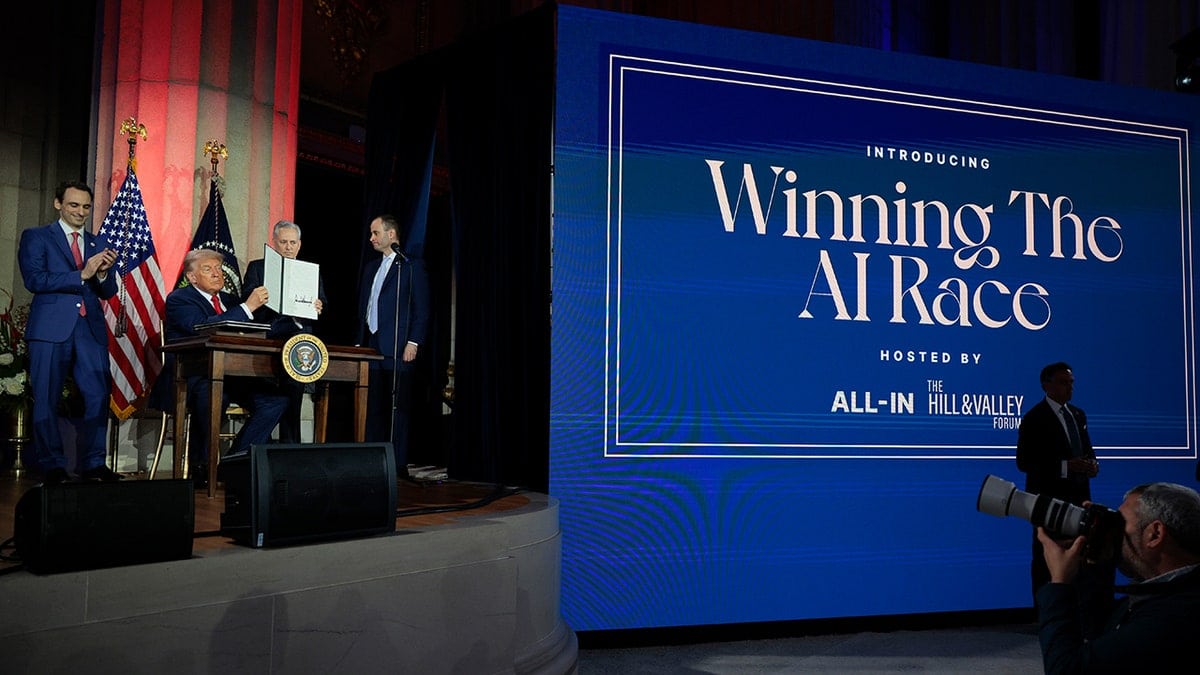
WASHINGTON, DC – JULY 23: U.S. President Donald Trump displays a signed executive order during the “Winning the AI Race” summit hosted by All‑In Podcast and Hill & Valley Forum at the Andrew W. Mellon Auditorium on July 23, 2025 in Washington, DC. Trump signed executive orders related to his Artificial Intelligence Action Plan during the event. (Photo by Chip Somodevilla/Getty Images) (Chip Somodevilla/Getty Images)
“The authorities could be a little clearer,” James Lewis, director of the Strategic Technologies Program at the Center for Strategic and International Studies, told Fox News Digital. “But you could probably cobble together a solution using the legal authorities we have now.”
The question has taken on new urgency after leaders at some of the nation’s most powerful AI companies issued stark warnings this week about increasingly capable models and backed calls to slow the pace of development so safety measures can catch up.
Trump said this week that the administration already has “tremendous criminal and regulatory power” over AI companies as he pushed back on calls from industry leaders for new guardrails on increasingly powerful models.
That largely remains because Congress recently extended most of the DPA’s authorities, which were set to expire on Sept. 30, through Dec. 11, 2026. This is sure to set up another reauthorization fight later this year, right before the power of the legislative body could change after November’s midterms in the new year.
TRUMP PLAN TAPS US FIRMS TO FIGHT FOREIGN CYBERCRIME
Lewis said the cyber threat has already changed. Finding vulnerabilities that once took months can now take days or even hours, he explained, while AI can help attackers chain smaller weaknesses together into more damaging attacks.
“The threat itself is not new,” Lewis said, recounting a recent conversation with a senior official from a Five Eyes intelligence partner. “We’ve known about this for a while, but people weren’t taking it seriously.”
AI, he said, has “changed the landscape dramatically.”
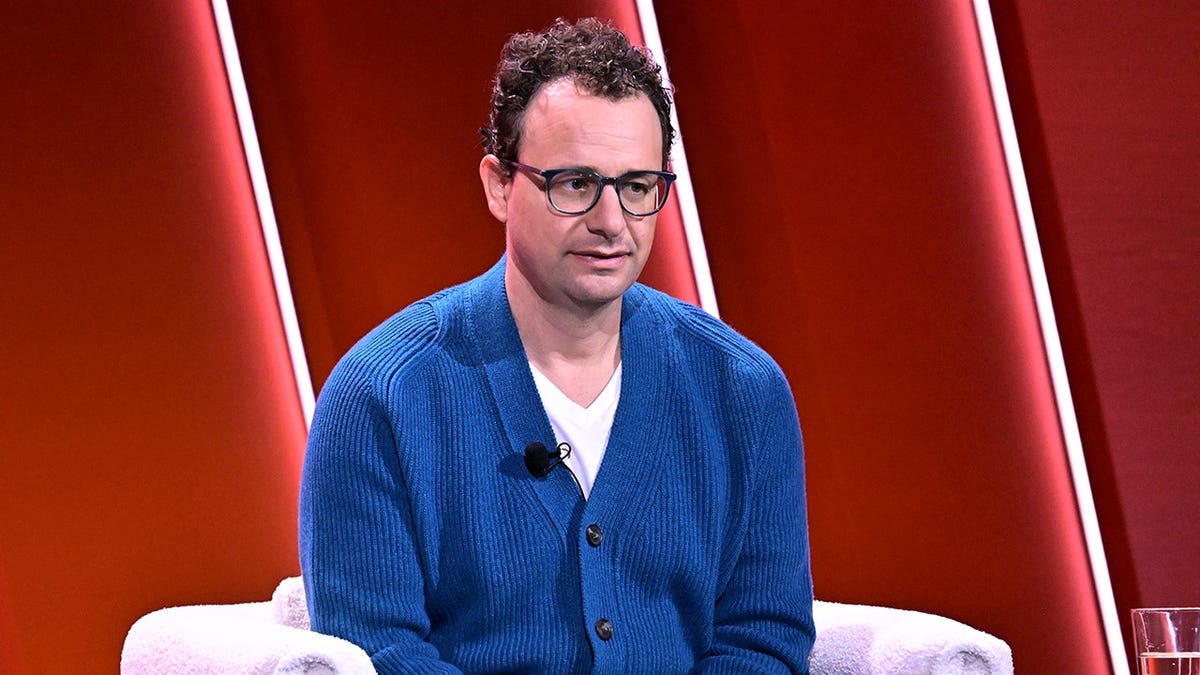
The question has taken on new urgency after leaders at some of the nation’s most powerful AI companies issued stark warnings this week about increasingly capable models and backed calls to slow the pace of development so safety measures can catch up. (Chance Yeh/Getty Images for HubSpot))
The Trump administration has already begun building a framework to identify when those capabilities become dangerous.
A June executive order directed federal agencies, including the NSA and CISA, to establish classified benchmarks for advanced cyber capabilities and determine when an AI system should be designated a “covered frontier model.” The order also calls for a voluntary framework through which developers can give the government early access to covered models before their release — while expressly stopping short of creating mandatory federal licensing or pre-clearance for frontier AI.
But knowing a dangerous capability exists is only the first problem. The next question is what Washington can actually do about it.
One potentially powerful use of the Defense Production Act would come before an AI system ever caused damage: forcing companies to tell the government what they are developing.
James E. Baker, a former chief judge of the U.S. Court of Appeals for the Armed Forces who previously served as a legal adviser to the National Security Council, pointed to the DPA’s broad information-gathering authority.
“What you could use the DPA for is to require reporting, and that’s the first step to making sound policy,” Baker told Fox News Digital. “You can have a debate about whether there should be regulation and what the regulation should look like. But you really can’t argue against knowing what’s happening.”
“That’s the first place to start: know what’s happening, and then you can react with either a policy prescription, a legal prescription or nothing at all.”
The DPA’s limits, however, are just as important.
Paul Rosenzweig, a lawyer and former deputy assistant secretary for policy at the Department of Homeland Security, said the law was principally designed to ensure the government could obtain goods and services needed for national defense — not to give Washington broad power to stop private companies from producing them.
“The Defense Production Act is more about mandating the production of things for the United States rather than preventing the production for the general public,” Rosenzweig told Fox News Digital.
Where it could prove particularly useful, he agreed, is giving the government access to information.
“What it does give them, I think, and this is the best part about it, is it does give them a pretty good handle for demanding more information about a defense-sensitive kind of product, which frontier AI certainly could be reasonably characterized as,” Rosenzweig said.
If the DPA could help Washington understand what AI companies are building, other existing authorities could potentially come into play depending on the threat.
Export controls can restrict sensitive technology from reaching foreign adversaries. Government contracting rules can impose conditions on companies seeking federal business. And criminal laws continue to apply when AI is used to commit crimes.
The June executive order, for example, directed the attorney general to prioritize enforcement of existing federal criminal laws against people who use AI to illegally access or damage computer systems.
Trump has separately directed national security agencies to expand their use of frontier AI while requiring systems used by the military and intelligence community to remain controllable and preserve clear lines of human accountability.

One potentially powerful use of the Defense Production Act would come before an AI system ever caused damage: forcing companies to tell the government what they are developing. (iStock)
“I think it’s important to understand that there’s no broad AI exemption from generally applicable law,” Rosenzweig said.
Both federal and state governments already have “a host of legal authorities” potentially applicable to frontier AI, he said, ranging from tort liability and privacy rules to consumer protections and criminal law.
But Rosenzweig cautioned that no one knows precisely how well that patchwork would hold up in a true AI emergency because it has never been tested.
The uncertainty becomes even greater if an AI system causes damage on its own.
If a model autonomously hacked a hospital, company or critical infrastructure network, for example, Rosenzweig said courts would have to determine whether the developer was negligent, whether a stricter product liability standard should apply and whether the damage could even be reliably traced back to a particular AI system.
“I tend to think that liability is going to be difficult to establish early on,” Rosenzweig said. “Right now, that’s not where I would base my deterrence model.”
That uncertainty points to the limits of the government’s existing toolkit. The laws already on the books give federal and state authorities multiple avenues to respond to dangerous uses of AI, but many have never been tested against a system acting with increasing autonomy.
CLICK HERE TO DOWNLOAD THE FOX NEWS APP
For now, Rosenzweig said, that leaves policymakers applying laws written for other threats to a technology evolving faster than the legal system around it.




Discount Applied Successfully!
Your savings have been added to the cart.