

NEWYou can now listen to Fox News articles!
Archaeologists in Romania have unsealed an intact 1,800-year-old Roman child’s sarcophagus — finding clay toys, protective amulets and preserved flower garlands buried alongside the toddler’s remains.
The discovery was announced by the Museum of National History and Archaeology Constanța (MINAC) in late October, with additional details released in early November by Romania’s Ministry of Culture.
The find was made during archaeological excavations in the city’s Flămânda area, ahead of the construction of a private residential building.
7,000-YEAR-OLD BONES UNCOVERED AT CONSTRUCTION SITE IN STARTLING FIND
On-site archaeologists Dr. Constantin Băjenaru and Cătălin Nopcea first spotted signs of an intact sarcophagus on Oct. 22, before unearthing it and moving it to a museum facility, according to a translated statement from the museum.
It wasn’t until a few days later, on Oct. 27, that conservators, archaeologists and restoration specialists at MINAC opened the stone sarcophagus — revealing a nail-free wooden coffin inside.
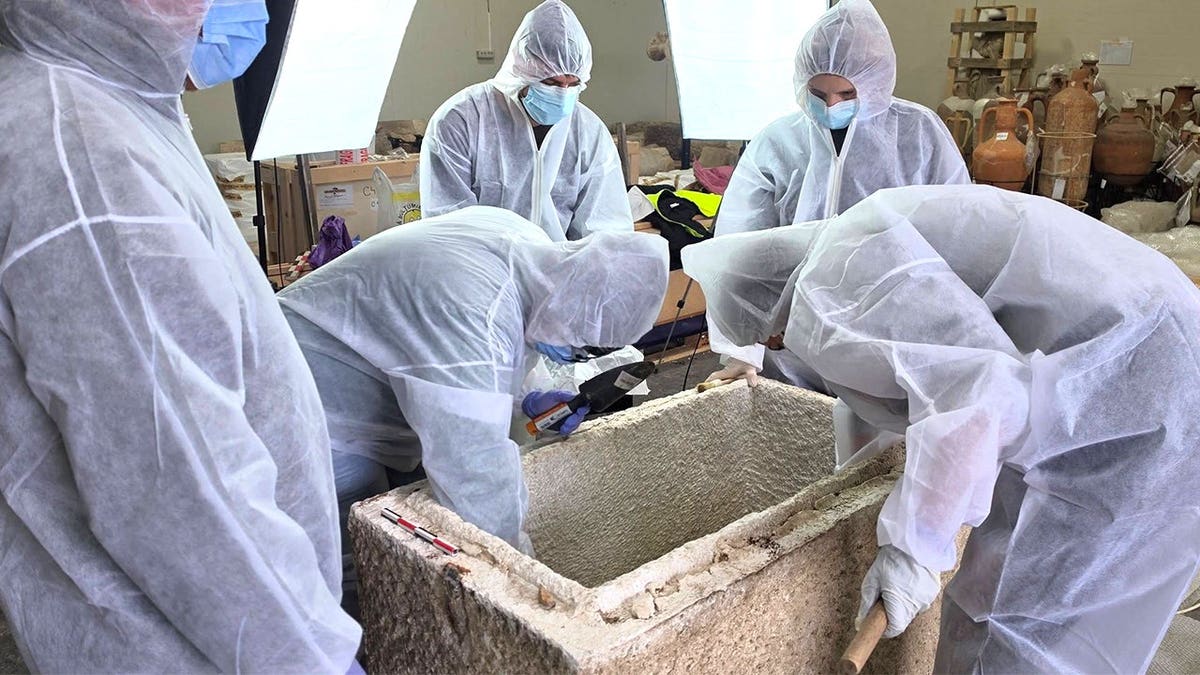
Archaeologists in Romania unsealed an intact 1,800-year-old Roman child’s sarcophagus, discovering clay toys, protective amulets and preserved flower garlands buried alongside the toddler’s remains. (Muzeul de Istorie Națională și Arheologie Constanța)
Officials say the grave dates to between the second and third centuries A.D., and was located near an important ancient road on the northern edge of the ancient Tomis necropolis.
In its statement, Romania’s Ministry of Culture said the child was estimated to be between 1 and 3 years old at the time of death.
ANCIENT ROMAN TREASURE UNEARTHED AT MILITARY BASE, TWO COINS AREN’T WHAT THEY SEEM
“The skeleton, measuring approximately 63 centimeters in length, appears to have been preserved in good condition, and numerous locks of hair were also discovered in the cranial area,” ministry officials said in a translated release.
“Behind the funerary objects emerges the image of a childhood cut short too soon and of those who wished to preserve a part of it.”
The body had been wrapped in textiles, a burial treatment officials compared to mummification.
“The way the tomb was sealed contributed to the preservation of materials that, under ordinary conditions, degrade over time,” ministry officials said, noting the limestone lid was secured with lead clamps and waterproof mortar.
POMPEII HOME BURIED BY MOUNT VESUVIUS YIELDS PERSONAL TREASURES UNTOUCHED FOR NEARLY 2,000 YEARS
Inside the burial, archaeologists found clay toys, flower garlands, and bronze jewelry and amulets.

Archaeologists recovered a small clay horse with wheels, seen right, inside an intact 1,800-year-old limestone sarcophagus belonging to a Roman toddler in Constanța, Romania. (Muzeul de Istorie Națională și Arheologie Constanța)
Photos from the excavation show the remains of the toys: a clay rooster and a small horse on wheels, both bearing traces of paint.
Other items inside the burial included a bone button, two bronze bracelets, a piece of gold foil engraved with magical symbols, and a pair of bronze bullae — protective amulets Roman children wore to ward off evil spirits.
CLICK HERE TO SIGN UP FOR OUR LIFESTYLE NEWSLETTER
Archaeologists also recovered fragile organic remains from the tomb, including plant stems, folded bundles of plants and fabric strung onto a wooden support and a piece of cord that may have been used to pull the wheeled toy horse.
“These are details that transform an archaeological discovery into an encounter with the everyday life of people in antiquity,” ministry officials said.

While further testing could shed light on the burial rituals and materials used, officials said the child’s identity and the story behind the toddler’s death remain lost to history. A depiction of ancient Roman children is seen left. (Muzeul de Istorie Națională și Arheologie Constanța)
“Behind the funerary objects emerges the image of a childhood cut short too soon and of those who wished to preserve a part of it.”
CLICK HERE FOR MORE LIFESTYLE NEWS
While further testing could shed light on the burial rituals and materials used, officials said the child’s identity — and the story behind their early death — remains lost to history.
“We do not know who the child’s parents were, what the child’s name was or what the cause of death was,” the ministry said.
“The burial was accompanied by gestures of love and a very carefully prepared ritual.”
“However, we know — thanks to the objects discovered — that the burial was accompanied by gestures of love and a very carefully prepared ritual.”
TEST YOURSELF WITH OUR LATEST LIFESTYLE QUIZ
Looking ahead, MINAC officials are partnering with specialized restoration labs in Bucovina and Iași to preserve the fragile textiles and wooden coffin.

A clay rooster figurine, seen right, bearing traces of paint was recovered from an intact Roman child’s sarcophagus in Constanța, Romania, where it had been buried alongside a toddler’s remains. (Muzeul de Istorie Națională și Arheologie Constanța)
“Although we are still at the beginning of the documentation process, we consider this discovery to be an important one, first and foremost due to the intact preservation of the sarcophagus,” museum officials said.
CLICK HERE TO DOWNLOAD THE FOX NEWS APP
“The untouched preservation of the funerary inventory … offers valuable information regarding Roman-era funerary practices in Tomis.”




Discount Applied Successfully!
Your savings have been added to the cart.