-
×
 GEORGE Magazine, Issue 3
1 × $47.00
GEORGE Magazine, Issue 3
1 × $47.00 -
×
 GEORGE Magazine, Issue 29, Collector’s Edition
1 × $195.00
GEORGE Magazine, Issue 29, Collector’s Edition
1 × $195.00
Subtotal: $242.00
 GEORGE Magazine, Issue 3
1 × $47.00 GEORGE Magazine, Issue 29, Collector’s Edition
1 × $195.00
GEORGE Magazine, Issue 3
1 × $47.00 GEORGE Magazine, Issue 29, Collector’s Edition
1 × $195.00 Subtotal: $242.00
By Jordan M. Clarke
In a society where 1 in 20 people get diagnosed with cancer and 1 in 4 deaths are caused by heart disease, when are we going to realize that what we have been doing simply isn’t working? Associations such as the FDA (Food and Drug Administration) and NCA (National Cosmetology Association) have been guilty of corruption for decades, resulting in chronic diseases, illnesses, and cancer. When the United States has the sickest citizens in the world, how will the government gain back the trust of Americans who have been betrayed by the poison these agencies allowed to slip by? How do we stop this never-ending cycle, and who is it benefitting?
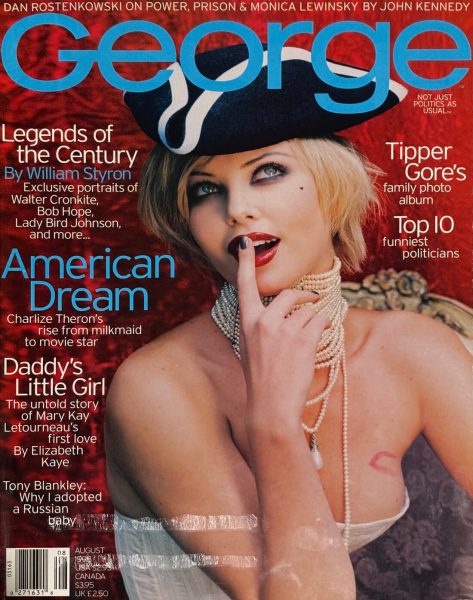
In George Magazine’s August 1998 issue, people like John Bailey (FDA’s director of cosmetics and color) were concerned about the health effects of many ingredients found in cosmetics like hair dye and some skin creams. “We don’t know if there’s a long term risk associated with some of these (products),” Bailey stated in the article titled, The Lipstick Lobby by Sheila Kaplan. The FDA proposed that beauty salons post signs warning that their coal-tar based hair-dye products can cause cancer, the industry mobilized. Congress and the FDA were then flooded with telegrams and letters, and the proposal died overnight.
The global pharmaceutical market is projected to reach $1.5 trillion to $1.7 trillion in revenue by 2025. In 2020, the global pharmaceutical industry generated around $1.27 trillion in sales.
Americans are one of the sickest people in the world. Countries like Switzerland, Japan, Singapore, Iceland, and Norway consistently rank among the healthiest due to their high-quality healthcare systems, emphasis on preventive care, healthy lifestyles, and social environments that support mental and physical well-being. Switzerland and the United States both have regulatory agencies that oversee the safety, efficacy, and quality of food, drugs, and medical devices within their respective countries. While their missions are similar, the agencies differ in structure, regulations, and approaches.
In George Magazine’s article, No Sugarcoating It by Renee Republic, we talk about the dangers of sugar on the body and brain. The article goes on to explain how one problem can lead to more serious ones over time. Rather than our doctors recommending a limited intake of sugars, they will allow you to keep doing the damage to yourself so they can give you medications to support your new illness. It almost seems like we are not receiving any type of help in regards to our health until something is officially diagnosed. It is estimated that by the year 2030, the annual medical and social costs related to diabetes and other preventable diseases will rise over $622 billion.
Switzerland follows EU standards for cosmetics because it is part of the European Economic Area (EEA). This regulation is the cornerstone of cosmetic product safety in Europe and has been largely adopted in Switzerland. Switzerland adheres to the EU’s list of banned and restricted substances. For example, ingredients like hydroquinone (used in skin lightening) and formaldehyde (a known carcinogen) are restricted or banned.
There are several ingredients commonly used in beauty and personal care products that are banned or restricted in European Union (EU) countries due to safety concerns but are still allowed in the United States. These ingredients have raised concerns regarding potential health risks, such as hormone disruption, skin irritation, or cancer. Parabens are restricted in the EU, and the use of certain parabens is limited due to concerns about potential endocrine disruption. Parabens are still widely used in the U.S. in various cosmetic products, including lotions, shampoos, and deodorants. Parabens are preservatives that prevent the growth of harmful bacteria and mold in products. However, studies suggest they may mimic estrogen in the body, potentially leading to hormone disruption.
Formaldehyde and formaldehyde-releasing preservatives are banned or heavily restricted in the EU, particularly in personal care products such as shampoos, conditioners, and nail polishes. Formaldehyde is a known carcinogen, and it can also cause skin irritation and allergic reactions. These ingredients are still allowed in the U.S., although some manufacturers have voluntarily removed them from their products.
Both BHA and BHT are restricted in the EU and are not allowed in products that are used around the mouth, such as lipsticks. These ingredients are used as antioxidants and preservatives but have been linked to cancer, endocrine disruption, and skin irritation. BHA and BHT are still widely used in the U.S. in cosmetics, particularly in products like lipsticks, moisturizers, and eye makeup.
The U.S. allows the use of synthetic fragrances in cosmetics without mandatory disclosure of individual ingredients, which includes many phthalate-based fragrances. Fragrances, particularly those that are phthalate-based, can be associated with allergic reactions, endocrine disruption, and skin irritation. The EU has stringent rules requiring the disclosure of specific fragrance allergens in cosmetics. Certain synthetic fragrances are also restricted due to their potential to cause allergic reactions or hormonal disruption. The EU has stringent rules requiring the disclosure of specific fragrance allergens in cosmetics. Certain synthetic fragrances are also restricted due to their potential to cause allergic reactions or hormonal disruption.
The EU operates on the precautionary principle, meaning if there is significant concern or uncertainty about an ingredient’s safety, it is banned or restricted until proven safe. This results in more stringent safety standards for cosmetic products. The FDA in the U.S. does not have as strict of a regulatory framework when it comes to cosmetics. The FDA does not require pre-market approval for most cosmetic products, and the regulation of ingredients is less comprehensive compared to the EU and Switzerland. This leads to the use of ingredients that are considered safe in the U.S. but have raised red flags in other countries. Cosmetic companies in America often act based on consumer demand and market pressures. While there is growing awareness about harmful ingredients, companies are slower to remove ingredients unless there is a legal requirement or strong public pressure to do so.
According to an article from Womensvoices.org, salon workers are at greater risk for certain health problems. There’s decades worth of research on the beauty workforces causing different types of cancers, neurological diseases, birth defects, and reproductive disorders, as well as skin diseases, asthma, and other breathing problems. The average consumer is exposed to the chemicals found in professional hair dyes a fraction of what a cosmetologist will face, breathing in toxic chemicals such as P-phenylenediamine (a coloring agent that can cause skin and eye irritation, asthma, dizziness, convulsions, and coma) for 8 hours a day, 5 days a week.
NBC News’ Kate Show recently posted a report on a new lawsuit that alleges a link between hair-dye ingredients and cancer. Hector Corvera, a professional hairstylist of 40 years, is suing multiple hair dye companies after his recent bladder cancer diagnosis. Corvera explains that coloring hair for four decades has taken a toll on his body, and he was diagnosed with bladder cancer in 2023. He is currently the plaintiff in a new lawsuit against 13 companies. His attorney, Allen Smith, says that Corvera’s repeated exposure to chemicals in their hair-dye products caused his cancer and that he plans to file multiple other hair-dye cases soon. When asked what Smith’s accusing those companies of doing, he responded, “I’m accusing these hair-dye companies of manufacturing a product that’s unsafe—at a minimum I would want these manufacturers to provide a warning.” NBC asked half a dozen researchers and doctors who say that while there isn’t strong evidence of a link to cancer for clients, numerous studies have found a link between repeated work exposure and an increased risk for bladder cancer.
The FDA states that “under the law, cosmetic products and ingredients generally do not need FDA premarket approval.” Although some companies have reformulated their products after some hair dyes were found to cause cancer in lab animals in the 1980s. “There are definitive studies that have come out decades later that show the manufacturers did in fact not do what they said they were going to do.” This alleges that the companies who make the products are misleading the FDA along with the thousands of salon workers and people who use these products.
Brazilian Blowouts, a popular hair treatment that eliminates frizz and produces a shiny, sleek result in the hair, was marketed as “formaldehyde-free.” This texture-smoothing treatment became popular in the mid-2000s. The treatment became widely recognized after being marketed as a way to achieve smooth, shiny, frizz-free hair with long-lasting results. The allure was in its ability to straighten hair, reduce frizz, and cut down on styling time, all while still allowing the natural hair texture to be somewhat preserved. By the late 2000s and early 2010s, the Brazilian Blowout treatment became a go-to salon service for those seeking a more manageable, sleek look without fully committing to permanent hair straightening. It attracted a wide audience, including celebrities, which helped propel its popularity even further.
Methylene glycol is a chemical compound that is often included in some hair-smoothing treatments like the Brazilian Blowout. When heat (such as from a flat iron or blow dryer) is applied to the treatment, the methylene glycol can break down and release formaldehyde gas. While the presence of formaldehyde in these treatments is controversial, the amount released can depend on factors such as the specific product, the heat applied, and ventilation during the procedure. Some brands market their treatments as “formaldehyde-free,” but they may still contain other ingredients that break down into formaldehyde when heat is applied.
With all the damage that happens as a result of toxic ingredients slipping past the FDA, people have resorted to using mobile apps like Yuka. The Yuka app allows consumers to scan the barcode of food and cosmetic items, offering insight on their nutritional quality, ingredients, potential allergens, and harmful additives. The app uses a rating system to evaluate products, helping users identify healthier options, avoid harmful ingredients, make more informed decisions while shopping for groceries, and make product transparency more accessible.
As consumers continue to fight for better transparency and healthier choices, the rise of apps like Yuka is a beacon of hope. It empowers individuals by providing critical information on food and cosmetic products that many traditional regulatory systems have failed to address. With the growing awareness of harmful ingredients in cosmetics, food, and personal care products, the battle for stricter regulations and better consumer protection has gained momentum.
The U.S. continues to lag behind countries like Switzerland and members of the European Union when it comes to banning dangerous chemicals, but the public’s demand for safer products is louder than ever. Lawsuits and the increasing health concerns around cosmetic ingredients, like those in hair dye, highlight the urgent need for change. Whether it’s the toxic chemicals in beauty treatments or the hidden dangers in everyday products, it’s clear that society can no longer turn a blind eye.
In the face of this, tools like Yuka offer a way forward. By arming consumers with knowledge, Yuka is part of a larger movement pushing back against the corporate interests that prioritize profit over public health. The question remains: will government agencies, like the FDA, take heed of these concerns, or will it continue to rely on outdated regulations that put the health of millions at risk? It’s time to demand a change that prioritizes the well-being of people over the bottom line, and the future of health-conscious technology apps will be crucial in that fight. The answer to whether we will ever break free from this cycle depends on how loudly we demand transparency, accountability, and reform. The power is now in the hands of the informed consumer.




Discount Applied Successfully!
Your savings have been added to the cart.