
NEWYou can now listen to Fox News articles!
Cuba acknowledged that 32 of its citizens — described by the government as members of the island’s armed forces and intelligence services — were killed during the U.S. operation that seized Venezuelan leader Nicolás Maduro in Caracas, declaring two days of national mourning in their honor.
Havana did not specify where the personnel were stationed during the raid. But their deaths have renewed scrutiny of years of reporting and international investigations documenting Cuba’s deep and covert involvement inside Venezuela’s military and intelligence structures.
Jorge Jraissati, a Venezuelan political analyst, said Cuba’s intelligence role was critical to the consolidation of power first under Hugo Chávez and later under Maduro. “Experts usually link Cuba as the most important intelligence provider of Venezuela. This includes issues like running elections, building diplomatic leverage with other countries and keeping the security forces in check, among others,” he told Fox News Digital.
TRUMP VOWS US WILL ‘RUN’ VENEZUELA UNTIL ‘SAFE’ TRANSITION OF POWER
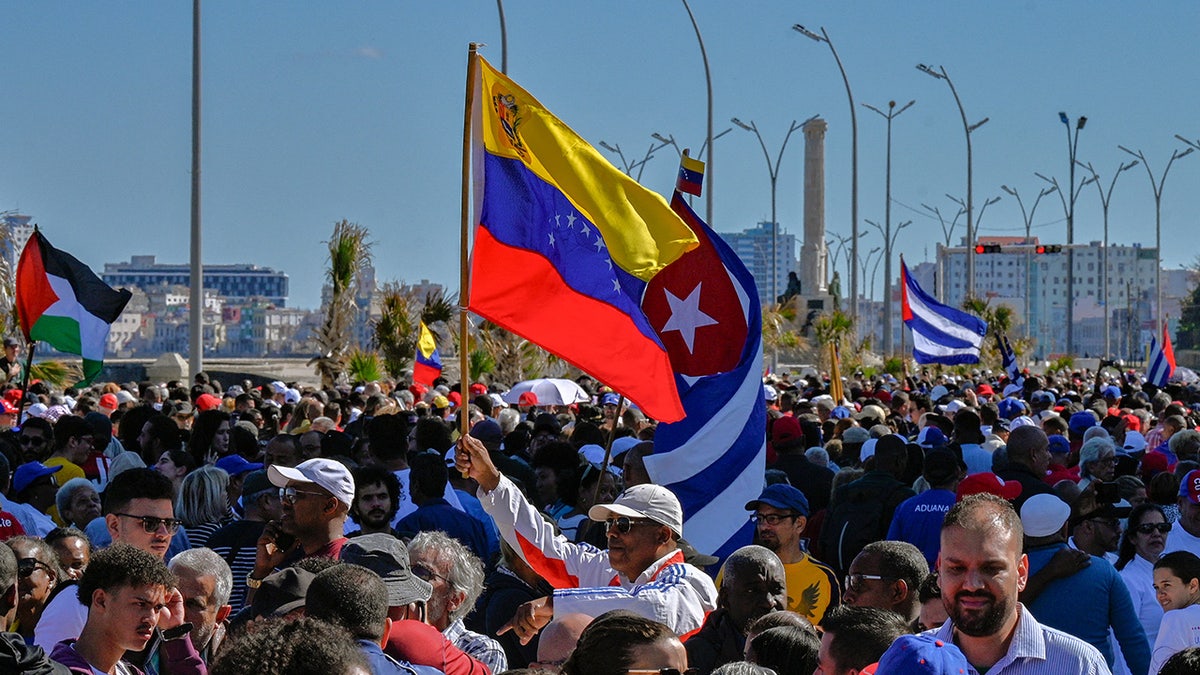
Cubans hold a Venezuelan national flag with a Cuban one during a gathering in support of Venezuelan leader Nicolás Maduro in Havana on Jan. 3, 2026, after U.S. forces captured him. President Donald Trump said Saturday that U.S. forces had captured Venezuela’s leader Nicolás Maduro after bombing the capital Caracas and other cities in a dramatic climax to a monthslong standoff between Trump and his Venezuelan arch-foe. (Adalberto Roque / AFP via Getty Images)
Jraissati said any transition in Venezuela “would require the American government, in partnership with the Venezuelan people, to work together on minimizing the Cubans’ influence over Venezuela’s state apparatus and society at large.”
A Reuters investigation published in August 2019 found that two confidential agreements signed in 2008 granted Cuba sweeping access to Venezuela’s armed forces and intelligence services. Under those agreements, Cuban officials were authorized to train Venezuelan troops, restructure intelligence agencies and help build an internal surveillance system focused on monitoring Venezuela’s own military, according to the report.
Those arrangements played a central role in transforming Venezuela’s military counterintelligence agency — the General Directorate of Military Counterintelligence (DGCIM) — into a force designed to detect dissent, instill fear within the ranks and ensure loyalty to the government, the investigation found.
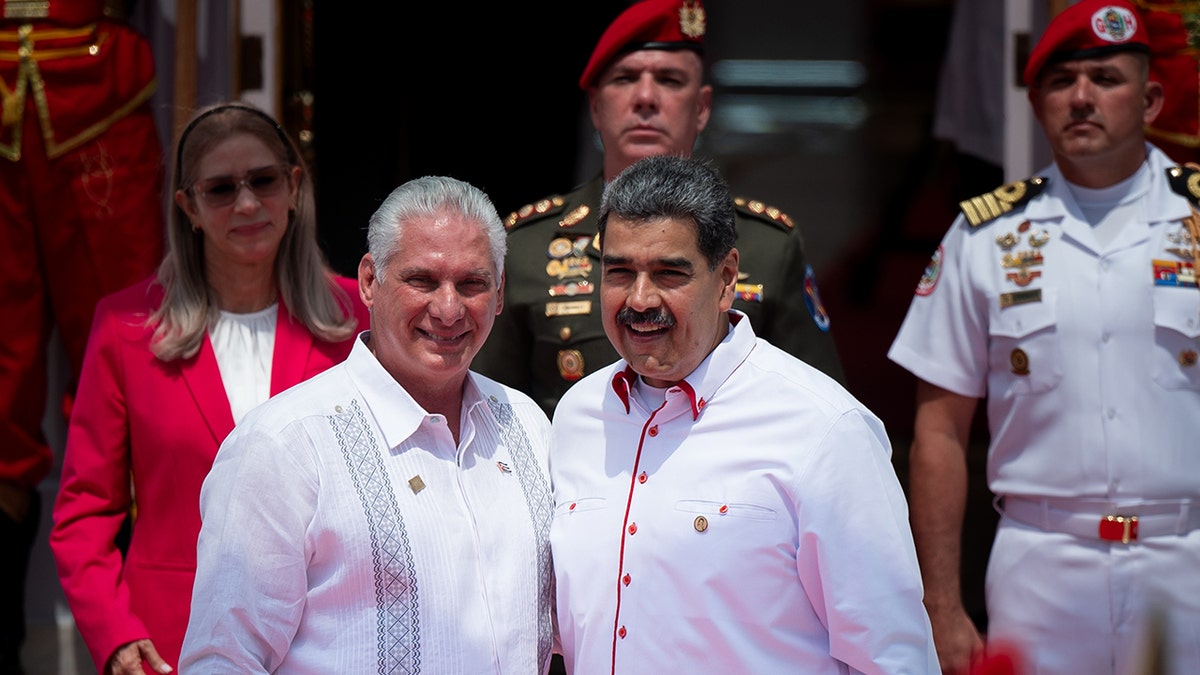
Nicolas Maduro, Venezuela’s president, right, greets Miguel Diaz-Canel, Cuba’s president, during the 23rd States of the Bolivarian Alliance for the Peoples of Our America People’s Trade Treaty (ALBA-TCP) Summit at Miraflores Palace in Caracas, Venezuela, on Wednesday, April 24, 2024. The alliance of leftist countries in the region are meeting to reject the U.S.’ reimposed oil sanctions on Venezuela, ending a six-month reprieve for the Maduro regime.
The findings were later echoed by the United Nations Independent International Fact-Finding Mission on Venezuela, which said it reviewed a 2008 memorandum of understanding between Cuba and Venezuela. The U.N. mission reported that the agreement provided for Cuban advisory oversight in the restructuring of Venezuelan military intelligence, including the creation of new agencies, training of counterintelligence officers and assistance with surveillance and infiltration techniques.
Former Venezuelan officials cited by Havana Times and El Toque have described Cuban advisers embedded across some of the country’s most sensitive institutions, including the civilian intelligence service SEBIN, DGCIM, the defense ministry, ports and airports, and Venezuela’s national identification system.
Human rights organizations and international investigators say those structures were central to the government’s response to mass protests in 2014 and 2017, when Venezuelan security forces carried out widespread arrests and deadly crackdowns on demonstrators.
The U.N. fact-finding mission documented patterns of extrajudicial executions, arbitrary detention and torture, and reported that Cuban advisers helped train Venezuelan personnel in methods used to track, interrogate and repress political opponents.
CLICK HERE TO DOWNLOAD THE FOX NEWS APP
Experts say Cuba’s admission that its military and intelligence personnel were killed during a U.S. operation inside Venezuela has sharpened focus on the alliance’s true depth, turning years of documentation into an immediate geopolitical issue.
Discount Applied Successfully!
Your savings have been added to the cart.