🧭 What’s actually new…and what isn’t (as of May 22, 2026)
✅ 1. FBI and Congress intensify cooperation
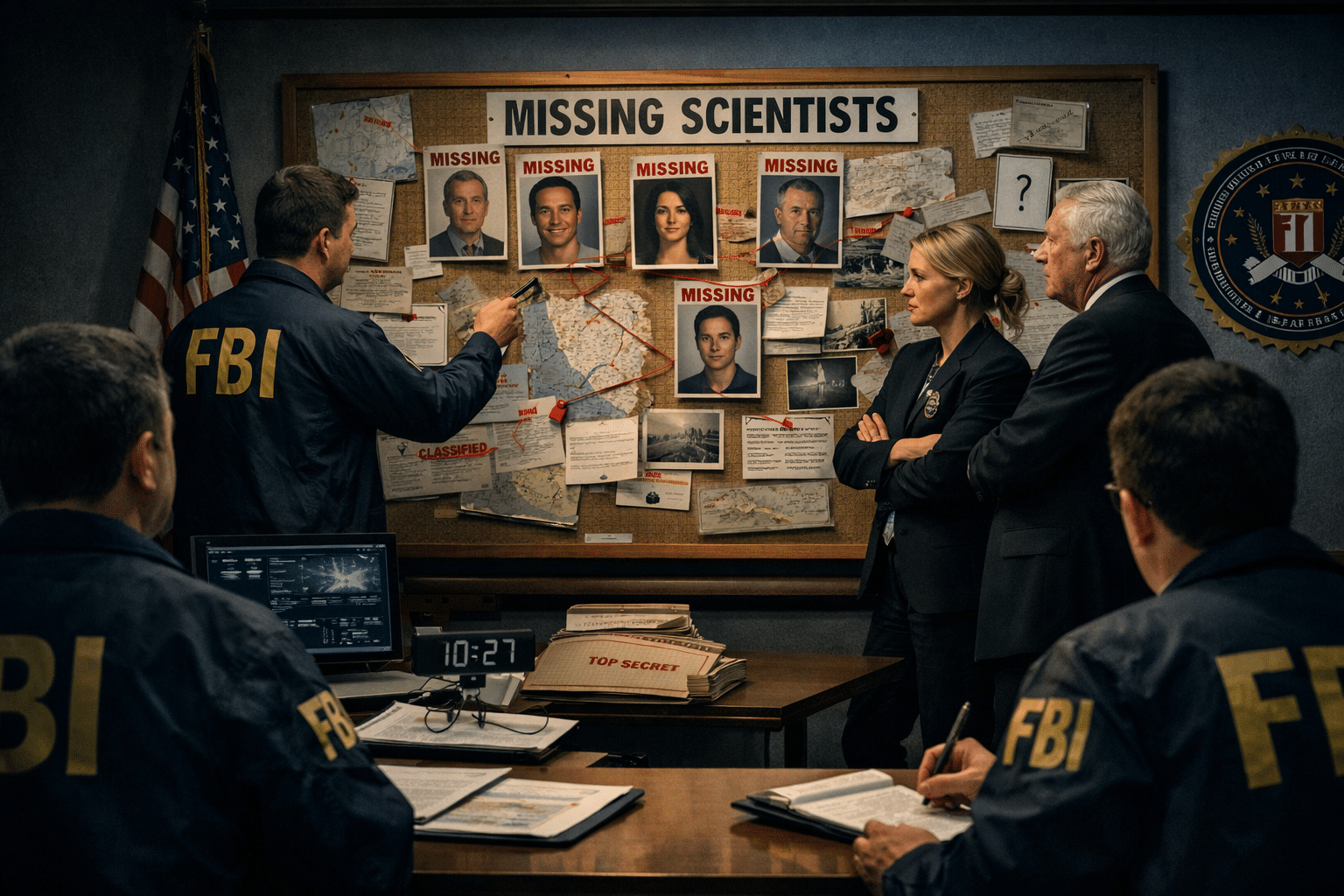
Federal authorities are now running parallel investigations into at least a dozen cases involving scientists and officials tied to aerospace, nuclear, and defense research.
The House Oversight Committee, led by Chairman James Comer, has demanded agency briefings and labeled the situation a potential national‑security threat if connections are proven. MSN
✅ 2. White House acknowledgment
The White House confirmed it requested updates from relevant agencies after reporters asked whether any investigation was examining possible links. Officials reiterated that no confirmed connections exist among the cases, but the administration is “monitoring developments closely.” Newsweek
✅ 3. Pattern perception vs. reality
While online posters continue to group the incidents into a single narrative, investigators emphasize that the cases span different disciplines, locations, and causes…from confirmed suicides and homicides to natural deaths and unresolved disappearances.
Examples include:
- Monica Reza (NASA JPL)…missing since June 2025
- William Neil McCasland (retired Air Force general)…disappearance still unsolved
- Amy Eskridge…confirmed suicide
- Carl Grillmair and Nuno Loureiro…homicides with known suspects MSN
✅ 4. Expert caution
Retired FBI agent Jennifer Coffindaffer and analysts like Jesse Walker warn that adding loosely connected names creates a false sense of pattern, comparing the narrative’s growth to past “death‑list” myths. MSN
🔍 Blind‑Spot & Bias Analysis
Blind spots:
- Employment verification gaps: Some individuals’ ties to NASA or national labs remain unconfirmed.
- Cause‑of‑death opacity: Several cases lack publicly released autopsy results.
- Jurisdictional fragmentation: Local agencies handle evidence separately, limiting cross‑case synthesis.
- Foreign‑actor speculation: No verified proof of foreign interference, though some lawmakers cite “optics” of clustering near high‑security research hubs.
Bias patterns:
- Pattern‑seeking bias: Online communities link unrelated tragedies to fit a narrative.
- Authority bias: Political statements are treated as evidence.
- Confirmation bias: Distrust of institutions fuels belief in coordination.
- Availability bias: Viral posts amplify the impression of escalation even when facts remain static.
Bottom line:
Despite heightened scrutiny, no verified connective tissue has emerged. The story’s momentum is driven more by public anxiety and political optics than by confirmed investigative breakthroughs. Newsweek MSN
*****
Get the Aetherian Realm’s Final Judgments Map: https://georgemagazine.com/product/aetherian-realms-final-judgments-map/
Get Ageless Tech. Using AI to Your Advantage: https://georgemagazine.com/agelesstech/
Get George’s America’s 250th: https://georgemagazine.com/product/america-250-celebrating-legacy/
Get The George Dispatch: https://georgemagazine.com/thedispatch/
Get George Magazine. Print or Digital: https://georgemagazine.com/subscribe-george-magazine/
Get George Junior. Print or Digital: https://georgemagazine.com/subscribe-george-junior-magazine/
Get George’s Crypto E-Playbook: https://georgemagazine.com/product/the-crypto-playbook-by-george-magazine/
Visit Project Looking Glass: https://projectlookingglass.org/



![Enjoy the [Road] Show Travel Mug with Handle, 14ozEnjoy the [Road] Show Travel Mug with Handle, 14oz](https://georgemagazine.com/wp-content/uploads/2024/08/479070202831754764_2048-300x300.jpeg)