


BRADY, Nebraska – In the Sandhills of Nebraska, some grazing pastures look more like the Sahara Desert. The Morrill Fire — the largest wildfire in Nebraska history — scorched vast stretches of land in mid-March.
Farmers and ranchers across western Nebraska are now trying to recover, but severe drought conditions are making matters worse.
“The wind was screaming, maybe 70 mph. They said in 10 minutes it traveled 14 miles,” said Joe Van Newkirk, owner of Van Newkirk Herefords Ranch. “We heard that there was a fire in Angora, which is about 50 miles north-west of our headquarters, we just kind of looked at the map and there was just no way that this place was not going to get burned.”
The ranch, located in Oshkosh, Nebraska, has been in the Van Newkirk family for 140 years. The operation holds an annual bull sale, selling 250 to 300 bulls to ranches across the country.
Thankfully, the Van Newkirk home was spared. It sits miles away from grazing pastures that are now almost unrecognizable after the fire.
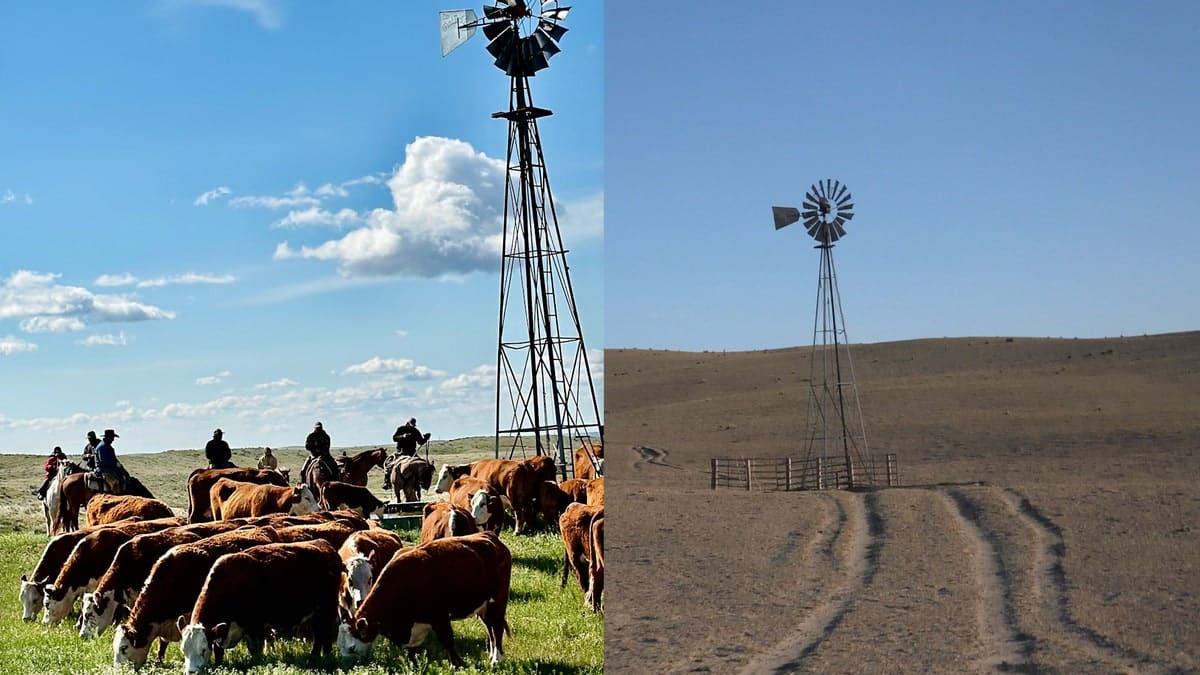
Before and after the Morrill Fire at Van Newkirk Herefords (Van Newkirk Herefords)
“We didn’t have any cattle on here, or any buildings to speak of. So we were very lucky in that respect,” said Van Newkirk. Around a third of his summer range burned in the fire.
There is still extensive cleanup work ahead. Livestock watering tanks are now completely filled with sand.
“We could probably come up here and shovel them out but who says it’s not going to blow right back in,” said Van Newkirk. “We’re gonna let this country heal, let the wind go down. Maybe next spring, winter, we’ll come up here and fix this stuff.”
While surveying the ranch, Van Newkirk said he recently noticed the first signs of improvement since the fires erupted in March.
“This fire was the 13th, 14th of March, and by the 1st of May, it didn’t look a whole lot different up here. The grass hadn’t started,” he said. “But just since then, four or five days, it’s made a difference. We haven’t received any moisture to speak of.”
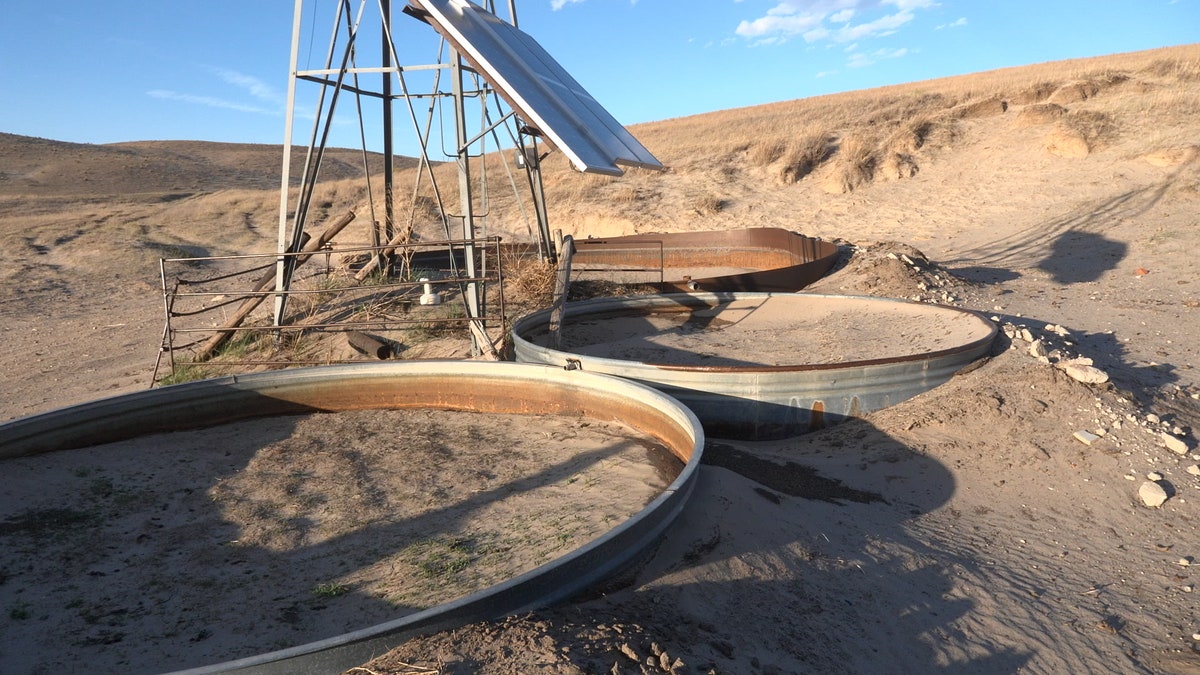
The watering tanks are filled with sand in the grazing pastures of Van Newkirk Herefords. (Kailey Schuyler )
The Morill fire burned 642,029 acres, according to NOAA. Severe drought conditions are compounding the damage. The latest U.S. Drought Monitor shows more than 90% of Nebraska is experiencing drought, with growing portions of the state classified under severe, extreme and exceptional drought conditions.
But the Morrill Fire was not the only wildfire burning in Nebraska at the time.
“It burned down the shop, and my corrals, and all the hay in my yard ended up going,” said Owen Johnson, Operator of Bearded Lady LLC.
The Cottonwood Fire also tore through Nebraska, scorching 129,253 acres. The blaze hit Bearded Lady Ranch in Brady, Nebraska, which raises registered quarter horses.
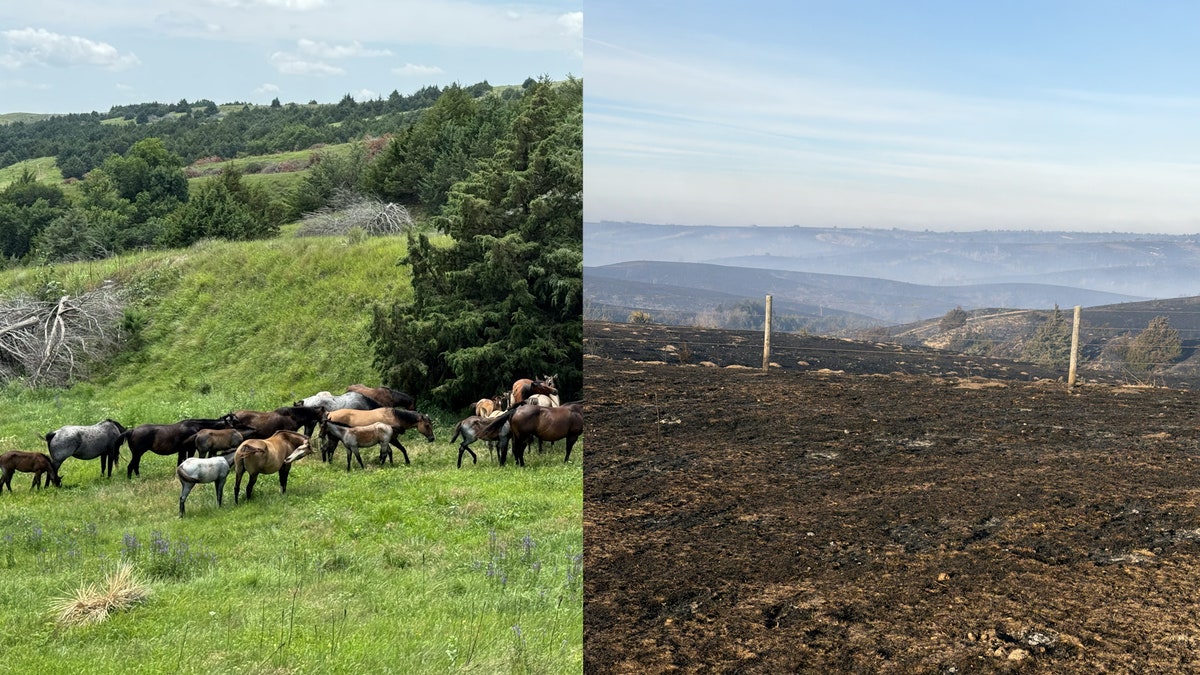
Before and after the Cottonwood Fire at Bearded Lady LLC (Bearded Lady LLC)
“I have a dozer at the house, and I tried to bulldoze a fire break on the north and west sides of the house,” Johnson said. “So that, essentially, once the fire hit that line, my hope was that it would save at least the house, the buildings around the house, the farmstead.”
“I actually dozed about 120 or 130 feet, but the wind was just too strong. It actually jumped that bare ground and burned up to the house,” he added.
THE SURPRISING REASON WHY AMERICANS COULD FACE HIGH BEEF PRICES FOR YEARS
Although his home survived, Johnson said the ranch still faces major challenges.
“I know I need to rebuild my shop, so that I have somewhere to put the stuff that I need to make it through the days. But we just haven’t got any rain,” Johnson said. “We don’t have any fences. All my horses are in dry lots, which is not typically how I do things.”
Johnson also said he has noticed behavioral and reproductive changes in his horses since the fires and drought.
“I don’t know if it’s from the drought or the stress, but usually after they foal, they have a pretty routine cycle for when they come back into heat,” Johnson said. “You can start breeding those mares back again, and my mares just aren’t coming into heat.”
“So now you’re sitting here going, man, when are we gonna get the fencing done, and when’s it gonna rain? And even if everything else happens, if we don’t get mares to where they’re going to have us foals for next year, how are we going to make it through the next year?” he added.
Despite the hardship, Johnson said volunteers and donations from across the country have helped keep the ranch operating.
“The outreach from people, it almost gives you a different view of society,” Johnson said. “There were people coming from all over the United States.”
“There was hay from Georgia and Wisconsin, and I don’t even know all the states, but there were literally people driving 12 or 13 hours to bring hay out — not just to us, but to other neighbors and other people that were affected by the fires,” he added.
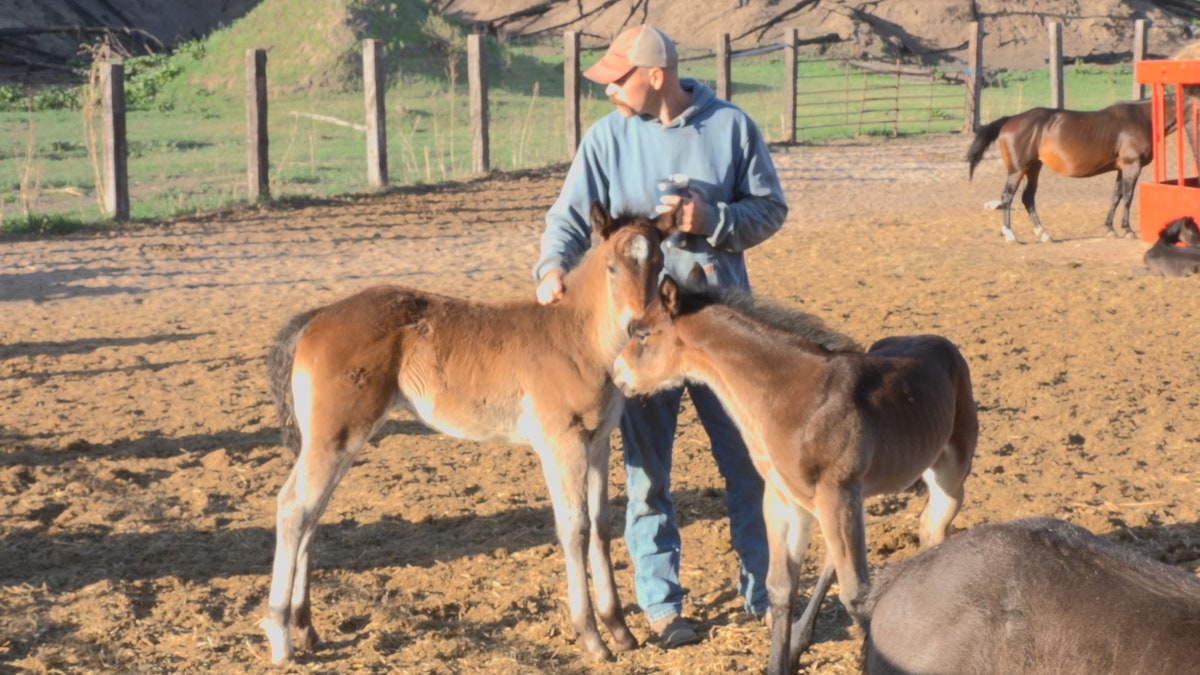
Bearded Lady LLC is trying to keep the Blues Kingfisher and Ruano Rojo Blue Valentine lines alive. (Kailey Schuyler)
THE SINGLE CRUSHING PROBLEM AMERICAN CATTLE RANCHERS WISH TRUMP WOULD FIX INSTEAD
Van Newkirk shared a similar sentiment about the support pouring into ranch country.
“You know, that’s where that really chokes me up, all the outpouring of people nationwide to help this cattle community. It’s a tight-knit community, our hometown,” said Van Newkirk. “The day of the fire, our fire department looked like a commissary. I mean there was just so much food, Gatorade, palettes of water. There was a bushel basket full of chapstick for these firemen.”
But both ranchers said recovery ultimately depends on rainfall.
“It’s just miles upon miles of drought and it’s affecting everybody. I would feel pretty confident to say there’s not very many farmers or ranchers right now that don’t have some sort of stress or concerns about the lack of precipe,” said Johnson.
“This country’s dry, and we could use all the prayers that you could have us,” said Van Newkirk.
Nebraska Governor Jim Pillen has requested that President Donald Trump issue a major disaster declaration related to the wildfires. The funding would assist with covering the cost of damage to public infrastructure.
CLICK HERE TO DOWNLOAD THE FOX NEWS APP
Pillen said in a statement, “”As Nebraska faced historic wildfires, the people of our state came together to jumpstart the recovery process. I’m submitting my request for a disaster declaration to the White House and FEMA. We appreciate President Trump’s attention to this matter and his long-standing support of our state when we have requested disaster recovery funding.”
There are currently several relief funds and GoFundMe pages to help those impacted stay afloat.




Discount Applied Successfully!
Your savings have been added to the cart.