


A strange “golden orb” pulled from more than 2 miles beneath the Gulf of Alaska, once rumored to be everything from an alien egg to an unknown species, has finally been identified after a yearslong scientific investigation.
Researchers with NOAA and the Smithsonian announced the unusual object, first discovered in 2023 during a deep-sea expedition, is a remnant from a rarely seen giant deep-sea anemone called Relicanthus daphneae, specifically part of the organism that anchored it to the ocean floor.
The discovery was made using a remotely operated vehicle exploring about 3,250 meters (over 2 miles) deep, where it encountered an odd golden structure attached to a rock.
The strange, mound-shaped mass with a small opening stunned scientists, who admitted at the time they had no idea what they were looking at.
SCHOOLBOY SPOTS AMERICAN REVOLUTION WARSHIP ON BEACH AFTER STORM UNCOVERS 230-YEAR-OLD WRECK
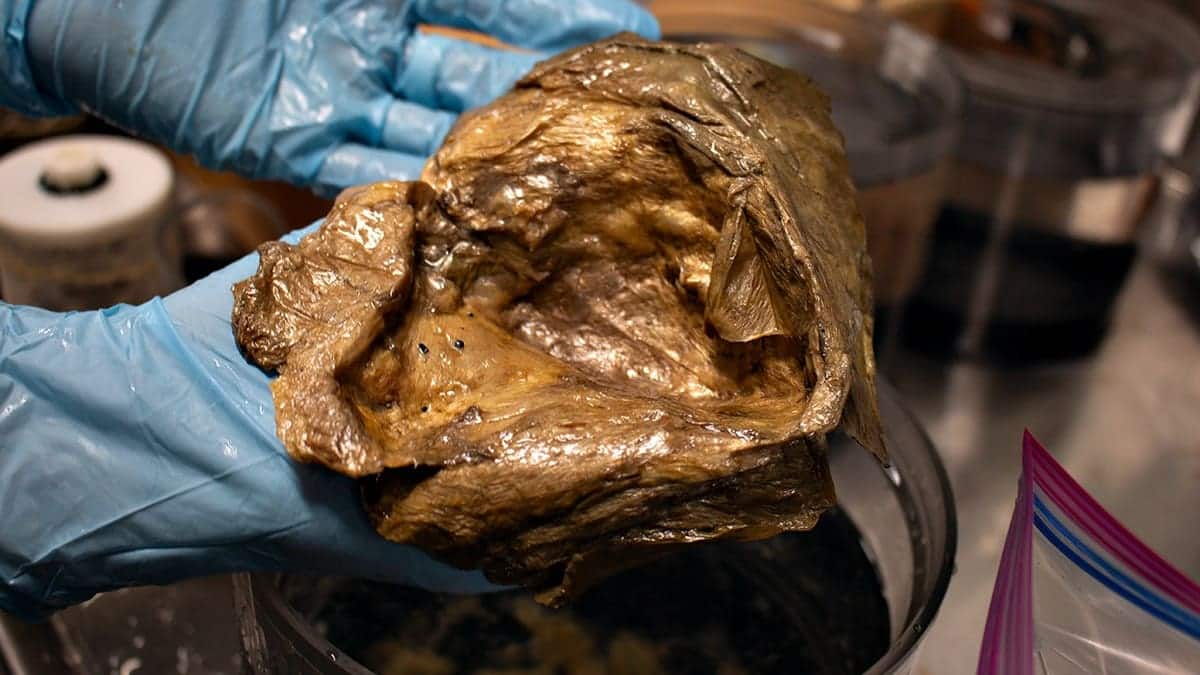
A close-up image of the “golden orb” in the lab of the Smithsonian Institution. (NOAA Fisheries)
“Was it an egg case? A dead sponge? Had something crawled into it … or out of it?” scientists asked.
The unusual find quickly captured public attention, fueling speculation online and within the scientific community. But determining its identity turned out to be anything but simple.
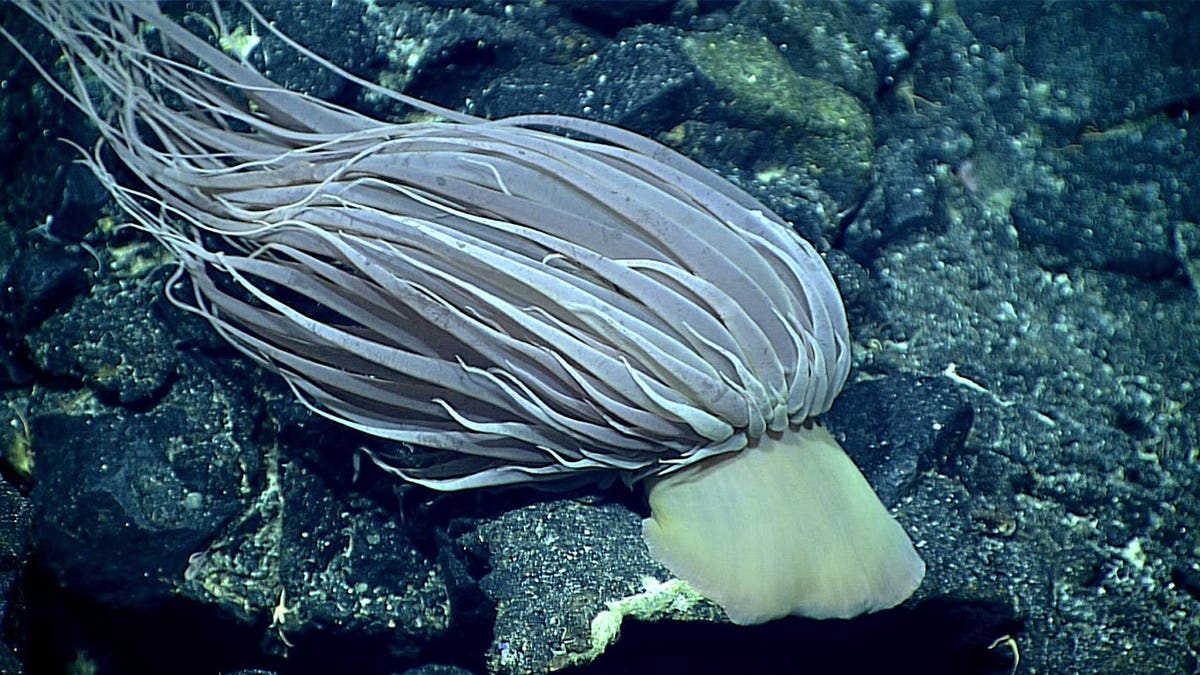
This deep-sea anemone, Relicanthus daphneae, which was observed during a 2016 expedition on NOAA Ship Okeanos Explorer in the Mariana Islands region, is not the “golden orb,” but it’s an anemone of the same species as the one that left its mysterious golden base on Alaska’s seafloor. Note the similar base of the Mariana Islands anemone (the part attached to the rock). (NOAA Ocean Exploration, Deepwater Exploration of the Marianas)
Dr. Allen Collins, a zoologist and director of NOAA Fisheries, said scientists needed to go beyond their routine processes and enlist the expertise of multiple people to solve it.
SHOCKING DISCOVERY IN FLORIDA WAREHOUSE LEAVES OFFICIALS SEARCHING FOR WHAT WENT WRONG
“This was a complex mystery that required morphological, genetic, deep-sea and bioinformatics expertise to solve,” Collins said.
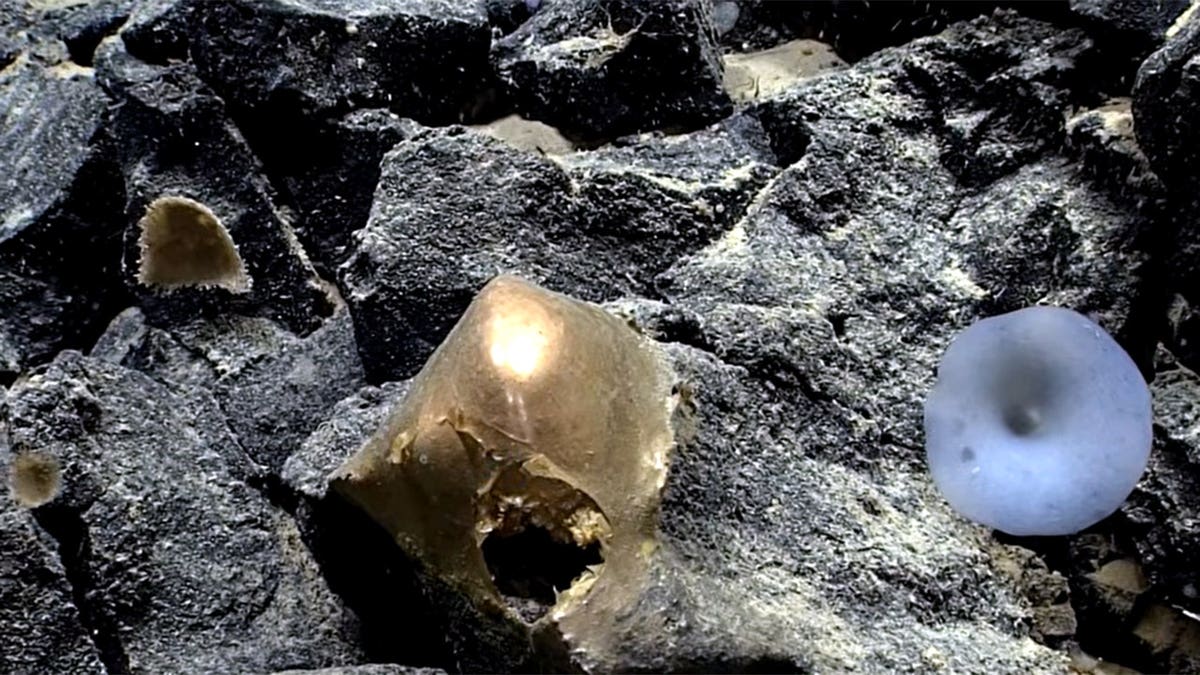
In 2023, during NOAA’s Seascape Alaska 5 expedition, scientists found the golden-colored life form attached to a rocky outcropping at a depth of nearly two miles. (NOAA Ocean Exploration)
Scientists initially struggled because the object lacked recognizable animal features. But closer analysis revealed it was made of fibrous layers packed with stinging cells, pointing to a connection with cnidarians, the group that includes corals and anemones.
CLICK HERE TO DOWNLOAD THE FOX NEWS APP
Capt. William Mowitt, acting director of NOAA Ocean Exploration, said the “golden orb” was just one of many “captivating mysteries” hidden in the deep ocean.
“This is why we keep exploring — to unlock the secrets of the deep and better understand how the ocean and its resources can drive economic growth, strengthen our national security and sustain our planet,” Mowitt said.




Discount Applied Successfully!
Your savings have been added to the cart.