
NEWYou can now listen to Fox News articles!
As the Supreme Court heads into the new year, its docket makes clear that the justices aren’t easing into a quiet second half of the term. This winter, we’ll get hearings in a series of cases that go to the core of federalism, equal protection, executive power and even the meaning of citizenship itself. And looming behind the argument calendar is the anticipation of major opinions — some of them likely to arrive well before the traditional end-of-June finale — that will shape the legal and political landscape for years to come.
The January calendar opens with Chevron v. Plaquemines Parish, a case the court should use to put an overdue stop to the abuse of state tort law as a weapon against nationally significant industries. At issue is whether energy companies sued by Louisiana parishes over decades-old oil-and-gas activity may remove those cases to federal court. That question may sound technical, but the stakes couldn’t be higher.
Local governments, backed by well-funded activist groups, have pursued environmental claims designed not to remedy concrete harms, but to use sympathetic state courts to impose sweeping policy change. Allowing such suits to proceed in venues hostile to manufacturers and producers invites inconsistent legal standards and massive verdicts untethered from federal policy. A ruling for Chevron wouldn’t immunize companies from accountability; it would prevent state courts from becoming shadow regulators of national energy policy.
And that theme will reappear if the justices take up the Colorado climate-tort case brought by Boulder, which I’ve discussed elsewhere. These lawsuits attempt an end-run around Congress and the EPA by using state nuisance law to regulate global emissions. The Supreme Court needs to take this case because allowing 50 states (and thousands of municipalities) to impose their own climate regimes through litigation would be unworkable, unconstitutional and economically disastrous.
TRUMP’S SIGNATURE TARIFFS HANG ON KEY QUESTION ABOUT CONGRESS’ POWER BEFORE SUPREME COURT
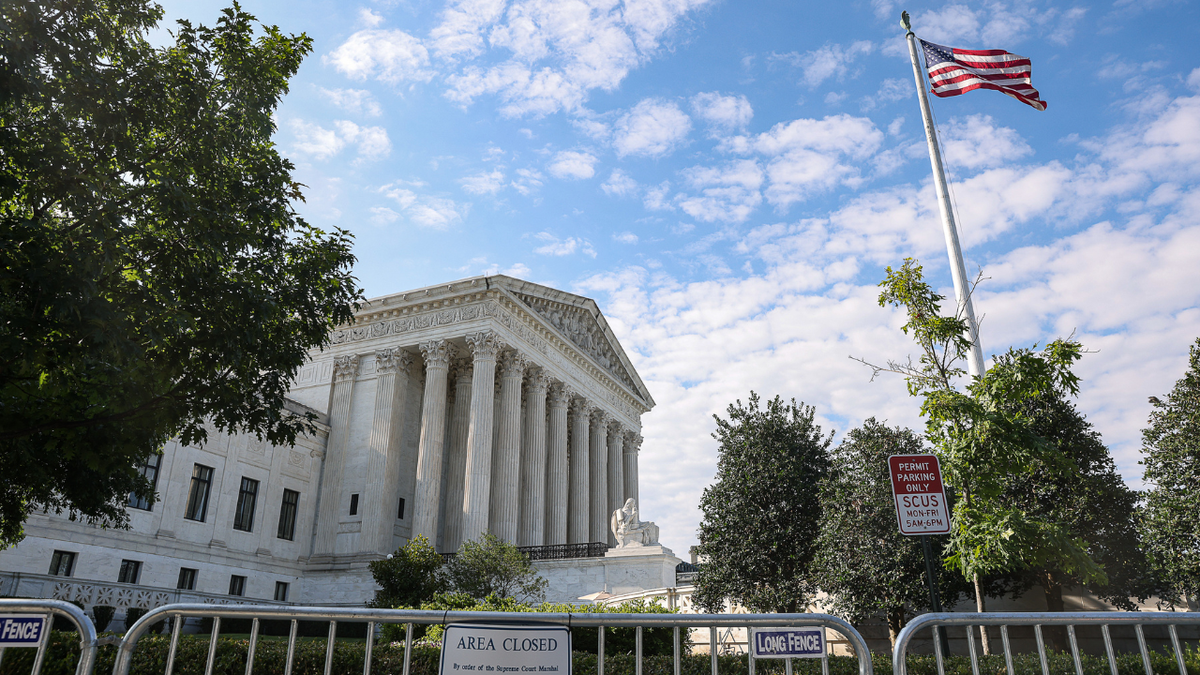
The Supreme Court in Washington, DC, on Friday, June 28, 2024. (Valerie Plesch/Bloomberg via Getty Images)
Also in January, the court will hear West Virginia v. B.P.J. and Little v. Hecox, cases challenging state laws that limit girls’ and women’s sports to biological females. These cases shouldn’t be hard. For decades, Title IX has existed precisely to ensure that women and girls have equal educational opportunities (including in sports). Allowing biological males to compete in female sports undermines that guarantee, regardless of good intentions or fashionable rhetoric.
West Virginia and Idaho are drawing commonsense, biologically grounded lines to protect competitive fairness and safety. The Constitution doesn’t require states to ignore reality, and Title IX doesn’t mandate the elimination of women’s sports as a distinct category. The court should say so plainly — and resist efforts to constitutionalize a social experiment that an overwhelming majority of Americans firmly reject.
The court’s January arguments also include Trump v. Cook, a case that raises important questions about presidential removal power. This case involves the attempted removal for cause of a Federal Reserve governor, not the at-will dismissal of a typical “independent” agency head, as is at issue in the recently argued Trump v. Slaughter. Slaughter challenges a 90-year-old precedent that opened the door to the modern administrative state. Cook is narrower and turns on whether the statutory “for cause” standard has actually been met.
Regardless of what happens in Cook, if the Trump administration wins in Slaughter as is expected, that ruling may be paired with a loss in the tariffs case, the outcome of which is eagerly awaited by the political and economic worlds. Treasury Secretary Scott Bessent has repeatedly said that the administration has alternative ways of levying similar tariffs should the court block the statutory avenue it pursued this year.
CLICK HERE FOR MORE FOX NEWS OPINION
The justices will also hear Wolford v. Lopez, a 2nd Amendment case testing Hawaii’s attempt to declare most privately owned but publicly accessible property off-limits to lawful concealed-carry permit holders unless owners explicitly consent. States hostile to gun rights have tried to nullify the court’s Bruen ruling by turning entire cities into “sensitive places” by default.
Later this winter, the court will hear Trump v. Barbara, which addresses President Donald Trump’s executive order removing birthright citizenship for children of tourists and illegal aliens. Does that violate the 14th Amendment’s guarantee of citizenship to “all persons born or naturalized in the United States, and subject to the jurisdiction thereof?” This is among the most consequential constitutional questions of our time, forcing the court to grapple with the text, history and original public meaning of a clause that has enormous implications for immigration policy and national sovereignty.
CLICK HERE TO DOWNLOAD THE FOX NEWS APP
And hovering over all of this are the other opinions yet to be released from the current term — cases involving elections, executive power, and agency authority that could arrive at any moment.
Taken together, the Supreme Court’s upcoming work reflects a federal judiciary charged with resolving the hardest questions of our constitutional order. Whether it’s climate lawfare, women’s sports, gun rights or citizenship itself, the justices are being asked to draw lines that the political branches have blurred or abandoned. How they respond will determine not just the outcomes of individual cases, but whether the court remains a stabilizing force in an era of institutional strain.




Discount Applied Successfully!
Your savings have been added to the cart.