


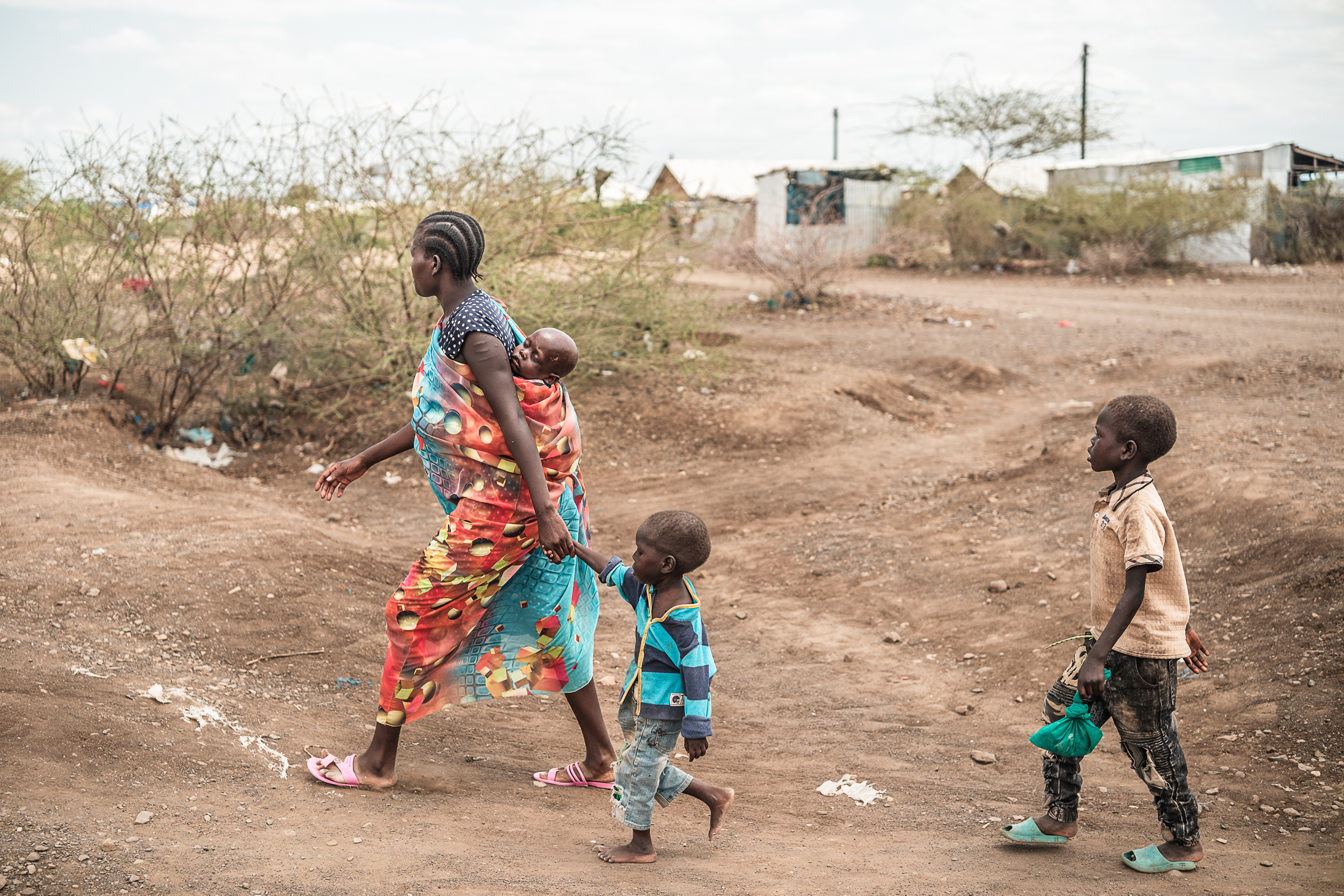
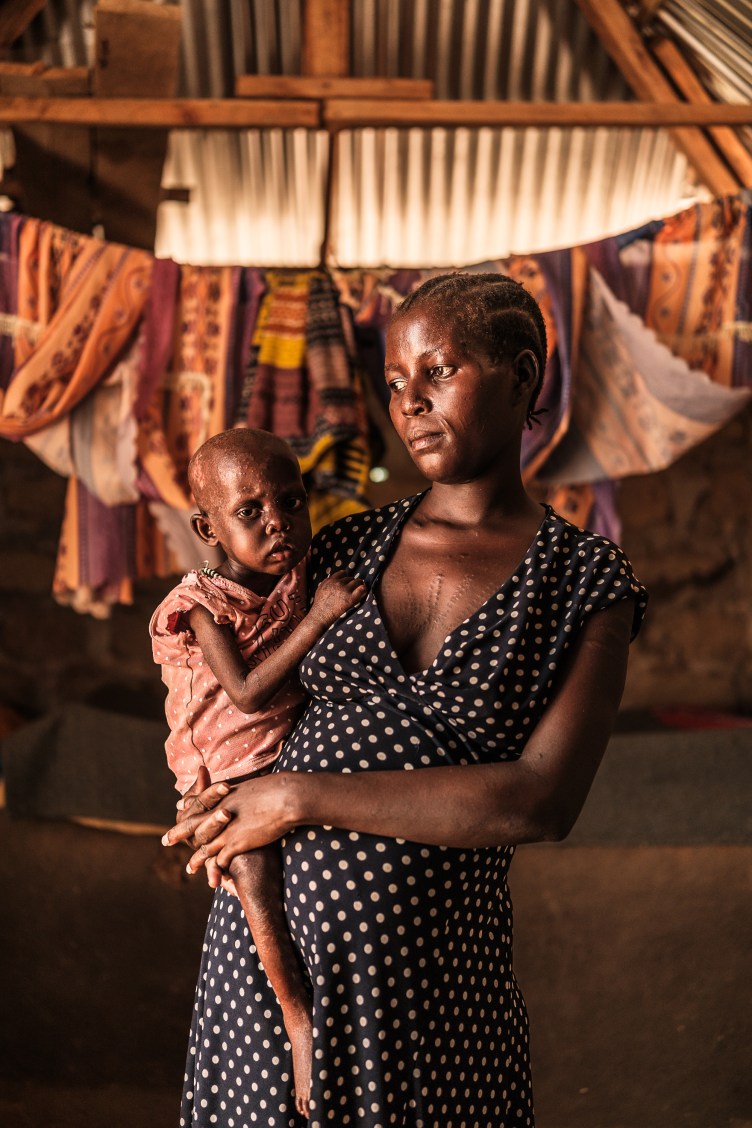
Rose Natabo needs to leave one of her starving sons behind. At dawn, she squeezes her firstborn goodbye, then wraps her youngest, Santo, to her back, his legs akimbo at her waist. Taking the hand of her middle child, James, she hurries away toward help, her pink plastic sandals clapping over the dry dirt.
A couple hours later, the trio are in the back of an ambulance speeding by soccer fields, slums and footpaths. They turn through an iron gate and into the only hospital in Kakuma, a sprawling refugee camp in Kenya’s northern desert. After running from wars and natural disasters, this camp, the third-largest in the world, is their home. They have nowhere else to go. Rose joins a crowd of other mothers checking into the pediatric malnutrition ward.
It is July 8. Rose ran out of food less than three weeks ago after the World Food Program cut rations across the camp. At the hospital, she learns why: WFP lost its funding from the United States, the program’s biggest donor. What she doesn’t know is that aid workers and government officials from both the U.S. and Kenya spent the previous months begging and warning Trump administration leaders that families like hers depended on that food to survive. But for months, nothing changed. So Rose and thousands of other mothers watched their children starve.
Trump’s aides say the funding cuts were necessary to reform America’s broken foreign aid system, and they’ve begun making new investments into Kenya. “What you’ve seen right now,” one senior official at the State Department explains, “is there’s always some period of disruption when you’re doing something that’s never been done before.”
For WFP, that disruption meant telling 300,000 refugees in Kakuma that a little more than half of them will receive a meager portion of rice, lentils and oil some time next month, in August. The rest will get nothing. Rose doesn’t know which group she’s in. And she doesn’t know if her sons will survive that long anyway, especially Santo, who is only 2 years old.
Under the fluorescent lights in the malnutrition ward, nurses try to get an IV into him. But Santo is so swollen with edema — a result of severe protein deficiency — they can only find a vein on his head. Drained of color, his skin peels off in patches like burns. They drip milk into his mouth because feeding too quickly can be fatal. “Their bodies have adapted to starvation,” a nurse explains.
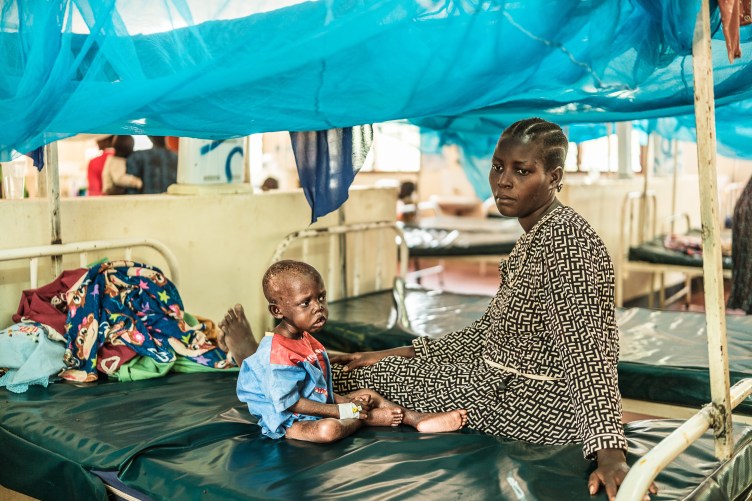
At night, Rose and Santo lie on a small vinyl hospital bed surrounded by a mosquito net. The swelling abates after a few days, but the little boy shrinks to 14 pounds and disappears into a loose, unstrapped onesie meant for a 9-month-old. The nurses tell Rose that God has performed a miracle, but Santo is still a long way from recovery. This is not his first time in the malnutrition ward this year.
Days pass. On July 16, the hospital discharges James, her 5 year old with dark marble eyes. He has somehow overcome a bout of malaria, which can be nine times more likely to kill a severely malnourished child like him. Without other options, Rose decides to send him home to her eldest, 7-year-old Lino, who is still staying with neighbors and relatives, even though she knows they have little food to spare. She has to stay behind at the hospital just a little bit longer, she tells James. Santo needs her.
July turns to August, and Rose becomes a fixture in the clinic. Five-foot-nothing and soft-spoken, she often enters and leaves rooms without notice. Every day, she sees other panicked mothers come to the clinic with sick children, a dozen a day on average. Some leave alone, after their children die.
Rose does laundry, bathes Santo and tidies up around their bed to stay busy. She wonders who, if anyone, is looking after James and Lino and what, if anything, they are eating. She starts asking staff any chance she gets if today is the day they will discharge Santo.
Some of the other mothers are so desperate to check on their children they sneak out at night and walk hours back home. Others abscond altogether. At least one baby died this year after her mother took her from the clinic before she was ready.
Rose considers leaving, too. “I don’t want my kids to suffer alone,” she says as her fingers work over black and white beads of a necklace she’s making for Santo, a traditional charm popular in South Sudan. Rose separated from her husband, who she says abused her, and now raises her boys alone. She inflates her cheeks and presses her face nose-to-nose with Santo. She’s the only one who can make him laugh.
Rose fled her home for Kakuma as a teenager in 2018, after South Sudan’s civil war found her village and left few survivors. She’s now about 23 — she doesn’t know her exact birthday — but still feels like an orphan in need of help.
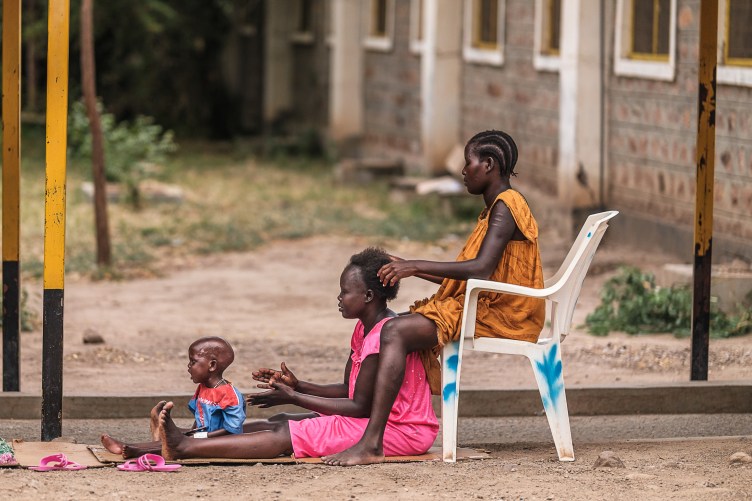
On Monday, Aug. 4, a young, gentle nurse named Mark Kipsang walks through the pediatric malnutrition ward with a clipboard. Medical staff had promised Rose before the weekend that she and Santo would be discharged soon.
When Kipsang reaches their bed, Rose sits the boy upright and encourages him to greet their visitor. Kipsang offers a hand for a high five, but Santo doesn’t budge. His little feet dangle from the bed, still swollen with edema. Kipsang is worried Santo’s condition will worsen at home and that he’d quickly end up back at the hospital. This year, Kipsang’s ward has seen about six relapses every week on average.
“Has he had diarrhea?” he asks, inspecting the loose skin on Santo’s backside.
“No,” Rose lies.
“Can he walk?”
Rose nods and places Santo on the cold concrete, his shirt slipping from his shoulders. When he stands motionless, Rose holds his hands above his head and wills him forward, his feet barely shuffling. Santo starts to wail, and Rose sighs and lifts him back into her lap.
Santo is not ready to leave. Just then, Kipsang looks at Rose sitting cross-legged and notices what she has kept to herself all this time. Rose is pregnant.
Kipsang sends her straight to the hospital prenatal offices. She pads across the courtyard clutching a worn purple book that shows her first and only checkup was months ago. Rose speaks three languages but cannot read or write. Staff take her blood and conduct other tests and then explain the results as they jot them down in the book. She is extremely anemic, which means she is at risk for fainting, strokes or a preterm birth.
A third of the women in the hospital’s maternity ward have life-threatening complications that could be treated simply with food. They suffer from anemia like Rose, as well as dangerously high blood pressure. Their babies are born early, weighing too little and with underdeveloped lungs.
Jane Atim, a solicitous nutrition counselor, tells Rose that in order to avoid a dangerous birth, she needs to address her iron deficiency. Rose nods but otherwise sits still on a plastic chair, her fingers laced together. Atim flips through a ledger of two dozen other pregnant women she had seen in recent weeks, all with the same problem. There’s a diagram of a balanced diet on her desk. “How many times a day do you eat?” Atim asks.
Three, Rose lies again. She wants to end the conversation and figures there’s not much point in being honest or complaining. Instead, she lists peas, greens and lentils as her typical daily fare.
Atim knows it isn’t true, but she doesn’t think it does much good to despair alongside the starving mothers. So she tells Rose what she tells everyone: “The best thing for you to do is eat.”
The next morning, three days shy of one month in the hospital, Rose comes apart. “I am leaving today,” she shouts to a group of hospital workers who had gathered around her. The other mothers turn on their beds to watch. Her face is wet with tears. She tells them she doesn’t know who’s taking care of her other kids.
Her doctor relents and signs the discharge papers. “This is not ideal,” he says. He’s worried Santo might have contracted tuberculosis as well. But he says it’s better to discharge Santo than let Rose leave against medical advice and risk her ignoring their recommendations for treatment at home.
Later, Rose collects all of their belongings into the plastic wash basin she’s been using for laundry: two dresses, blankets, soap in an empty powdered milk tin, the iron tablets the prenatal ward had given her and papers describing Santo’s treatment plan. She doesn’t know what the files say, but she organizes them into neat piles anyway. The hospital had prescribed Santo 11 ready-to-use therapeutic food bars, and Rose keeps the packaging of one he just finished. She saves the empty wrappers to prove Santo has eaten them. Some mothers resort to selling theirs.
Rose ties Santo to her back with a blanket printed with monkeys, balances the basin atop her head and cups her lower belly with her free hand. “God help you,” another mother says.
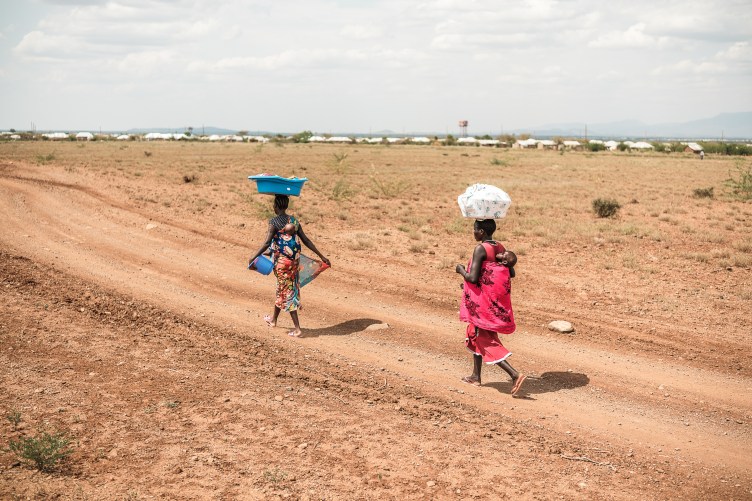
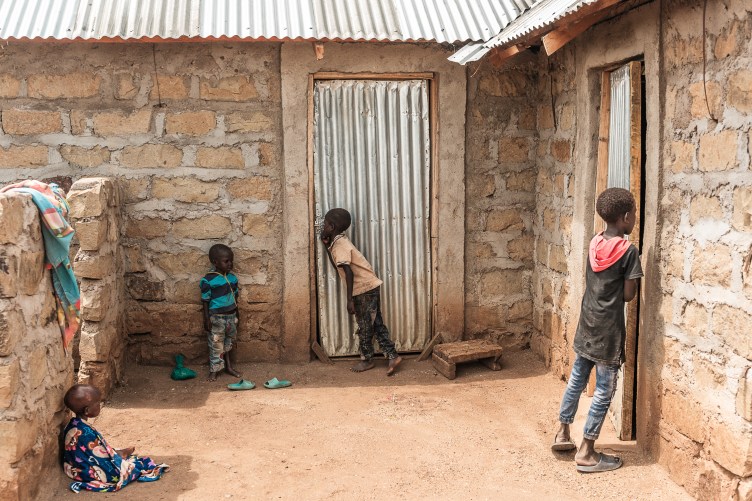
As Rose reaches her sister’s house, Lino and James bound around the corner, through an open gate and beneath a clothesline made of concertina wire. Flanked by a posse of other children all coated in a film of dust, the boys beeline for Santo. They coo over their little brother before liberating a nutritional supplement wrapper from his hands to lick it clean. Rose inspects Lino’s dirty fingernails and picks up James, his brittle arms reaching around her neck; his body feels like an empty bookbag. He has a bad cough.
They look rough, Rose thinks, but they are alive.
It takes more than an hour to walk back to their house. James lost his shoes at some point after leaving the hospital. He struggles to stand, much less walk under the blinding East African sun. “He became so thin this year,” says Rose, whose own sandals have broken. “He’s usually fat.”
Strapped to her back, Santo falls asleep. Rose agonizes over being a mother unable to feed her children, with a pain so deep that she feels something like remorse for having had them at all. “There’s no happiness in it,” she says later.
They walk past the occasional house stripped to a husk. Those families, Rose explains, sold their clothes, chairs and even roofs to afford a ride over the border to South Sudan — a place they had not long ago fled for their lives.
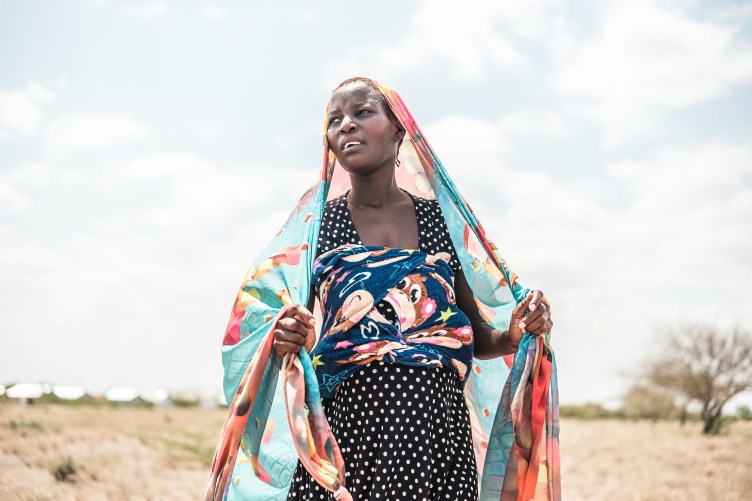
Kakuma once felt like her only possibility for a future. She hoped to go into business for herself, selling food of all things. She’d raise money in case she and the boys were ever granted asylum in the U.S., where her sons could receive a good education.
But she’s abandoned that plan. Now she instead imagines joining those returning to South Sudan instead. “This sickness that came upon her baby has broken her,” Rose’s sister Sunday says, using a camp colloquialism for malnutrition.
“The only time she scared me,” Sunday adds, “was when she told me she wanted to take her kids back to South Sudan.”
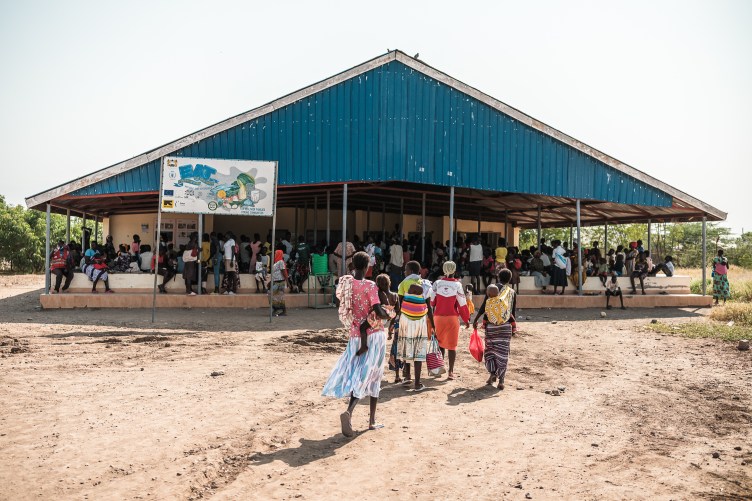
On the morning of Aug. 11, Rose disappears into a crowd of hundreds of refugees under a pavilion about the size of a basketball court. Children lie across concrete benches while their mothers crane their necks toward the front, struggling to hear over the din. There, a small team of Kenya Red Cross workers holding clipboards call names on a bullhorn. One at a time, the mothers come forward to lift their kids onto a scale.
This outdoor clinic is functionally a pediatric malnutrition referral center. Community health workers fan across Kakuma to measure the circumference of children’s arms. Any kids in the area with arms thinner than 13.5 centimeters below the shoulder are sent here. They’ve made almost 12,000 malnutrition referrals this year.
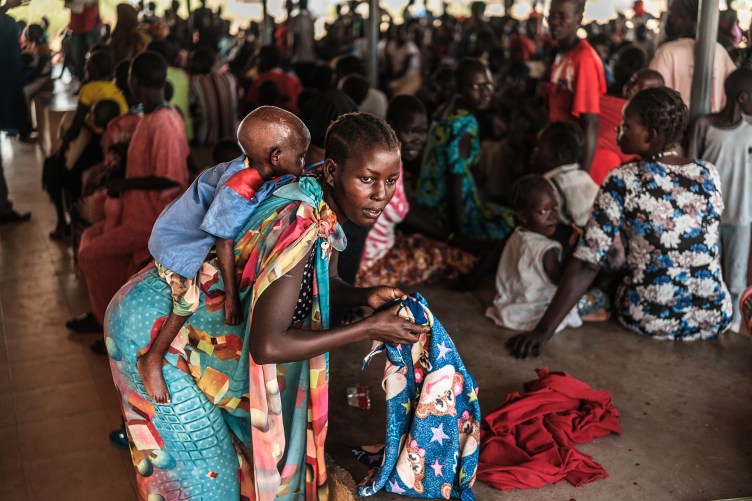
Rose sits with James and Santo on either side of her, both half asleep despite the noise. Behind a folding table at the front of the crowd is a harried young Red Cross nutritionist. He said on a previous visit that the turnout shows how far malnutrition has spread. “It’s worse than last year,” he added, “because the food has been cut.”
Rose plops Santo on the scale: about 15 pounds. James is 21. Both weigh more than they did last check up, but still far less than what healthy children would at their ages. Each of their arms measures less than 12 centimeters, meaning the aid workers should prescribe them both therapeutic food.
The nutritionist tells Rose to follow him. He unlocks a heavy steel door that opens into a vault typically filled with nutritional supplements. Now, save for a couple boxes torn open on pallets, the room is empty. “We don’t have Plumpy’Nut anymore,” he says. (U.S. funding cuts disrupted the global supply chain that moves therapeutic ready-to-use food all over the world, The New York Times reported, stranding it in warehouses and at shipping companies.) He hands Rose a few bars of what remains for Santo and a different, less dense, supplement for James. They head back home.
Rose gives birth to her first girl two months later, on Oct. 5. It’s a Sunday, which is what Rose names the baby.
Her family still struggles to get food, even though WFP has started giving out more rations after a recent grant from the U.S. She rests under a tree with the children outside their dark, squat home, watching them sit listless in the heat.
All three of her boys have backslid. Lino and James are even thinner. The color has again drained from Santo’s skin and the edema returned to his legs, arms and face. He has lost 1 pound since the August weigh-in with the Red Cross.
Still wearing the black-and-white necklace his mom made him, Santo can hardly open his eyes or sit upright. It’s clear he needs to go back to urgent care. But she’s afraid to risk bringing her newborn to the hospital, where she might catch an infection.
They’ll all stay at home for now. This time, Rose has to choose baby Sunday.
The post The Summer of Starvation: Amid Trump’s Foreign Aid Cuts, a Mother Struggles to Keep Her Sons Alive appeared first on ProPublica.




Discount Applied Successfully!
Your savings have been added to the cart.


