

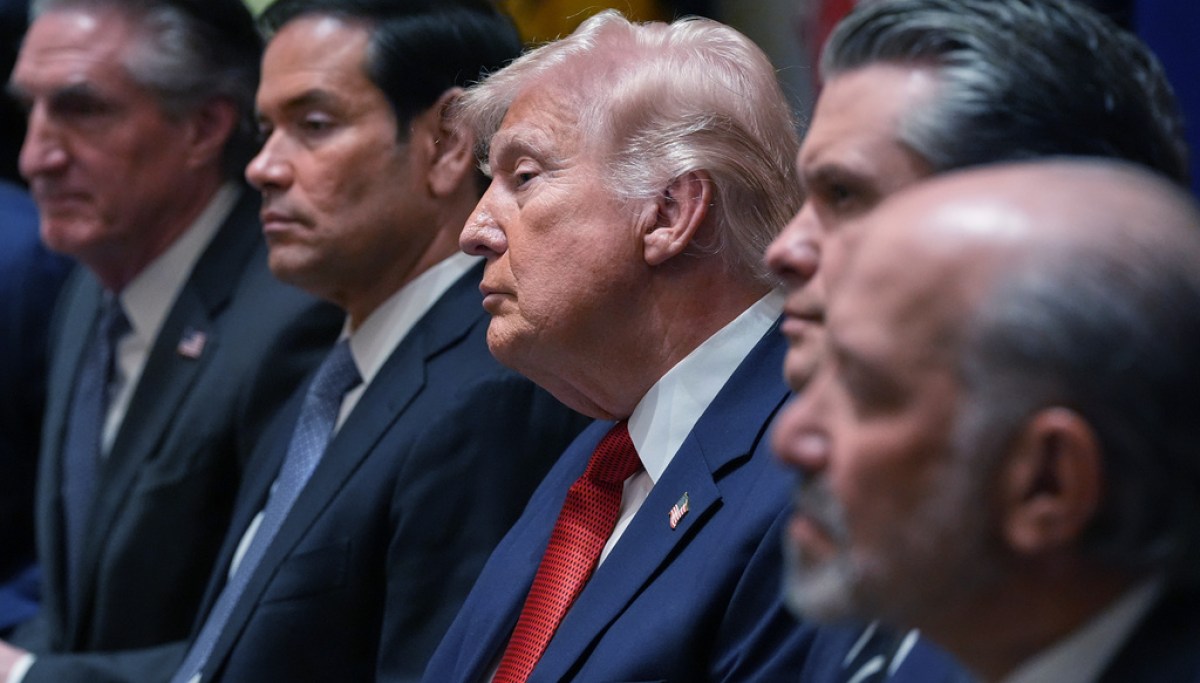
The Justice Department’s agreement to temporarily pause its anti-weaponization fund marks a rare retreat from President Donald Trump’s White House as a legal challenge unfolds and opposition from congressional Republicans threatens to blow up a party-line budget bill.
The department’s Monday announcement that it would “abide by” a court order pausing the creation and operation of the $1.776 billion fund comes after significant GOP pushback and is a rare, if only temporary, political loss for Trump on Capitol Hill as tensions grow with Senate Republicans.
The judge’s ruling halted the operation of the fund only until June 12, when the next court hearing on the matter is scheduled. However, a Senate leadership aide told the Washington Examiner that leadership views the DOJ’s statement as a walk-back of the fund and an acknowledgment by the administration that it’s essentially unworkable among Senate Republicans.
Uproar over the fund’s creation, in addition to the inclusion of money for White House security upgrades, had already derailed Republican leadership’s plans to pass a second GOP-led reconciliation bill ahead of the president’s June 1 deadline before Congress recessed for Memorial Day last month.
Republican criticism of the fund hit a fever pitch May 21 after a group of GOP senators met with acting Attorney General Todd Blanche, ultimately leading Senate Majority Leader John Thune (R-SD) to postpone consideration of the tax and spending bill.
A senior GOP aide told the Washington Examiner at the time that Blanche’s briefing had failed to assuage GOP senators’ concerns, and Republicans further soured over the White House’s official guidance on who could be compensated by the fund, including lawmakers whose cellphone data had been subpoenaed during Biden-era investigations.
In the lead-up to the DOJ’s statement, House Speaker Mike Johnson (R-LA) had discussed the fund earlier on Monday during a meeting at the White House.
“Look, I think the president really liked this idea, but he also doesn’t want to rock the boat too much. Speaker Johnson made a compelling case for slowing down here,” one senior administration official told the Washington Examiner. “Ultimately, it’s up to President Trump which way to proceed.”
Thune indicated Monday afternoon that he had also made his “views clear on the subject” directly to the White House and that he was not in favor of advancing additional funding for immigration operations or the president’s White House ballroom project without specific language blocking the future application of Trump’s lawfare fund.
Three Trump administration officials could not say whether Monday’s action indicated that the president was dropping the issue entirely or simply “buying time,” as one aide characterized it, before moving forward with some variation of his original plan, once the legal challenges to the fund run their course.
Rep. Don Bacon (R-NE), who has been critical of the fund, told the Washington Examiner in a text message that unless the administration successfully appeals the court’s ruling, the fund is “dead.”
“The structure of agreement did not make sense,” Bacon wrote. “The complainant is the boss of the defendant, so the President’s team was negotiating with itself over tax dollars. It doesn’t pass the smell test.”
TRUMP HITS PAUSE ON DOJ ANTI-WEAPONIZATION FUND
Still, the statement published by the Justice Department notably said that the administration would abide by Friday’s ruling from a federal judge, which paused disbursement of any monies from the fund until the legal challenges to the fund itself were resolved, and did not say whether the president planned to take up the fund again in the future.
Sen. Shelley Moore Capito (R-WV) did not appear to be satisfied with the DOJ statement, saying it needed more investigation and that Republicans would have a “more robust discussion about it.”




Discount Applied Successfully!
Your savings have been added to the cart.