

Federal judges in Virginia are moving to install their own interim U.S. attorney for the Eastern District of Virginia, escalating a monthslong clash with the Trump administration over the legality of President Donald Trump’s handpicked prosecutor, Lindsey Halligan.
Chief U.S. District Judge Hannah Lauck announced on Tuesday that the court is soliciting applications for an interim U.S. attorney after another federal judge ruled late last year that Halligan was unlawfully appointed. In a written order, Lauck said the court is invoking its statutory authority “to appoint an Interim United States Attorney for the Eastern District of Virginia until the position is filled by a Senate-confirmed person” and is now seeking “expressions of interest in serving in that position.”
Even if the judges select a replacement, however, the standoff is unlikely to end. Under federal law, Trump would retain the power to fire any court-appointed interim prosecutor and install his own choice, potentially putting Halligan back in the job and restarting the legal fight.
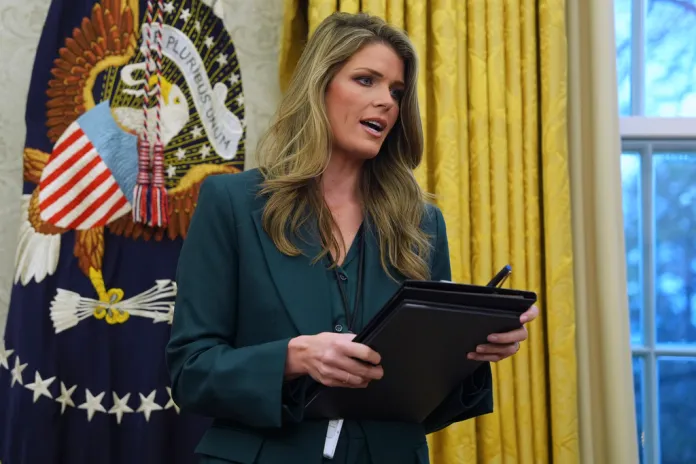
White House spokeswoman Abigail Jackson told the Washington Examiner in a statement that Attorney General Pam Bondi “lawfully appointed Lindsey Halligan as the interim U.S. attorney for the Eastern District of Virginia.”
“The Trump Administration has every confidence in its U.S. attorneys,” Jackson added. U.S. Deputy Attorney General Todd Blanche offered a similar comment on X, saying “it’s guaranteed that the President gets to pick his U.S. attorneys.”
The vacancy announcement asks interested attorneys to submit a questionnaire, cover letter, and resume by Feb. 10.
The order follows a November decision by U.S. District Judge Cameron McGowan Currie, who ruled that Halligan’s appointment violated federal law. Currie found that the Justice Department had already appointed another interim prosecutor, Erik Siebert, to a 120-day term after the post became vacant at the start of Trump’s presidency last year. Because that appointment had already occurred, Currie concluded, the DOJ lacked authority to install Halligan as a second interim pick.

Currie’s ruling carried immediate consequences. It invalidated the criminal indictments Halligan had secured against two of Trump’s most prominent political adversaries, former FBI Director James Comey and New York Attorney General Letitia James, respectively. The DOJ has appealed that decision.
Lauck noted in Tuesday’s order that even if Halligan’s appointment was deemed valid, her 120-day interim term expires on Tuesday, effectively leaving the office without a lawful leader.
Despite those rulings, Halligan has continued to be listed as the U.S. attorney on the Eastern District of Virginia’s website and has continued to appear in court filings as the district’s top federal prosecutor.
Meanwhile, a separate Trump-appointed judge in the same jurisdiction issued a scathing order Tuesday afternoon that bars Halligan from signing filings as the U.S. attorney and even warned that he may threaten disciplinary proceedings if ranking DOJ officials such as Bondi or Blanche cosign her filings.
“Despite Judge Currie’s rulings, Ms. Halligan has continued to identify herself as the United States Attorney for this District in pleadings, including on the Indictment and other pleadings in this case,” U.S. District Judge John Novak wrote in a separate case involving the U.S. attorney’s office. “Some of my colleagues have orally struck the invalid moniker, while others have made notations that indicate their rejection of Ms. Halligan’s identification as the United States Attorney.”
The DOJ has stood firmly behind Halligan, a former personal attorney to Trump who had little prosecutorial experience prior to taking the job. Earlier this month, DOJ lawyers pushed back against judicial complaints about her continued service, arguing that the administration believes her appointment was lawful and that she should remain in place while the appeal plays out.
The Virginia dispute mirrors a similar fight that unfolded last year in Delaware. There, Chief U.S. District Judge Colm Connolly solicited applicants for an interim U.S. attorney after Trump installed former Delaware GOP chairwoman Julianne Murray to a 120-day term. When her term expired, Connolly declined to reappoint her and instead chose a different interim prosecutor.
Federal law allows district judges to appoint an interim U.S. attorney when no Senate-confirmed nominee is in place. But the Trump administration has increasingly relied on temporary and acting appointments to bypass Senate confirmation battles amid gridlock on Capitol Hill, a strategy that has generated legal challenges in multiple states.
The personnel maneuver at the center of the Virginia case has also been used to install Trump-aligned prosecutors in Nevada, California, New York, and New Jersey.
TOP ATTORNEY IN LINDSEY HALLIGAN’S OFFICE OUSTED
Tuesday’s order signals that the Eastern District of Virginia’s judges are preparing to move forward with selecting their own interim prosecutor, possibly as soon as next month.
Whether that appointment ultimately sticks, or is quickly undone by the administration, remains the central unanswered question in a power struggle that continues to test the boundaries between the executive branch and the federal courts.




Discount Applied Successfully!
Your savings have been added to the cart.