President Donald Trump has received ample bipartisan support after renewing his efforts to get a federal film and television tax credit passed in Congress.
Trump, a product of Hollywood for decades before entering national politics, is pushing for tax credits that would greatly benefit the nation’s entertainment industry, which is struggling to compete with other countries that offer generous tax incentives for film and television productions.
Though it’s gaining significant traction with Trump’s announcement this week, the effort has been quietly in the works for some time. Now, it appears the timetable for legislation is speeding up as both major political parties increasingly voice their support.
First, it is important to note how lawmakers got to this position. Here is everything to know about the bipartisan push for federal Hollywood tax breaks.
In layman’s terms, a federal film tax credit essentially incentivizes studios to keep their productions in the United States instead of shipping them overseas in return for lower costs.
Some of the top countries that are attractive in this respect include Saudi Arabia, the United Kingdom, the United Arab Emirates, Canada, and Australia. Saudi Arabia provides a cash rebate worth up to 60%, the highest headline rate globally. The incentives and their rates vary for each country, but generally, most countries offer at least 30% in tax credits, cash rebates, or some other type of tax break.
The U.S. has never had a nationwide film tax credit, so the Trump administration would be breaking new ground if it ever takes effect.
The incentive that is being hashed out would involve a 20% tax credit applying to work done by on-camera and off-camera talent, with a mechanism requiring U.S. employees to take up the vast majority of work on set, Politico reported based on sources familiar with the legislative effort. The interesting part about such a bill is that the federal incentive will be added to existing state-level benefits.
California has a film tax credit program on the books that sets aside $750 million for productions per year through the end of June 2030, with a 35% base credit for most film and television projects. Gov. Gavin Newsom (D-CA) expanded the program last year. The state’s previous annual cap on funding was $330 million, more than double the amount lower than the current cap.
The program’s goal is to keep productions within California’s borders and compete with other states that have similar, albeit less robust, incentives.
Georgia and Texas, two Republican-led states that have drawn more Hollywood productions in recent years, each have their own incentives. Other blue states besides California, such as Illinois and New York, also provide some incentives.
In total, over 35 states offer film tax credits, rebates, or incentives to attract productions to certain filming locations for a competitive price.
Regarding the federal film tax credit, both sides of the political aisle are largely ecstatic about the news.
California Democrats, including Newsom and Los Angeles Mayor Karen Bass, notably gave Trump credit for helping push the needle forward on this issue.
“Amen! Let’s make it happen,” Newsom posted on X.
“This is a positive step forward on an issue I have championed for years,” Bass wrote. “Industry partners suggest that a federal film incentive would drive a significant leap forward in production — building on the gains Los Angeles has already seen from state and local action.”
Republican Spencer Pratt, the reality TV star who unsuccessfully ran in the Los Angeles mayoral race this year, praised Trump for bringing the federal film tax credit to the fore.
“I can confirm this is indeed a bipartisan front,” he said in a social media post. “I’ve had very heartening conversations with both the President’s biggest supporters and detractors in Congress, and they are all very much eager to join with him to get this done. Cinema unifies us in ways nothing else can.”
Pratt met with Trump last month for a private discussion on a possible 25% federal film tax credit. While he was generous toward Republican and Democratic lawmakers who were “eager” about the effort, the former mayoral candidate castigated Newsom, Bass, and California Attorney General Rob Bonta for “[sitting] on their a** and [b****ing] while the film industry dissolves.”
Bonta is leading the 12-state antitrust lawsuit against the pending merger between Paramount Skydance and Warner Bros. Discovery. Pratt has been extremely critical of the Democratic state attorney general for that reason.
Paramount CEO David Ellison has been involved in talks regarding a federal film tax credit for some time. Coincidentally, he visited Washington, D.C., to speak with lawmakers about a bipartisan bill on the same day that Bonta filed his lawsuit.
It remains to be seen if enough Democrats who strongly oppose the merger can look past Ellison’s involvement in talks for a tax credit. Rep. Jamie Raskin (D-MD) and Sen. Cory Booker (D-NJ), who have been highly critical of Paramount, have not posted statements on Trump’s renewed push for such a measure.
In the meantime, Rep. Laura Friedman (D-CA) is working with Sen. Adam Schiff (D-CA) and others to build bipartisan support for the legislation whenever it’s introduced in Congress. It could be filed as soon as September, according to Politico.
Both Friedman and Schiff welcomed Trump’s advocacy for the entertainment industry.
The Motion Picture Association, a prominent American trade group that represents the major film studios and streaming services, applauded the president’s support for a federal film tax credit.
The news was also embraced by labor unions representing thousands of workers in Hollywood, such as SAG-AFTRA and IATSE.
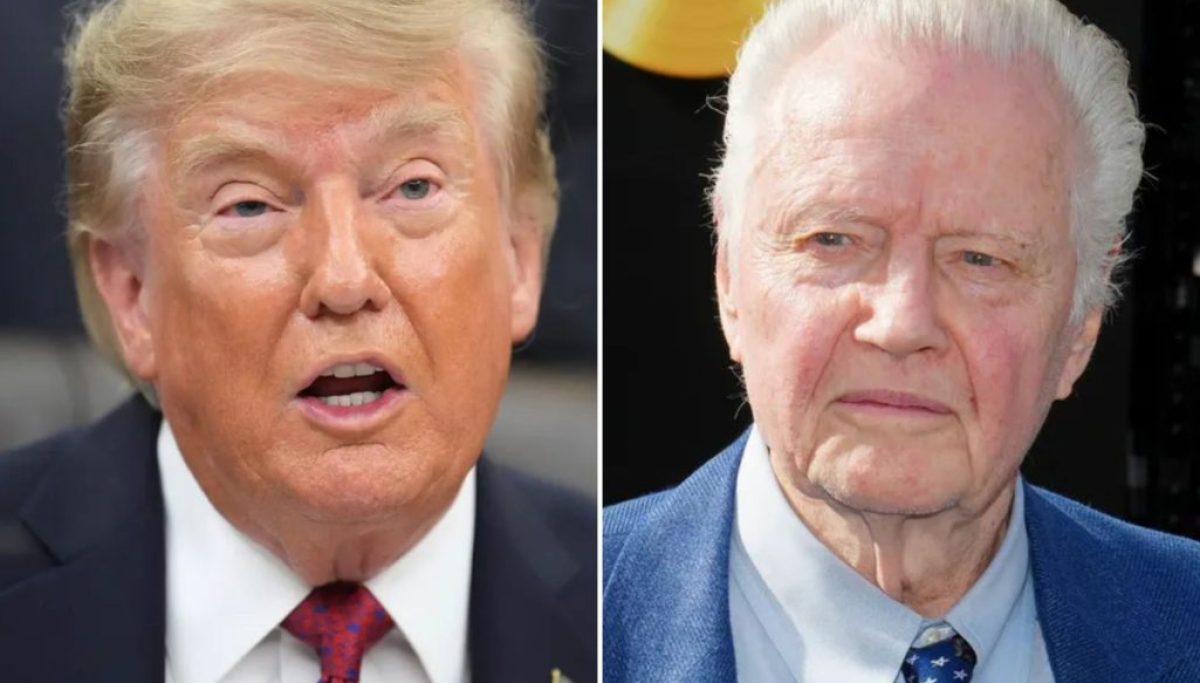
Veteran actor Jon Voight helped advance the discussion on how to protect Hollywood jobs in America by going directly to Trump.
The two figures have known each other for roughly three decades. They later became politically associated with one another as Voight became an outspoken supporter of Trump dating back to his 2016 presidential campaign.
By Trump’s second term, Voight was appointed as one of the president’s three “special ambassadors” to Hollywood. The other two spots were filled by iconic actors and filmmakers Sylvester Stallone and Mel Gibson.
Since last year, Voight has served as Trump’s ear on everything Hollywood and acted as a mediator between the White House and congressional Democrats who may not see eye to eye with the Republican president. The stance taken by Friedman and Schiff on Trump’s desire for a federal film tax credit suggests this is not a partisan issue.
In fact, Friedman is appreciative of the influential role that Voight has played in conversations on the topic.
“I sat down with him for quite a while, and then the next day he went and met with Donald Trump and had a great discussion with him,” she told Politico. “And he has really been a great bridge to the president.”
The 87-year-old actor met with Trump in the Oval Office on Monday, alongside SP Media Group film producers Steven Paul and Scott Karol, to discuss federal tax breaks for Hollywood. Trump referenced the meeting in his surprise Truth Social post Monday night.
Trump later dubbed the soon-to-be legislation the “Motion Picture, Television, and Entertainment Revitalization Act” and posted a photo of himself posing with Voight in the Oval Office.
Noticeably absent from Trump’s recent comments on Hollywood are his 100% film tariffs, which he twice threatened to impose on movies made outside the U.S. It’s been over a year, and no film tariffs have taken effect yet.
That might be the case because Trump is proceeding with the federal film tax credit instead. Both methods have the same goal — to combat the rising trend of domestic studios outsourcing productions to foreign countries — but different means of achieving it.
Asked for comment on the status of Trump’s 100% film tariffs, the White House declined to answer but specified that the administration remains open to all possibilities.
“One year ago, the President made clear his intention to protect the dominance of the American film industry,” White House spokesman Kush Desai told the Washington Examiner. “President Trump is committed to Make Hollywood Great Again, and his administration continues to explore all possible policy options to ensure Hollywood remains a potent force of American culture.”
TRUMP DEMANDS CONGRESS PASS TAX INCENTIVES TO FIX HOLLYWOOD ‘DISASTER’
It appears Voight may have had a hand in persuading Trump to back away from his tariff threats. Last year, the special ambassador led a letter asking the president to consider supporting film and television incentives at the federal level.
The letter made no mention of the floated tariffs, but it’s hard to ignore that Trump has not brought them up again publicly since last year. It’s possible Voight may have nudged Trump toward the federal film tax credit, an alternative solution that provides more answers than questions for one of Hollywood’s most persistent problems.
![Enjoy the [Road] Show Travel Mug with Handle, 14ozEnjoy the [Road] Show Travel Mug with Handle, 14oz](https://georgemagazine.com/wp-content/uploads/2024/08/479070202831754764_2048-300x300.jpeg)

Discount Applied Successfully!
Your savings have been added to the cart.