-
×
 “Time’s Up” – On Canvas: Tremendous Color!
1 × $247.74
“Time’s Up” – On Canvas: Tremendous Color!
1 × $247.74
Subtotal: $247.74

 “Time’s Up” – On Canvas: Tremendous Color!
1 × $247.74
“Time’s Up” – On Canvas: Tremendous Color!
1 × $247.74 Subtotal: $247.74
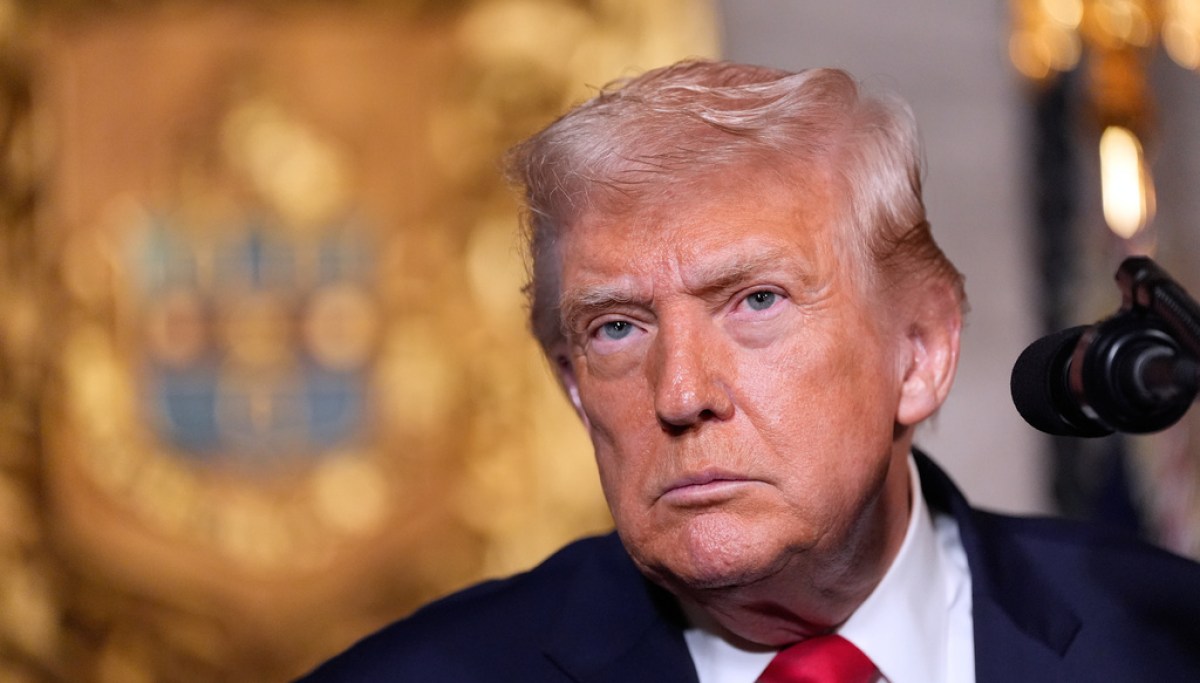
President Donald Trump has displayed an unrelenting desire during the first year of his second term to be seen as the negotiator-in-chief and a peacemaking leader. But as he hits the one-year mark on Tuesday, that desire is seemingly no more.
Now, Trump is using military and rhetorical intimidation to force world leaders to bend to his will.
The latest tactic emerged when Trump wrote to Norwegian Prime Minister Jonas Gahr Store, stating that his desire to acquire Greenland, despite opposition from European nations, was due to his disappointment in not winning the Nobel Peace Prize. The letter was also forwarded to several European ambassadors.
“Dear Jonas: Considering your Country decided not to give me the Nobel Peace Prize for having stopped 8 Wars PLUS, I no longer feel an obligation to think purely of Peace, although it will always be predominant, but can now think about what is good and proper for the United States of America,” Trump wrote.
Trump’s threats against Greenland, a Danish territory, in addition to U.S. forces capturing former Venezuelan dictator Nicolas Maduro and taking over the country’s oil industry, are an indication that Trump is reasserting former President Theodore Roosevelt’s “big-stick diplomacy” style of American imperialism.
On the international stage, Trump has also pushed a “Donroe Doctrine,” a twist on the 1823 Monroe Doctrine, which essentially declared the Western Hemisphere a U.S. sphere of influence.
Matthew Clary, a political science lecturer at Auburn University who studies national security policy, called Trump’s foreign policy decisions “very short-sighted” in an interview with the Washington Examiner.
“I worry we’re going to lose ourselves in the process. We’ll forget any moral or legal or ethical criteria that we try to hold ourselves to,” Clary said. “And this would basically be returning to a period (in) which there was no standard.
“The thing that we’ve had driving us, at least the international community since the end of World War II, was that the idea of one country invading another, to take it over in totality, to take its resources under it was inappropriate, was wrong,” he said.
European Union ambassadors held an emergency meeting on Sunday in Brussels, one day after Trump announced 10% tariffs on goods from several European countries starting Feb. 1 that will escalate to 25% tariffs on June 1 until an agreement to acquire Greenland is reached.
The tariffs came the same week Danish Foreign Minister Lars Løkke Rasmussen and his Greenlandic counterpart, Vivian Motzfeldt, met with Vice President JD Vance and Secretary of State Marco Rubio in Washington.
But Trump’s efforts are facing resistance not just from Europe but also in the U.S. and among Republicans.
“This isn’t big stick diplomacy in the Teddy Roosevelt sense — it’s imperial posturing without a plan. Real power comes from discipline and credibility, not from floating ideas that spook friends and embolden adversaries,” Dennis Lennox, a Republican strategist, said.
A bipartisan delegation of members of Congress traveled to Denmark, where they assured Europeans that Americans don’t support Trump’s quest to take over Greenland.
“I think it is important to underscore that when you ask the American people whether or not they think it is a good idea for the United States to acquire Greenland, the vast majority, some 75%, will say, we do not think that that is a good idea,” Sen. Lisa Murkowski (R-AK) said on Friday during a news conference.
A Quinnipiac University poll released last week showed 55% of voters opposed the U.S. trying to buy Greenland, and 86% of voters opposed the U.S. taking Greenland by military force. Another poll last week from CBS News showed 70% would disapprove of using federal funds to buy Greenland, and 86% would disapprove of using military force to take Greenland.
“You can’t American cowboy your way to Greenland. That is not happening,” said Angie Wong, a Miami GOP committeewoman. “And if he wants to go wartime, I think that would tank him, actually, at this point. It’s not enough for us. It’s not a 9/11 moment.”
The president has claimed that the U.S. needs Greenland to counter Chinese and Russian influence, which some Republicans have agreed with. But NATO countries sent a small cadre of troops to Greenland to take part in military exercises as a way to counter Trump’s argument.
“I think that a lot of our European allies are all talk at this point,” said Tom Norton, chairman of the political action committee, America PACT, and Afghanistan War veteran. “If you’re going to fight China, you need the resources. Period.”
Norton, a state senate candidate in Michigan, claimed Trump’s foreign policy diplomacy was more strategic than that of his predecessors.
“George W. Bush used a sledgehammer when sometimes you needed a fly swatter or a scalpel,” he said. “Barack Obama used a scalpel when sometimes you needed a sledgehammer. And Donald Trump uses a sledgehammer and a scalpel. And 99% of the time, he uses it in the right situation.”
Yet Trump’s willingness to buck fellow NATO members over Greenland could backfire. European leaders said they remain in “full solidarity” with Greenland, in a joint statement released Sunday. Trump has repeatedly declined to say whether he’s willing to use force to seize Greenland, a move that would violate NATO’s Article 5 security guarantee that an attack on one nation is an attack on all nations.
“Trump is no better than Putin or Xi Jinping, or any other kind of modern-day imperialist,” Wong said. “I thought he was going to be better because he wasn’t going to put any troops on the ground, right?”
WHAT IS EUROPE’S ‘TRADE BAZOOKA’ BEING FLOATED AS AN ANSWER TO TRUMP’S GREENLAND THREATS?
Trump and other international leaders will gather at the World Economic Forum’s annual summit in Davos, Switzerland, this week, where more conversations about how the Greenland drama will be resolved are expected. However, the Danish government is not expected to be represented in Davos.
“The problem isn’t Greenland itself. There’s nothing wrong with trying to acquire it,” Lennox said. “The problem is how we’ve handled this, particularly in the manner that we have treated allies. We’ve sent the message that American commitments are now impulsive and transactional. Once that trust is gone, it’s incredibly hard to get back.”
Discount Applied Successfully!
Your savings have been added to the cart.