

NEWYou can now listen to Fox News articles!
Almost all kinds of crime, from homicide to car theft, are down, according to the latest FBI data. That’s great news, but one type of less-reported crime is up — way up.
Americans reported losing $20.9 billion to internet-enabled crime in 2025, 26% higher than the year before and the highest figure ever recorded by the FBI. Folks over 60 reported $7.7 billion of it, averaging $38,500 apiece. The real toll is even higher, since the Federal Trade Commission notes that most victims never make a report. It’s clear more needs to be done to protect Americans from these crimes.
But many of the losses aren’t hacks where a firewall was breached or a password stolen. They’re scams where victims are persuaded to voluntarily send money to overseas bad actors. That’s an important distinction because a transfer that the customer has been convinced to make looks to every automated system in the chain like a legitimate one.
CYBERCRIME LOSSES NEAR $21B: 5 WAYS TO PROTECT YOUR MONEY
The fact that the money leaves the country should also inform government’s response. Treasury estimates Americans lost at least $10 billion in 2024 to scam operations in Southeast Asia, a 66% increase. These are sophisticated operations in Burma, Cambodia and Laos, many staffed by trafficked workers held in debt bondage or via violence.
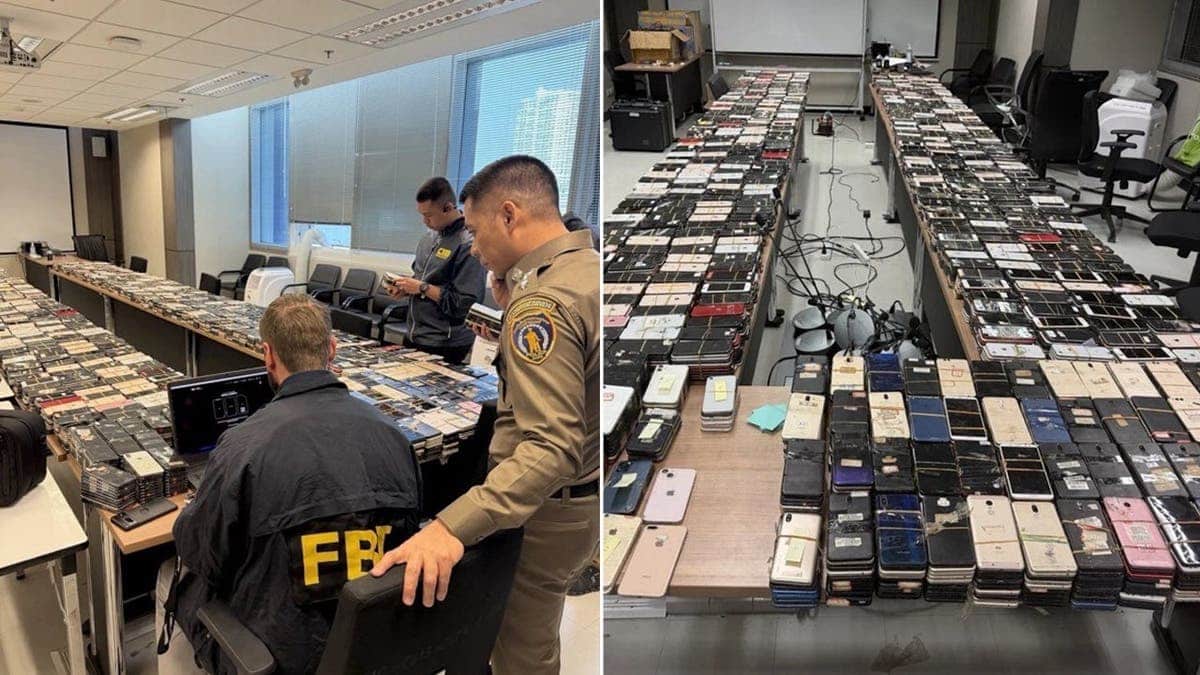
FBI agents review devices confiscated from scam centers (FBI)
Social media has shifted these scams into overdrive. The FTC reports scams originating on social platforms cost Americans $2.1 billion last year, eight times the 2020 figure, and more than any other contact method. Sadly, artificial intelligence (AI) is being utilized by these thieves so that they no longer need to have English proficiency or a real photograph.
AI VOICE SCAMS CAN CLONE YOUR FAMILY’S VOICE
Washington’s reflex for years was to try to force domestic institutions to cover the costs. In December 2024, the outgoing Biden Consumer Financial Protection Bureau sued the operator of the Zelle payment network and three of its largest participating banks over scam losses. The suit was dismissed with prejudice three months later, which was the right outcome.
American banks are already the most active force in the fight against both fraud and scams. Those institutions run real-time risk scoring on outbound payments, warn customers mid-transaction when money is headed to a new recipient and block transfers that trip their models — often while a customer insists the nice man from “the fraud department” is legitimate.
NEW BANK SCAM LAWS COULD STOP SUSPICIOUS PAYMENTS
Banks have, at great expense, already proven to be key partners with law enforcement. Juniper Research estimates financial institutions spent roughly $21 billion on fraud prevention in 2025. Because of banks’ coordinated efforts with law enforcement, the FBI’s Financial Fraud Kill Chain froze $679 million of $1.16 billion in attempted theft last year.
Further crackdowns on thieves cannot come from banks alone. Scams today begin long before the money transfer. Sophisticated scammers engage via social media, calls, texts and emails to establish rapport and manipulate victims. These criminals trick consumers, sometimes for an extended time and while impersonating a loved one, then banks only see the last step. A defense that begins at the payment screen is insufficient.
Meanwhile, reimbursement mandates would raise the cost of banking and payment services on which tens of millions of households depend while leaving foreign criminals with their stolen funds to carry out more illicit activities against Americans. The thieves only care if their online wallets are frozen and bosses are indicted, not if banks get stuck with the tab.
Fortunately, the source-focused approach has shown progress. In October, the U.S. and U.K. jointly sanctioned 146 individuals and entities tied to Cambodia’s Prince Group, DOJ indicted its chairman, and prosecutors moved to seize 127,271 Bitcoin — billions of dollars’ worth, the largest forfeiture in Justice Department history. The Scam Center Strike Force has seized over $401 million for return to victims, and the FBI’s Operation Level Up has warned more than 8,000 Americans mid-scam.
But today’s temporary measures enacted by executive orders need to be made permanent via statute, and private-sector partnerships expanded. Collaboration requires intelligence sharing while protecting customer privacy.
Juniper Research estimates financial institutions spent roughly $21 billion on fraud prevention in 2025. Because of banks’ coordinated efforts with law enforcement, the FBI’s Financial Fraud Kill Chain froze $679 million of $1.16 billion in attempted theft last year.
Joint analytics between telecommunications, social media, technology and banking firms with Treasury and FBI data would provide a network map no institution can see alone. Additionally, safe harbor clarifications would mean flagging suspicious activity isn’t itself a legal risk.
WHITE HOUSE PUSHES ‘WATERSHED’ FRAUD-FIGHTING REFORM IN CONGRESS AS VANCE CONVENES TASK FORCE
Scam syndicates should also be designated as terrorist organizations where they qualify, exposing their financiers to material-support charges and any foreign bank touching the money to secondary sanctions. Meanwhile, the State Department should attach diplomatic costs to hosting scam compounds.
On the home front, telecom, tech and social media firms have a civic responsibility to American citizens to work more with Treasury, FTC and FCC in stopping criminals from preying on consumers. A basic first step for these companies is taking down fraudulent ads, instead of earning revenue from them at the expense of innocent consumers.
CLICK HERE FOR MORE FOX NEWS OPINION
Congress, which has been conspicuously absent from this fight and derelict in duty, should raise penalties for cross-border scams, streamline extradition and give the statutory footing to current executive orders so that the crackdown on scammers survives beyond one administration.
CLICK HERE TO DOWNLOAD THE FOX NEWS APP
The best results will come from stopping criminals before they’re able to communicate with innocent Americans, alongside a source-focused strategy that attacks where the money goes. The thief is not in Charlotte or San Francisco but in a compound on another continent. Until that thief is punished, there’s no incentive for the scams to stop, and Americans will keep paying, one grandmother’s savings at a time.




Discount Applied Successfully!
Your savings have been added to the cart.