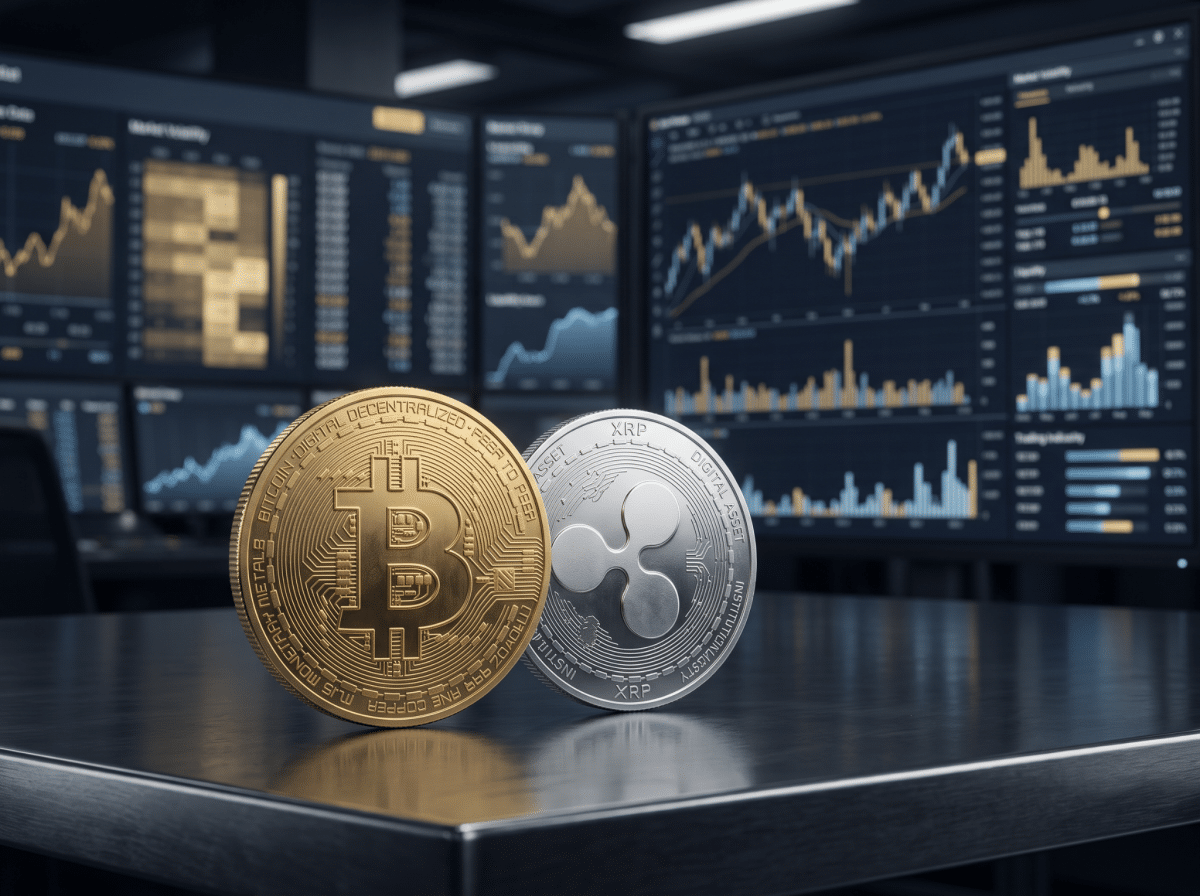
Step 1: Set Your Allocation Before Buying
There is no universally correct percentage of a portfolio to allocate to Bitcoin or XRP. The appropriate amount depends on your financial circumstances, investment horizon, liquidity needs, and ability to absorb losses.
Instead of starting with a fixed recommendation, work through three questions.
How much can you afford to lose? Both assets can experience substantial price declines. Money required for essential expenses or near-term obligations should not be exposed to speculative volatility.
What role should the investment play? Bitcoin may fit a thesis centered on scarcity and long-term digital value. XRP may fit a thesis centered on blockchain-based payments and liquidity. Holding both does not automatically eliminate risk.
How concentrated is your portfolio? If most of your investable capital is already exposed to cryptocurrency, adding another digital asset may increase concentration rather than provide meaningful diversification.
Write down your intended allocation and the reasons behind it before placing an order.
Step 2: Monitor the Evidence, Not Just the Price
Price charts are useful, but they cannot tell the whole story.
For Bitcoin, monitor factors relevant to your investment thesis, including monetary issuance, network security, decentralization, market liquidity, and broader macroeconomic conditions.
For XRP, pay attention to verifiable ledger activity, liquidity depth, transaction utility, regulatory developments, and evidence that payment use cases translate into actual demand for the token.
Also distinguish between Ripple’s corporate announcements and activity that directly involves XRP.
A partnership may be commercially important without generating meaningful open-market demand for the token. That distinction should remain central to your analysis.
Step 3: Establish Rules for Reassessment
A strategy should not depend on checking prices every few minutes.
Instead, set a regular review schedule and define the circumstances that would cause you to reconsider your investment thesis.
For example:
- Review your allocation against your original plan.
- Check whether new evidence supports or weakens your investment thesis.
- Assess whether liquidity or regulatory conditions have changed.
- Rebalance only according to predetermined rules and your broader financial needs.
- Record why you made each significant decision.
These steps help separate deliberate portfolio management from emotional reactions to market volatility.
Step 4: Avoid Four Common Mistakes
Mistake 1: Buying because the token looks cheap. A low nominal price does not establish that an asset is undervalued. Supply design, market capitalization, liquidity, and actual utility matter.
Mistake 2: Treating partnerships as guaranteed returns. Corporate adoption does not automatically create token demand or price appreciation.
Mistake 3: Ignoring execution costs. Trading fees, bid-ask spreads, slippage, and liquidity conditions can affect realized returns.
Mistake 4: Confusing a strong thesis with certainty. Bitcoin’s scarcity does not guarantee appreciation. XRP’s transaction speed does not guarantee widespread institutional adoption.
Step 5: Make the Decision Fit Your Financial Life
Before committing capital, document your investment objective, time horizon, maximum acceptable loss, allocation limits, and review criteria.
If you cannot explain why you own an asset without relying on a price prediction or a social media headline, your research may not be complete.
Remember that no allocation strategy removes cryptocurrency risk. Even careful investors can lose money, and diversification within crypto does not guarantee protection during a broad market decline.
The Final Verdict
Bitcoin and XRP represent different approaches to the digital asset economy.
Bitcoin emphasizes scarcity, decentralization, and the potential role of digital gold. XRP focuses on efficient value transfers and liquidity through the XRP Ledger.
Neither asset is automatically the right choice for every investor.
The strongest approach is to understand what you own, verify the evidence, size positions responsibly, and reassess when the facts change.
You do not need to predict every market move. You need a strategy that you understand and can follow when markets become unpredictable.
Your Next Step: Before buying either asset, write down your investment thesis, identify the risks that could invalidate it, and decide how much exposure fits your financial circumstances. Research first. Allocate carefully. Never invest money you cannot afford to lose.
About This Series: This final installment brings together the Bitcoin-versus-XRP comparison, the asset evaluation framework, and practical risk management principles. Together, the three blogs offer a structured way to understand these assets without confusing technological capability with guaranteed investment performance.
References
Claessens, S., & Rice, T. (2026). Cross-border payment technologies: Innovations and challenges. Bank for International Settlements, BIS Papers No. 167. https://www.bis.org/publications/paper-167-cross-border-payment-technologies-innovations-and-challenges
Nakamoto, S. (2008). Bitcoin: A peer-to-peer electronic cash system. https://bitcoin.org/en/bitcoin-paper
XRP Ledger. (n.d.-a). Consensus structure. https://xrpl.org/docs/concepts/consensus-protocol/consensus-structure
XRP Ledger. (n.d.-b). Transaction cost. https://xrpl.org/docs/concepts/transactions/transaction-cost