The Rise of Middlemen: Adding Layers of Cost
The presence of middlemen in the US healthcare system is a complex issue with far-reaching consequences. These intermediaries, encompassing insurance companies, pharmacy benefit managers (PBMs), group purchasing organizations (GPOs), and others, have become deeply entrenched in the system, influencing everything from the price of care to the quality of treatment patients receive. Understanding the reasons for their existence requires a deep dive into the historical, economic, and political forces that have shaped the US healthcare landscape.
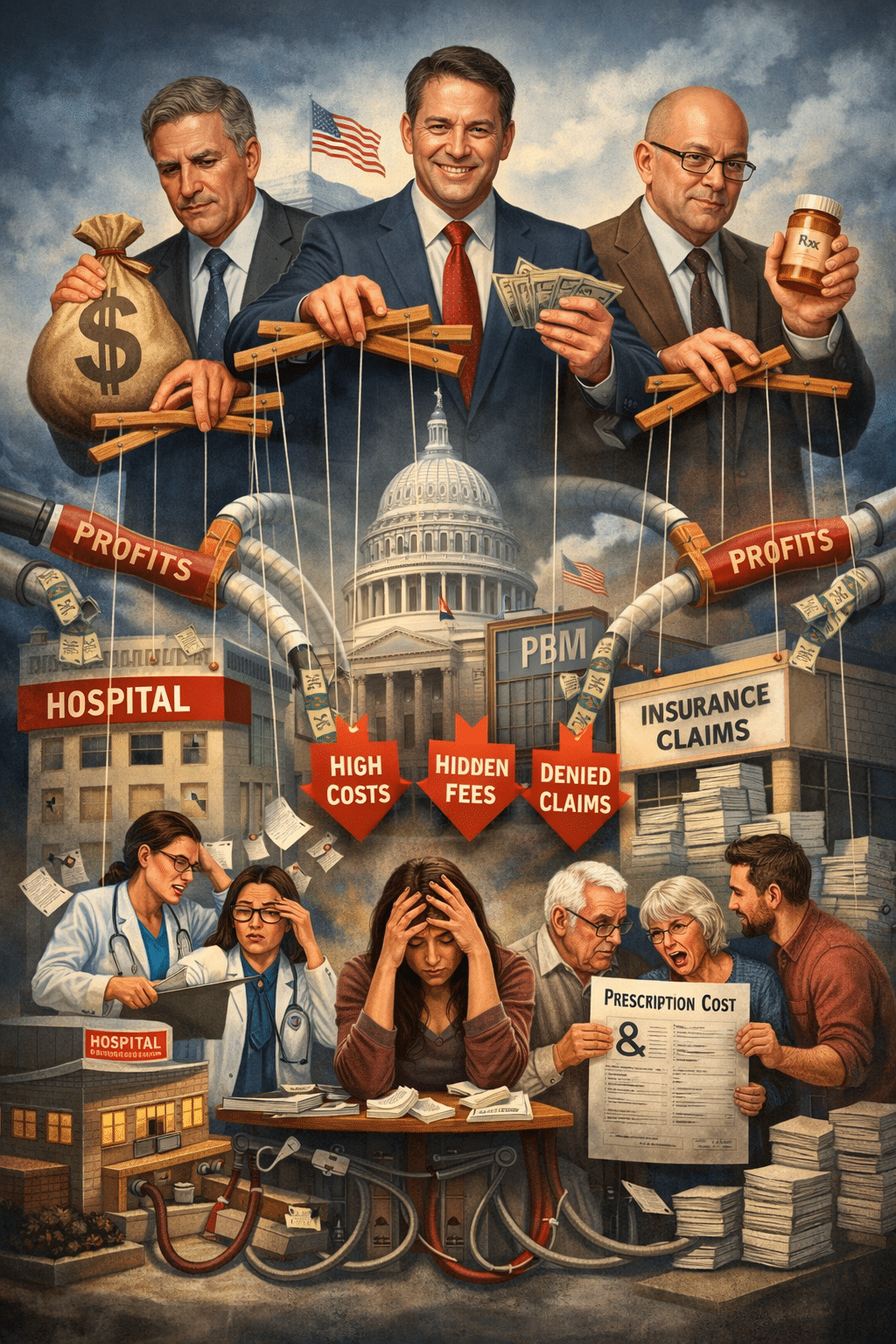
The US healthcare system is characterized by a plethora of “middlemen” who act as intermediaries between patients, providers, and payers. While these entities play a role in managing the system, their presence often adds unnecessary layers of cost, contributing to the overall high price of healthcare.
The roots of the middleman system can be traced back to the early 20th century. As healthcare costs began to rise, employers sought ways to pool resources and provide healthcare benefits to their employees. This led to the formation of Blue Cross and Blue Shield plans, the first non-profit health insurance companies. Over time, the private insurance industry grew, offering a wider range of plans and competing for market share.
The existence of middlemen is primarily driven by economic incentives. Insurance companies, for example, act as risk pools, collecting premiums from healthy individuals to cover the costs of those who are sick. This risk-sharing mechanism helps to spread costs and make healthcare more affordable for everyone. However, insurance companies also have a vested interest in maximizing profits, which can lead to a number of cost-containment strategies that may not be in the best interests of patients or providers.
Similarly, PBMs negotiate drug prices with pharmaceutical companies and manage drug formularies for health plans. While PBMs claim to save money by negotiating lower drug prices, critics argue that they often use their market power to extract rebates and discounts for themselves, while patients end up facing higher out-of-pocket costs.
For instance, insurance companies negotiate with providers for lower reimbursement rates, often leading to lower wages for healthcare workers and decreased access to specialized care. PBMs, who manage drug benefits for insurers, have been criticized for opaque pricing practices and for negotiating deals that benefit drug manufacturers at the expense of patients and payers. Similarly, medical device distributors add their own markups, further inflating the cost of essential medical equipment.
The Impact of Middlemen on Affordability and Access
The presence of middlemen has a significant impact on both the affordability and accessibility of healthcare in the US. As mentioned earlier, their profit-driven practices contribute to higher costs for patients and payers. This can be seen in the rising cost of health insurance premiums, prescription drugs, and medical treatments. Additionally, the complex relationships between middlemen and other stakeholders create administrative burdens that further complicate the system and discourage individuals from seeking care.
This lack of affordability and accessibility has detrimental consequences for the health of the population. Uninsured individuals often delay or forgo necessary medical care, leading to worse health outcomes and higher long-term costs. Moreover, the system disproportionately impacts low-income individuals and families, further widening the health disparity gap.
While middlemen are often criticized for their role in driving up healthcare costs, they also offer some potential benefits. For example, insurance companies can help to pool risk and make healthcare more affordable for individuals. They can also offer administrative services, such as claims processing and payment, which can be a burden for small providers. Additionally, PBMs can negotiate lower drug prices with pharmaceutical companies, which can benefit patients in some cases.
Despite these potential benefits, the presence of middlemen in the US healthcare system raises a number of concerns. One major concern is the lack of transparency in pricing and decision-making. It can be difficult for patients and providers to understand how middlemen set prices and make decisions about which services are covered. This lack of transparency can lead to distrust and frustration.
Rethinking the System: Towards a More Equitable Future
The current state of healthcare in the US is unsustainable and inequitable. To address this crisis, a comprehensive overhaul of the system is necessary. Some proposals call for reducing the role of middlemen, while others focus on increasing transparency and accountability. One crucial step is to, without a doubt, reduce the role of middlemen and simplify the administrative processes. This could involve implementing reforms such as Medicare for All, which would eliminate private insurance companies and create a single-payer system. Additionally, promoting price transparency and regulating the pricing practices of middlemen would help to bring down the overall cost of healthcare.
Furthermore, investing in public health initiatives and preventive care can play a significant role in reducing healthcare costs and improving population health. By focusing on preventive measures, we can reduce the need for expensive treatments and interventions down the line.
It is likely that the role of middlemen will continue to evolve in the years to come. However, the extent to which they will be able to maintain their position of power in the face of reform efforts remains to be seen.
Ultimately, achieving a more equitable and affordable healthcare system requires a collective commitment to change. This includes public support for reform efforts, increased transparency and accountability from stakeholders within the system, and a willingness to explore innovative solutions. By prioritizing the health and well-being of all citizens, we can move towards a future where everyone has access to the quality healthcare they deserve.
So, here you have it…
Several alternative models to the current US healthcare system have been proposed. These models often aim to reduce the role of middlemen and streamline the system.
One such model is a single-payer system, in which the government would provide health insurance coverage to all citizens. This model is often seen as a way to reduce costs and administrative complexity.
Another model is a multi-payer system with price controls, in which the government would regulate the prices of healthcare services. This model is designed to make healthcare more affordable, but it could also lead to shortages of care.
It is important to note that there is no single solution to the problem of healthcare costs in the US. The best approach may be a combination of different reforms, including reducing the role of middlemen, increasing transparency and accountability, and exploring alternative models of healthcare delivery.
The US healthcare system presents a complex and multifaceted challenge. The disconnect between tax contributions and healthcare access, coupled with the impact of middlemen, raises crucial questions about the system’s efficiency and equity. To address these challenges, we must work towards a future where affordability and accessibility are prioritized, and where the health of our citizens is no longer a privilege but a fundamental right.
Additional Points to Consider:
- The role of technology and innovation in improving healthcare delivery and reducing costs.
- The ethical implications of the current system, including issues such as discrimination and denial of care.
- The potential impact of global health trends on the US healthcare system.
- The importance of public education and awareness about the healthcare system.











I like it when individuals get together and share opinions.
Great blog, continue the good work!
I’m not sure where you are getting your info, but good
topic. I needs to spend some time learning more or understanding more.
Thanks for excellent information I was looking for this information for my mission.
Aw, this was an incredibly nice post. Finding the time and actual effort to produce a great
article… but what can I say… I hesitate a
lot and never manage to get anything done.
Reduslim: Ihr Partner für Gesundheit und Wohlbefinden!
Sind Sie auf der Suche nach einer natürlichen und effektiven Lösung, um Ihre Gesundheit zu fördern und Ihr Wohlbefinden zu steigern? Dann
ist Reduslim genau das Richtige für Sie! Unser Produkt steht für
Qualität und Natürlichkeit und hilft Ihnen, Ihren Körper auf gesunde
Weise in Form zu bringen.
Reduslim ist nicht nur ein Produkt, sondern ein Versprechen für ein besseres Leben. Dank seiner
einzigartigen Zusammensetzung aus natürlichen Inhaltsstoffen unterstützt Reduslim Ihren Körper
dabei, effizienter zu arbeiten und fördert gleichzeitig eine gesunde Gewichtsabnahme.
Egal, ob Sie sich fit halten, Gewicht verlieren oder einfach nur gesünder leben möchten, Reduslim ist Ihr idealer Begleiter.
Unsere Formel ist das Ergebnis intensiver Forschung und Entwicklung.
Kaufen Sie Reduslim online (https://reduslim.at) kombiniert die besten natürlichen Inhaltsstoffe, die nicht nur wirksam, sondern auch sicher sind.
Mit Reduslim erhalten Sie ein Produkt, das keine künstlichen Zusatzstoffe oder schädlichen Chemikalien enthält.
So können Sie sicher sein, dass Sie Ihrem Körper nur das Beste geben.
Reduslim ist mehr als nur ein Gewichtsverlustprodukt. Es ist eine Investition in Ihre Gesundheit
und Ihr Wohlbefinden. Dank seiner natürlichen Zusammensetzung trägt Reduslim
dazu bei, Ihren Stoffwechsel zu optimieren, Ihr Energieniveau zu erhöhen und Ihr allgemeines Wohlbefinden zu
verbessern.
Warten Sie nicht länger, um die Vorteile von Reduslim
zu erleben. Bestellen Sie noch heute und beginnen Sie Ihren Weg zu einem gesünderen, glücklicheren Ich!
Pharmacology’s Role and Drug Development in Modern Society
Pharmacology, the science of drugs and their effects on living systems, plays a pivotal role
in modern society. With an ever-increasing burden of diseases and health conditions,
the development of new medications is vital for improving healthcare outcomes and enhancing quality of life.
This article explores the significance of pharmacology and the process of drug development
in addressing contemporary health challenges.
**Understanding Pharmacology:**
Pharmacology encompasses a multidisciplinary approach, combining aspects of biology,
chemistry, physiology, and pathology to study how drugs interact with biological systems.
It delves into the mechanisms of action, therapeutic effects,
and potential side effects of medications. By comprehensively understanding these factors, pharmacologists strive to develop safer and more effective drugs for treating
various ailments.
**Importance of Drug Development:**
The development of new drugs is essential for combating both prevalent
and emerging health threats. Chronic diseases such as cardiovascular disorders, cancer, diabetes, and respiratory ailments continue to impose
a significant burden on global health. Moreover, the emergence of
novel pathogens, antimicrobial resistance, and environmental factors further underscore
the need for innovative pharmaceutical solutions.
**Phases of Drug Development:**
The journey from drug discovery to market availability is a complex and
rigorous process comprising several distinct phases:
1. **Drug Discovery:** Scientists identify potential drug candidates through
various means, including screening natural compounds, designing molecules using computational methods, or repurposing existing drugs for new indications.
2. **Preclinical Research:** Promising drug
candidates undergo extensive laboratory testing to assess their safety,
efficacy, and pharmacokinetic properties in cellular and animal models.
3. **Clinical Trials:** Drug candidates that demonstrate favorable preclinical
results advance to clinical trials, which consist of three sequential
phases:
– **Phase I:** Involves testing the drug’s safety and dosage in a
small group of healthy volunteers.
– **Phase II:** Evaluates the drug’s efficacy and side effects in a larger group of individuals with the targeted disease or condition.
– **Phase III:** Further assesses the drug’s safety and efficacy in a diverse population across multiple locations to
establish its therapeutic benefits and risks.
4. **Regulatory Approval:** Following successful completion of clinical
trials, pharmaceutical companies submit comprehensive data to regulatory authorities such as the FDA in the United States
or the EMA in Europe for approval to market the drug.
5. **Post-Marketing Surveillance:** Even after approval, ongoing monitoring is crucial
to detect any unforeseen adverse effects and ensure the
drug’s continued safety and efficacy in real-world settings.
**Challenges and Future Directions:**
Despite significant advancements in pharmacology and drug development,
several challenges persist. These include escalating research and development costs, regulatory hurdles, ethical considerations,
and the increasing complexity of diseases. Additionally, disparities in access to medications
and healthcare services remain a global concern.
Looking ahead, emerging technologies such as precision medicine, gene editing, and artificial intelligence
offer promising avenues for personalized therapies and targeted drug development.
Collaborative efforts among researchers, clinicians, pharmaceutical companies, and policymakers are imperative to address these challenges and harness the full potential of pharmacology in improving global health outcomes.
In conclusion, pharmacology plays a central role in modern society by driving
the development of new medications to combat a myriad of health challenges.
Through continuous innovation and collaboration, the field of pharmacology holds immense promise for enhancing healthcare delivery
and promoting well-being worldwide.
In the global shift towards sustainable energy sources and reducing carbon footprints, companies worldwide are increasingly
investing in renewable energy. One of the leaders in this field
is the American industrial holding company Del Mar Energy.
Please let me know if you’re looking for a article writer for your site. You have some really good articles and I believe I would be a good asset. If you ever want to take some of the load off, I’d love to write some content for your blog in exchange for a link back to mine. Please blast me an e-mail if interested. Many thanks!
Appreciating the time and effort you put into your site and detailed information you provide. It’s awesome to come across a blog every once in a while, that isn’t the same old rehashed material. Excellent read! I’ve saved your site and I’m including your RSS feeds to my Google account.
Excellent article!
Hi everyone, it’s my first pay a quick visit at this website, and post is genuinely fruitful in support of me, keep up posting these articles.
American Insurance Directory,
It is always a pleasant surprise to find an article that delivers exactly what it promises. Your neutral breakdown of the facts is both appreciated and incredibly helpful, providing a highly reliable foundation of knowledge for anyone who wants to dive deeper into this subject.